



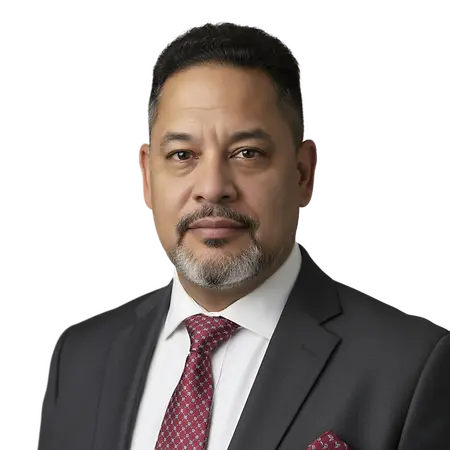
Richard Vasquez
Business Owner, Richard Vasquez
When I look back on my career, I don't think there was one big moment where everything suddenly became clear. It was more of a realization that happened over time. I had spent years working in business, accounting, finance, and tax, but I started realizing that I wanted to do more than just work with numbers.
I wanted to understand what was happening behind those numbers.
I had seen what poor decisions, weak controls, and fraud could do to a business and to the people behind it. These aren't just numbers on a financial statement. Sometimes you're talking about someone's livelihood, their employees, their family, or something they spent years building.
That's what pushed me toward fraud examination and forensic work.
It wasn't necessarily the easiest decision because I already had an established career. At that point, it would have been very easy to stay in my lane and continue doing what I already knew how to do. Instead, I decided I still had more to learn.
So I went back to learning. And I'm still learning today.
My military background had already taught me a lot about discipline, responsibility, and leadership. Running businesses taught me something different. It taught me that things don't always go according to plan. You make mistakes. You adjust. Sometimes you get knocked down, and you have to figure out how you're going to get back up.
Fraud examination added another lesson: don't automatically accept something just because it looks right on the surface. Ask questions. Pay attention to the details. And when something doesn't make sense, don't be afraid to dig deeper.
I think all of those experiences have shaped the way I lead today.
I don't believe being a leader means being the smartest person in the room or pretending you have every answer. I certainly don't. To me, leadership means being willing to listen, continuing to learn, admitting when you need to change direction, and then using what you've learned to help someone else.
At this point in my career, that's probably what means the most to me. I still want to grow and be successful, but success means something different to me now.
It's not just about what I can build for myself.
It's about what I can teach, who I can help, and hopefully leaving people and businesses a little better off because our paths crossed.
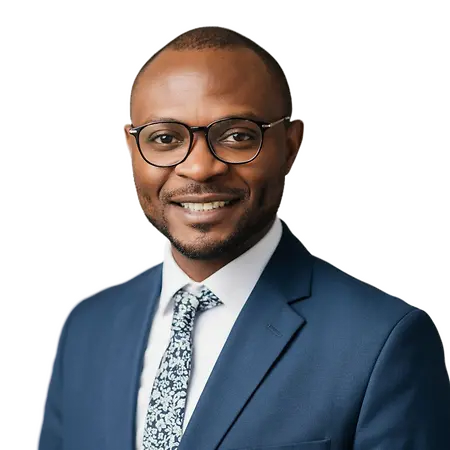
RODRIGUE TCHITAKA
Founder and CEO, Flacron Enterprises LLC
The decision that changed everything for me was choosing to stop thinking only about building a career and start building a company. Becoming the Founder and CEO of Flacron Enterprises LLC meant taking full responsibility for a bigger vision creating innovative technology solutions, building a strong organization, and pursuing long-term growth.
What made that decision difficult was the uncertainty. Entrepreneurship requires you to make important decisions without always having guarantees, resources, or a clear path ahead. I had to learn how to balance technology, leadership, business strategy, risk, and execution while continuing to grow personally and professionally.
That experience shaped me into a more disciplined, resilient, and forward-thinking leader. It taught me that leadership is not simply about having ideas; it is about taking responsibility, solving problems, building the right team, staying committed through challenges, and continuously adapting.
Today, my focus is on building and scaling Flacron Enterprises to the highest possible level. My goal is to create a globally recognized technology company that uses artificial intelligence, automation, cloud technologies, and cybersecurity to develop meaningful solutions and create lasting value.
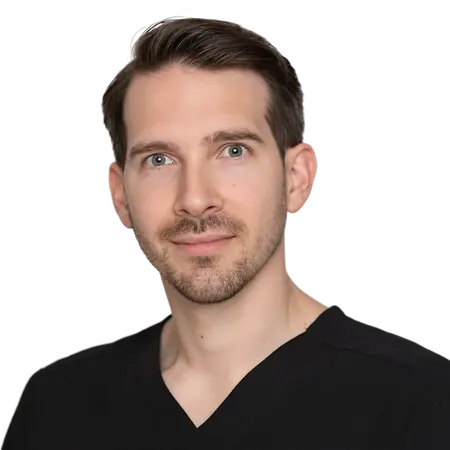
John Rajotte, MBA, SHRM-CP
Human Resources Manager, MarottaMD
The defining decision in my career was choosing to leave the organization where I had spent 15 years and take a completely different path in healthcare.
I began my career in 2005 with Gurwin, a nonprofit healthcare organization, and those 15 years gave me an incredible foundation. I learned from great leaders, worked alongside people who genuinely cared about their mission, and developed the people skills that have become central to my career. Leaving was difficult because I had invested so much of myself in that organization and was comfortable in what I knew.
Then COVID changed the healthcare landscape. I realized I had an opportunity to step outside of my comfort zone, so I made the decision to move into home care. It was a challenging transition, but it pushed me to develop in ways I hadn't anticipated, particularly through high-volume recruiting, managing a substantial 24/7 caseload, and learning to make decisions and solve problems quickly in a constantly changing environment.
That experience ultimately led me to my current role at MarottaMD, where I found an organization whose mission and values genuinely resonated with me. Looking back, that decision taught me that sometimes the most important career moves are the ones that feel the least comfortable at the time.
It shaped the leader I've become by teaching me to embrace change rather than fear it. I've learned that leadership isn't about having everything figured out; it's about being willing to step into the unknown, learn from the experience, and bring other people with you.
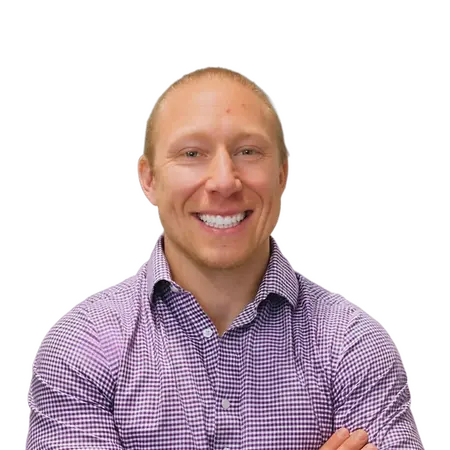
Mike Mielke
Founder, Troph, Troph
I spent a decade making other people's operations work, quietly wishing the tools I wanted actually existed. Becoming a dad is what finally moved me. What mattered now was making things that genuinely help people, and being around to raise my kids while I did it. So I stopped waiting for permission and started building them myself, one shower thought at a time, in a one-car garage. Giving up the titles I thought I was supposed to chase was hard, but I'm a humble builder at heart, and that decision taught me I'm at my best when I'm making something useful, not managing something big.
Matthew Wisniewski
Licensed Mental Health Counselor, MW Counseling LLC
When I was looking for a job, I scheduled a meeting with a private practice who was not hiring at the moment. The owner blatantly asked me, "Why don't you just start your own practice?" At that point, I realized that I needed to forge my own path. The difficulty of the mental health field is that providers are isolated. It is very much an every-man-for-himself field structure, even if you are in a group practice. This experience has taught me the importance of trust. Finding a small group of people that you trust is needed in any line of work. My leadership is built on trust: give people a reason to trust you, then return the favor and trust them back when the time comes.
Daniel Roa Vidal
Director Major Projects, Reliable Controls Corporation
The decision that changed my career was choosing to step beyond being only a technical specialist and accepting the responsibility of leading people, decisions, and ultimately major projects.
Early in my career, I was comfortable solving technical problems. Equipment either worked or it did not, and there was usually a technical reason behind the answer. Leadership was different. Suddenly, my decisions affected not only equipment and schedules, but also the people working beside me and the safety and success of an entire team.
That transition was not easy because leadership requires something technical knowledge alone cannot provide: the willingness to make decisions when the information is incomplete, to accept responsibility for those decisions, and sometimes to say "not yet" when everyone around you is pushing to move forward.
I also made the decision to take my career beyond the boundaries of one company, one country, or one industry. That choice eventually took me around the world, working with people from different cultures and backgrounds on increasingly complex projects. It taught me that technology changes from project to project, but the fundamentals of leadership remain remarkably consistent: listen to people, respect experience, communicate clearly, never compromise safety, and take responsibility for the decisions you make.
Over time, I learned that being a leader does not mean having all the answers. It means creating an environment where the right questions can be asked, where experienced people are heard, and where the team has the confidence to speak up when something does not look right.
Looking back, that decision changed much more than my career. It changed how I understood success.
Today, I measure leadership not only by whether a project reaches production, but by whether we developed people along the way, transferred what we learned, protected those working around us, and left the next team better prepared than we found them.
The decision that changed everything was accepting that experience brings more than opportunity-it brings responsibility.
COREY SCOTT HOLLMANN
ASC Administrator, Perioperative Consultant, Surgery Solution Hunters
The decision that changed my direction was choosing to leave a path that looked successful on paper but no longer aligned with who I wanted to become. Walking away was difficult because it meant trading certainty, status, and other people's expectations for a future I couldn't yet clearly see.
That experience taught me that leadership begins with honesty the willingness to recognize when something is no longer working and the courage to act before every answer is available. It also made me more comfortable with uncertainty and more empathetic toward people navigating change.
Today, I lead with greater clarity and intention. I listen more carefully, make difficult decisions sooner, and try to create an environment where others feel empowered to take thoughtful risks. That defining moment showed me that the most important career decisions aren't always about moving up; sometimes, they're about moving toward the person and leader you're capable of becoming.
Dennis E. Robinson Jr.
Military Processing Analyst (School Certifying Official), Covista
The decision that completely changed the direction of my career was choosing to embrace growth over comfort. There came a point when I realized that staying where I was simply because it was familiar would limit the person and leader I had the potential to become.
That decision was difficult because growth requires you to step into uncertainty. It meant being willing to learn, accept constructive criticism, take risks, and sometimes acknowledge that I did not have all the answers. I had to become comfortable being uncomfortable and trust that every challenge was an opportunity to develop.
That choice shaped the leader I am today. It taught me to lead with humility, remain coachable, listen before responding, and never stop being a student of my profession. It also taught me that leadership is not about having all the answers it is about creating an environment where people feel respected, heard, supported, and empowered to grow.
Looking back, the decision was bigger than a career move. It was a decision to invest in myself, embrace change, and become intentional about the impact I wanted to have on others. That mindset continues to guide me today: keep learning, stay grounded, and never become so comfortable that you stop growing.
Randall D. St. Claire
Fiction Writer
My decision to go into sales was based largely on a conversation I had with my grandfather, Art Lindsley, when I was maybe twelve. My grandfather had been a successful sales professional for his whole career, and he'd done very well for himself. He once told me, and I am paraphrasing here: "In business, nothing happens until someone sells something. Get good at doing that, and the rest will take care of itself." I found that to be true in all my career and personal pursuits. Get good at something, and good things will follow.
Mark MacDonald
Senior Brand Strategist / President, Be Known For Something
The decision that changed everything was choosing to stop chasing success and start using my gifts to help others find clarity, because I discovered that the most meaningful career is the one that makes a difference.
Robert E. Brown Jr
Assistant Area Manager, Lazer Logistics, Inc
We live in a 'Fast-Paced World', our time is precious and how we use that time determines our success. Try to remember that everything we do, we want to do right the first time, and keep in mind, "Haste Makes Waste". So, let's try to keep it to a minimum.
Larry Mager
Principal Owner, Mgmt-Ctrl, Inc.
As the leader of a management team, ultimately accountable for nine unique subsystems of work and approximately one hundred thirty people executing that work for effective outcomes, I sought to build what command-and-control leadership never has: a structured system for strategic management control, where data sharpens instinct rather than overriding it.
My inspiration came from a book, Seeing David in the Stone, where Michelangelo said he never claimed to have created David. He said he had simply removed everything that wasn't David. The figure of David was already there, sealed inside a block of marble, waiting for someone with the insight to see it and the discipline to let it emerge. I sought to "unlock" the solution for strategic management control, from within the operational infrastructure that I inherited.
The main difficulty was poorly defined standard work, a lack of data collection to meet requirements necessary for optimal outcomes and inadequate technology solutions to capture, curate and analyze relevant data.
I now understand that establishing "management control" is itself a process:
1) Leaders must be aligned to focus on the convergence of the 'quality' of the work and the 'quality' of the people who execute that work... Necessary to achieve the results and business outcomes that matter to the business.
2) All work should be defined as a process workflow, within an ecosystem of process workflows, with each process fully defined within a dossier of standard work artifacts.
3) People are extremely important. Nothing happens in the absence of a skilled, trained and competent workforce that is fully engaged to execute the work of the business. The workforce engagement process should be built as a people-centric marketplace, for workforce planning and role-based execution of each process.
4) Each process workflow must be "digitized" for the creation, capture and curation of operational data that can be analyzed for leadership insight.
5) Management control over operational 'quality' consists of addressing emerging issues to remove short-term barriers, while also focusing on improving systemic operational constraint in capability, capacity and cost (3C's) for value creation and long-term business growth.
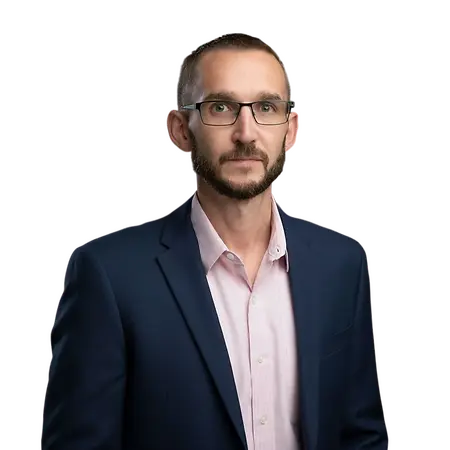
Bobby Rice
Senior Project Manager, Charlotte Glass Contractors
The decision that completely changed the direction of my career was moving from being focused solely on the technical side of projects to taking ownership of the people, planning, and leadership responsibilities that come with project management.
It was a difficult decision because it meant stepping outside my comfort zone. I was confident in understanding the work itself, but leading teams, managing client expectations, and being accountable for the overall success of a project carried a different level of responsibility. There was no longer anyone else to point to when challenges arose.
That transition shaped me into the leader I am today. It taught me that leadership is not about having all the answers. It is about creating solutions, building trust, and helping others succeed. The experience strengthened my ability to make decisions under pressure, communicate clearly, and remain accountable when the stakes are high.
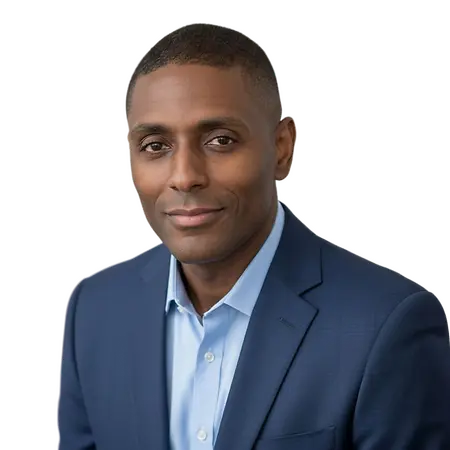
Stevens Michel
E-Commerce Supervisor, OKAY-Pure Naturals
One of the defining decisions in my career was leaving a job where I had become convinced that the environment was no longer right for me. At the time, leaving was difficult because I didn't know exactly what would come next, and finding another opportunity took time. But I eventually realized that I didn't have to remain in a situation that was unhealthy simply because it was a job.
The experience also taught me something more important about myself. Leaving was the right decision, but I realized afterward that I could have handled the situation better. Sometimes the lesson isn't simply that you need to walk away; it's learning how to recognize a difficult situation, respond intelligently, and avoid letting someone else's behavior dictate your own.
That experience changed how I look at work and leadership. I want to be someone who can handle difficult situations without losing perspective, knows when to stand his ground, and knows when it's smarter to step away. I don't consider myself a great leader yet, but I do want to become one. And I believe leadership starts with being able to manage yourself, make difficult decisions, and learn from the consequences of those decisions.
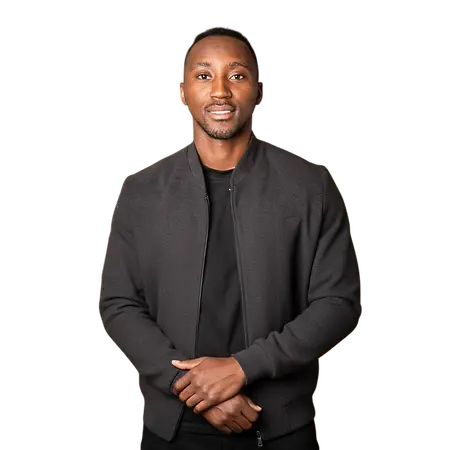
Felix
Senior Financial Analyst | Financial Planning & Analysis, Maverik, Inc.
The decision that changed everything was choosing to leave a path where I was already progressing in retail banking and start over in a completely different direction.
By that point, I had worked my way from entry-level roles into management, so stepping away from something familiar was difficult. I had stability, leadership experience, and a clear path forward, but I also knew I wanted to understand business at a deeper level and move closer to the decisions that shape how organizations grow.
That led me to pursue a degree in Business Analytics with a minor in Finance and eventually transition into corporate finance and FP&A. It was uncomfortable because I was trading certainty for possibility, but it completely changed the trajectory of my career.
Since then, I've been able to combine the people and operational lessons I learned in banking with financial modeling, analytics, automation, and strategic decision support. That decision taught me that growth often requires being willing to become a beginner again - and that the experiences you leave behind can still become some of your greatest advantages later.
It also shaped the kind of leader I want to be: curious, adaptable, willing to take calculated risks, and always focused on understanding both the numbers and the people behind them.
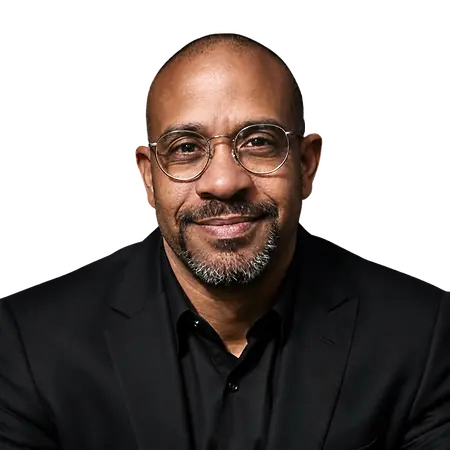
Ryan Crawford
Author and Ride / Control Engineer, Crawford Adventures
The decision that changed everything for me was choosing to stop waiting for permission and start acting like the leader I wanted to become.
For years, I thought growth came from titles, promotions, or someone noticing my potential. The turning point was realizing that leadership isn't something you're handed it's something you practice long before anyone gives you the role.
The decision was difficult because it forced me to confront the fear that I wasn't "ready," that I didn't know enough, or that stepping up would make me look arrogant. But once I pushed past that, everything shifted. I started taking initiative, documenting systems, training new people, and raising the standard around me.
That choice reshaped my entire direction. It taught me that influence comes from consistency, not position. It made me the kind of leader who builds others up, who solves problems before they become crises, and who treats every day like an opportunity to elevate the environment I'm part of.
That one decision to lead from where I stood became the foundation for every success that followed.
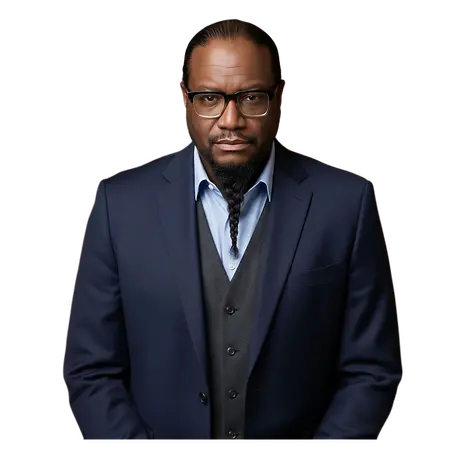
Christopher W Booker
Founder & Owner, The Booker's Brew & House of Booker LLC
Twenty-two years in corporate retail taught me something invaluable: I knew how to build systems, scale operations, and lead teams. What it didn't teach me was how to bet on myself.
That's the decision that changed everything leaving the security of a steady paycheck, a known path, and the validation that comes with a corporate title to build House of Booker from scratch.
The honest truth? It was terrifying. I had a family to provide for. I had children who needed options and opportunity. Walking away from consistent income and established credentials to start a digital media company wasn't a bold vision play it felt reckless, at least on paper.
But there was something else underneath the fear: a voice that kept saying, "If you're waiting for permission or perfect conditions, you'll wait forever." My father was a Marine. I grew up around people who understood that discipline and commitment matter more than comfort. That if you're going to do something, you do it with everything you've got.
The hardest part wasn't the risk. It was the self-doubt. Could I actually build something from nothing? Would I be a founder or just another person who quit?
That decision cracked me open in ways I needed. Failure isn't something to avoid it's how you learn. Systems matter more than you think. Integrity and consistency compound. Your "why" has to be bigger than the paycheck.
Eleven years later, House of Booker is a solid business. The Booker's Brew is growing on its own trajectory. And I'm still the person running both of them, still learning, still failing, still showing up.
The real victory isn't the businesses. It's that I stopped waiting for permission. That I learned the difference between calculated risk and recklessness. That I discovered I could actually build something I believe in, from the ground up, without a safety net.
Every entrepreneur knows this moment the point where you realize you're actually doing this, not talking about doing it. That's when the real work begins. And that's when you find out who you actually are.
The perfect timing won't come. The fear won't disappear. But you'll find out something crucial about yourself only by stepping into the uncertainty. That's worth everything.
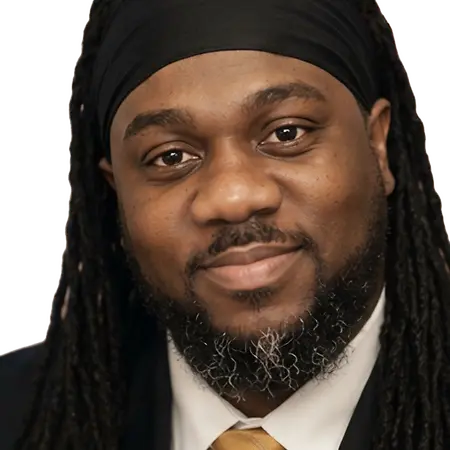
Carlton Grant Jr.
CRISIS COUNSELOR | MENTAL HEALTH ADVOCATE | HUMAN SERVICES PROFESSIONAL, Southern New Hampshire University
The decision that changed everything was choosing purpose over pain. After surviving an experience that nearly cost me my life, I realized I wanted my life to mean something. I chose to turn what I had been through into compassion for others. That decision led me toward crisis counseling, mental health advocacy, and service. It taught me that leadership isn't about having all the answers it's about showing up, listening, and helping people through moments when they may not see a way forward. Today, I'm building a future centered on service, family, and creating something that will continue helping others long after me.
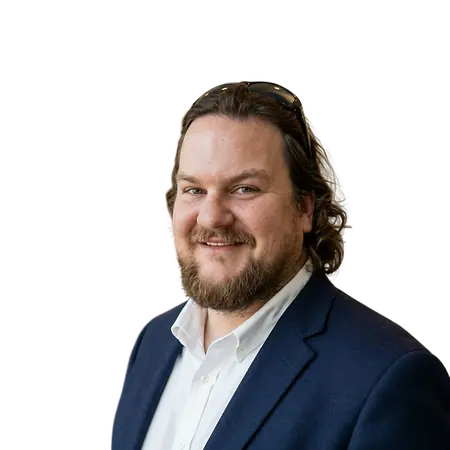
Christopher Keniley
Music Educator, Worship Leader, Business Owner, Chris K Music
The decision that changed everything was realizing there wasn't just one path to a successful career in music. Instead of waiting for the right opportunity, I learned to adapt, develop new skills, and create opportunities where I saw a need. That willingness to change and grow has shaped the musician, educator, entrepreneur, and leader I am today.
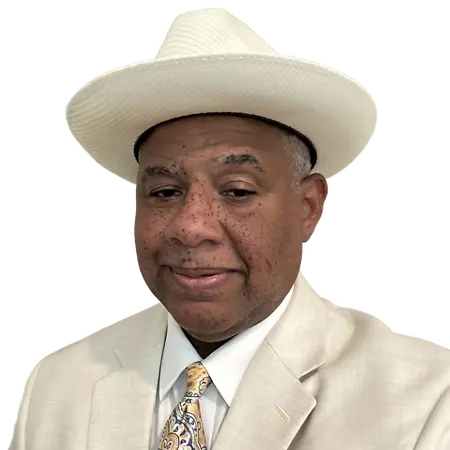
AJ Jones
Business Owner / Chef AJ, ColdVault by AJ
The decision that changed everything was realizing that I could build opportunities instead of waiting for them. That mindset transformed me from a participant in business into a creator of businesses, solutions, and impact.
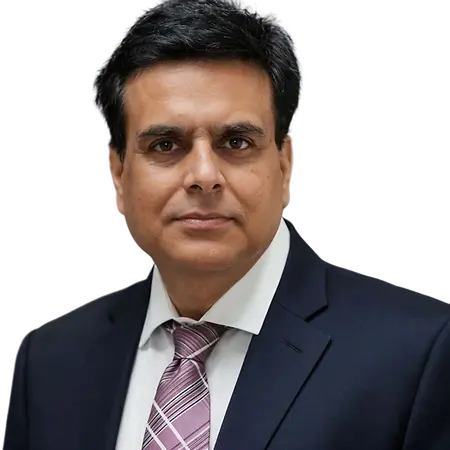
Phil Pathak
Senior Export Import Specialist, Winning as One DSV X SCHENKER
Choosing discipline over comfort was the decision that changed everything. It shaped my growth, my direction and the leader I am today.
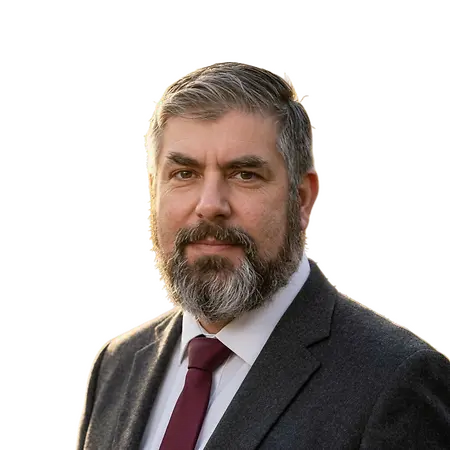
Aaron D Paker
Partner and Medicaid and Probate Specialist/ Author and Motivational Speaker, Life Point Law
Once I was forced to see that my mental health struggles did not make me unlovable, I had to make the hard choice to reframe my life in a way that would help others believe that they too were lovable. It requires a willingness to have uncomfortable conversations and to share my story with complete vulnerability that is contrary to most traditional advice. If the conversations I have were safe and easy, then there would be no need to work towards normalizing them.
Keep Reading