Some executives are so afraid of AI they won’t touch it. Others are so afraid of falling behind they’ll buy it before they know what to do with it. In both cases, I’d ask the same question: What does your business need to accomplish?
I believe most businesses can find an effective use for AI. That still leaves leadership with decisions to make. Who determined that AI was appropriate for this work? What result do you expect? How will you know whether you got it? The company defines the job. Then it chooses the tool.
Once you’ve determined that AI can help, the most important question is: Who will be responsible for how the company uses it?
If an employee uses AI to clean up a routine email, that employee can read it before hitting send. If you’re using AI to decide which products to discontinue, which markets to enter, or where to cut costs, you’re putting decisions that shape the future of the company in someone’s hands. How well does that person understand the business?
Say you ask AI which product line to drop. The numbers point to the one with the lowest margin. On paper, the answer looks reasonable. But what if that product is part of a customer contract? What if it brings in the customers who buy your most profitable products? What if the margin fell because of a supplier problem you’ve already fixed?
If the person responsible knows only what’s in the spreadsheet, how would they know to ask? And if they don’t ask, why would you rely on the answer?
The person overseeing that work needs to understand how the business makes money, what it has promised customers, and how a change in one part of the company affects the rest. They need access to the people and information that can fill the gaps, the judgment to know when to ask for critical data, and the authority to stop a recommendation from moving forward when the facts don’t support it. The less they know about the business, the more likely they are to accept an answer that looks right and leads the company in the wrong direction.
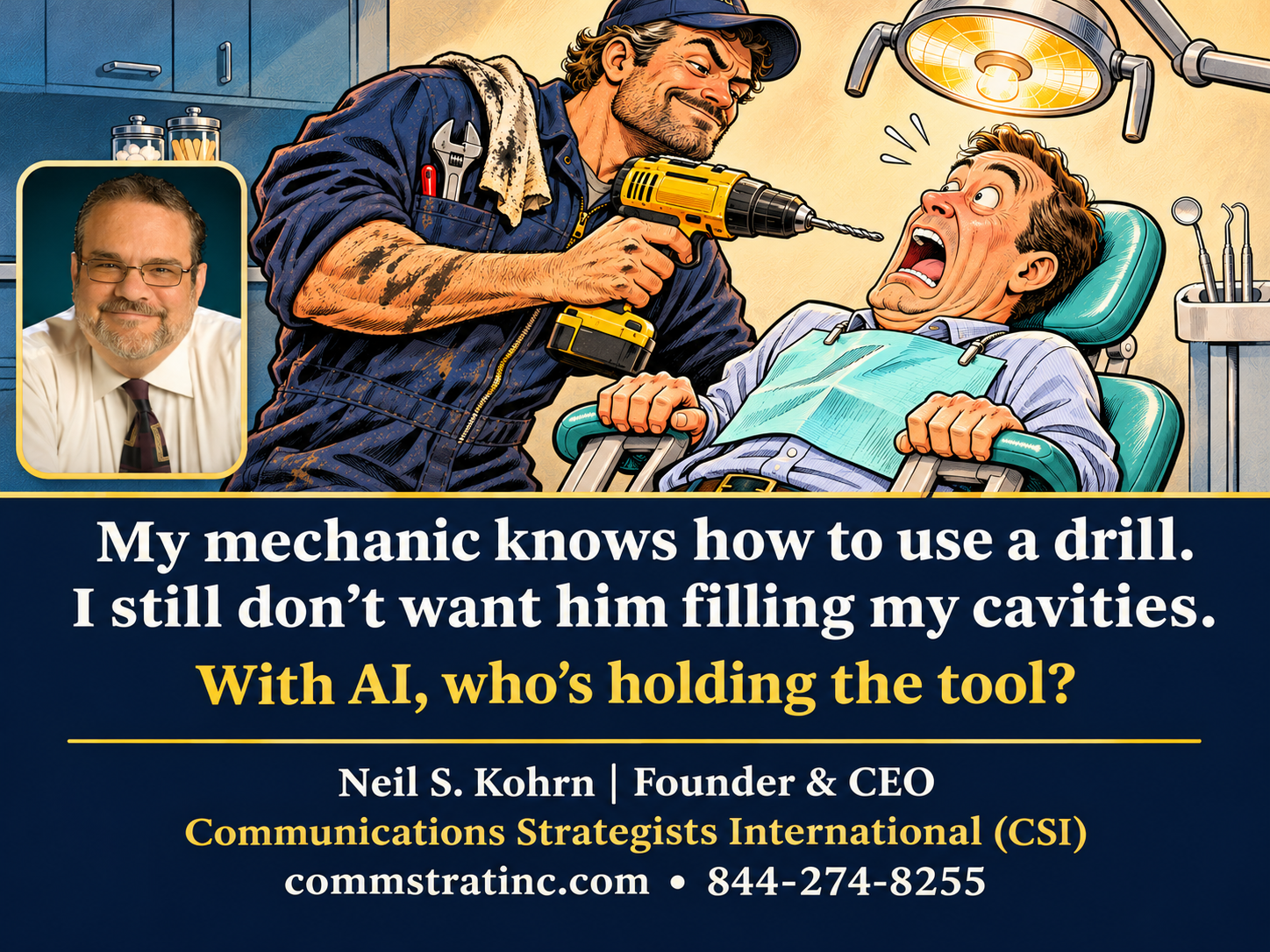
You hire a tutor because they know the subject and can see where you’re struggling. You hire a contractor because they know what to look for before opening a wall. You go to a licensed physician because you want someone who knows what your test results mean in the context of your health. You trust a mechanic who can diagnose the problem before charging you to replace a part. In every case, you’re paying for the judgment that comes with knowledge and experience. You’re entrusting someone with something of value.
Is the future of your business any less important?
When an AI recommendation could change the direction of your company, bring in a senior advisor who has actually run a business and lived with the consequences of those decisions. A good advisor will ask what you believe the obstacle is, talk to the people closest to the work, and look for evidence that challenges the initial diagnosis. Then they’ll second-guess the results, especially when the answer is exactly what leadership wanted to hear.
Think of that advisor as an investment in your company’s future. The value comes from finding the obstacle before you spend money solving the wrong problem and from asking what a recommendation could cost the business before you act on it.
Before you blame AI for a bad result, look at who chose it, what they asked it to do, what they gave it to work with, and who decided the answer was good enough to act on. If nobody can answer those questions, leadership has work to do.
Knowledge isn’t power; it’s survival.