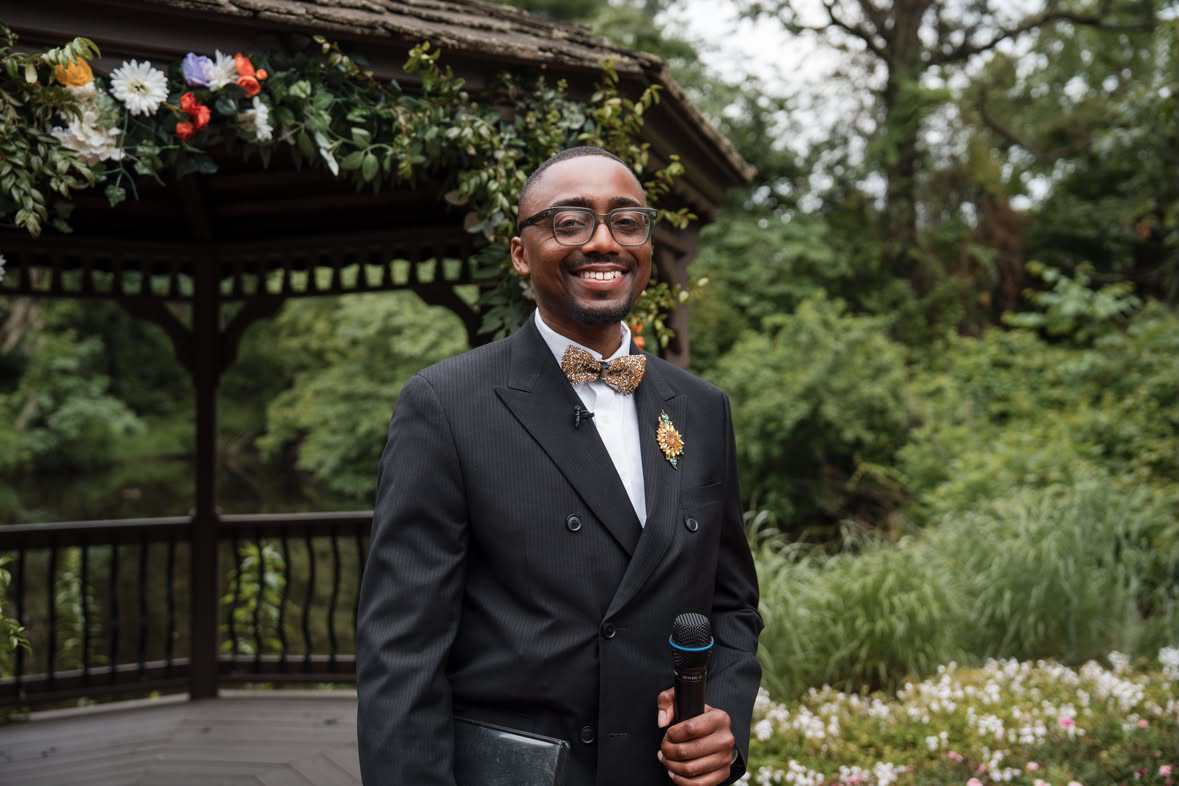
What happens when the career you build to support your life becomes just one part of the life you are determined to create? For Norman I. Graham, the answer lies in learning to honor his responsibilities without abandoning his ambitions.
There is a lesson Norman I. Graham has carried into adulthood from the memorable “Make the money, don't let it make you” line in the 1998 film The Players Club: money should be something a person manages, not something that ultimately controls them. It is an easy principle to repeat when discussing success, but a more difficult one to practice when bills are due, ambitions are growing, and the desire to do more keeps getting louder. For Graham, the lesson is about knowing when an opportunity is worth pursuing, recognizing when the price is too high, and remembering that the purpose of building a career is to create a life worth living. Financial success matters, but it should not become the only measure of whether that life is working.
His story is not a perfectly mapped journey from college graduation to entrepreneurial success. It is a story of changing directions, rediscovering old interests, learning through experience, and finding ways to make different parts of his life work together. Graham maintains a career in higher education while building businesses, participating in professional and community organizations, and continuing to develop himself. Each pursuit demands something different from him. Together, they reveal a man who is not interested in being confined to a single professional identity.
The dreams that never really disappeared
As a child, Graham imagined becoming a computer graphic artist. He did not follow that ambition into a college major or build his early career around graphic design. Yet the creative instinct that inspired the dream has found a place in his adult life. Today, he develops graphics and promotional content for his businesses, learning how to communicate visually with the audiences he hopes to reach. What once looked like an abandoned aspiration has become a practical skill within his entrepreneurial toolkit. It is a reminder that sometimes a childhood dream does not disappear; it waits for a different opportunity to become useful.
His academic path took him in another direction. At the University at Albany, Graham earned a bachelor's degree in journalism, drawn to a field that allowed him to explore his interest in writing and communication. But passion and practicality do not always arrive at the same destination. The financial realities of adulthood, including student loan obligations, required him to think about how his education could support a sustainable career. Journalism did not become the straightforward professional path he might once have envisioned, but writing remained part of his identity. Today, he uses it to create blog posts, explain his services, share professional insights, and communicate the personalities behind his brands. The degree continues to serve him, just not in the way he originally expected.
Graham later earned a master's degree in criminal justice, concentrating in victimology, from the University of New Haven. Although he did not pursue a traditional career in that specialty, the themes of advocacy and understanding people's experiences remain relevant to his involvement in community service. Through Alpha Phi Alpha Fraternity, Inc., he participates in work that helps bring attention to community needs and voices that can go unheard. His education has not dictated a single career destination. Instead, it has contributed to the perspective he carries into the different spaces he occupies.
There was another education happening alongside the formal one. Between 2008 and 2011, Graham held several undergraduate and graduate roles in higher education, including Student Assistant, Orientation Office Assistant, and Graduate Assistant. Those positions gave him opportunities to work with students, build relationships, and help people navigate unfamiliar environments. Years later, in 2016, he returned to higher education as an Admissions Counselor. The work brought him back to a setting he knew, but with greater responsibility for helping prospective students navigate the college application process and for training staff. He understands that what looks like an administrative task to one person can represent a major life decision to another. That awareness has helped shape his approach to service: understand the person in front of you before deciding what that person needs.
His experience as a chapter advisor for collegiate chapters of Alpha Phi Alpha reinforced another lesson: leadership is not simply about having a title or being the person in charge. It involves helping others move forward, addressing challenges, and recognizing that people will not always approach a situation with the same knowledge or perspective. Student leadership, fraternity involvement, and professional responsibilities have all given Graham opportunities to practice collaboration and accountability. Those experiences have helped him develop the tenacity to keep working through challenges rather than assuming every obstacle is a reason to change course.
Learning to believe in the person he was becoming
Yet professional development does not automatically erase personal doubts. Growing up, Graham sometimes felt that he did not quite measure up to the expectations of his peers or the standards society seemed to reward. He was personable and academically inclined, but he did not see himself as the most athletic or physically fit person in the room. During a time when being tough or excelling in sports could carry considerable social currency, he sometimes felt that his strengths were less visible. He knew certain paths were not for him, but understanding that intellectually did not always make it easier to feel comfortable in his own skin.
For a while, he believed being nice could compensate for the things he thought he lacked. As he matured, however, he began to understand that kindness was not a bargain in which he could exchange enough of himself to earn everyone's approval. Some people would appreciate him; others would not. No amount of effort could guarantee universal acceptance. The shift came when he began to invest more deliberately in his natural strengths, including critical thinking, intelligence, communication, and problem-solving. Instead of spending so much energy trying to fit into spaces that did not reflect him, he began looking for spaces where he could contribute meaningfully.
That lesson continues to inform how Graham approaches business and leadership. He does not need every person to understand his decisions, appreciate his personality, or recognize the value of every venture he builds. He needs to remain grounded in what he brings to the table while staying open to feedback that can help him improve. For someone whose work involves communicating with different audiences and building relationships across multiple industries, that distinction matters. Authenticity is not an excuse to stop growing. It is the foundation from which growth becomes more honest.
The moment the business had to become more than an idea
Graham's entry into entrepreneurship was not marked by a dramatic launch, an investor's check, or a perfectly executed business plan. His early notary journey was, by his own account, stagnant. Anxiety about making a mistake with a client's documents made it difficult to turn preparation into consistent action. He had invested in the materials and equipment needed to get started, yet those resources were not translating into the business activity he wanted. Eventually, a simple moment at home forced him to confront the distance between preparing to succeed and actually putting himself in a position to do so.
As he walked through his house and noticed the supplies he had purchased, Graham realized that he had been holding himself back from using what was already available to him. The problem was no longer simply a lack of resources. He needed to act, learn, and accept that building competence would require experience. He began registering with signing companies, developing his own marketing materials, and putting those materials in front of potential clients. Because hiring someone to design promotional content was not financially practical at the time, he learned to create it himself. Postal mail, email, his Google Business Profile, social media, and personal connections became ways to introduce his services to the community.
The early work was not glamorous. It involved researching opportunities, learning from educational content created by experienced notaries, asking questions, and figuring out how to communicate his value. He sought out people who had already encountered the mistakes he was trying to avoid, recognizing that learning from someone else's experience could save him time and frustration. He also learned that preparation could not eliminate every uncertainty. At some point, he had to trust what he knew, acknowledge what he still needed to learn, and take responsibility for the work in front of him. The business began to move when he stopped waiting to feel completely ready and started giving himself opportunities to become more capable.
That distinction is important for anyone who has purchased the equipment, registered the business, created the website, or completed the training but has yet to make the first meaningful move. There is a difference between building the foundation and standing on it. Graham's experience illustrates that the foundation matters, but it cannot do the work on its own. Eventually, the emails have to be sent, the conversations have to happen, the opportunities have to be pursued, and the skills have to be put into practice.
Building businesses around people, not just revenue
Today, Graham's entrepreneurial work includes Notarize With Norm, Wed By Norm, and Graham Family Signing Service. Although the businesses operate in different spaces, each reflects a distinct purpose. Notarize With Norm focuses on mobile notary and related services, helping clients navigate important document-signing needs with convenience and professionalism. Wed By Norm focuses on personalized wedding ceremonies, giving couples an opportunity to mark a significant life event in a way that reflects their relationship and preferences. Graham Family Signing Service provides a separate, family-centered signing service for its own clients and professional audiences. These ventures are not interchangeable, and each requires its own planning, communication, and operational decisions.
What connects them is Graham's understanding that people are trusting him with something that matters. A client arranging a notarization may be navigating an important transaction or a complicated personal circumstance. A couple preparing for a wedding is entrusting an officiant with a moment they will remember long after the ceremony ends. A professional partner making a referral is putting their own reputation behind the recommendation. In each situation, technical competence matters, but so does the experience of working with the person delivering the service. Being responsive, prepared, clear, and accountable is not an optional extra. It is part of the work itself.
His wedding-officiating journey also demonstrates how an unexpected opportunity can redirect a career. An opening arose when another notary needed help covering a wedding she could not accommodate. Graham was invited to consider officiating, and he was willing to explore what the responsibility required. That initial opportunity eventually contributed to the development of Wed By Norm, allowing him to combine communication, creativity, preparation, and a desire to create meaningful experiences. The lesson is not that every unexpected invitation should be accepted. It is that some opportunities deserve a closer look, particularly when they connect with skills and interests a person already possesses.
Preparation became especially important as he learned the demands of officiating. A wedding ceremony is not a setting in which an officiant should expect to improvise their way through every unfamiliar element. Graham has had to study rituals, rehearse unfamiliar procedures, and recognize when additional preparation is necessary. That commitment reflects a broader professional principle: clients should not have to absorb the consequences of a service provider's failure to prepare. Whether the task involves a document, a ceremony, or a professional commitment, taking the work seriously means anticipating what can be anticipated and being honest about what still needs attention.
The work nobody sees on the highlight reel
Entrepreneurship also requires learning how to operate when things do not unfold as expected. A business owner can create a plan, establish a policy, and prepare for an appointment, only to encounter a circumstance that reveals something the original plan missed. Graham has learned to treat those experiences as opportunities to reassess how he works. Policies may need refinement. Communication may need to be clearer. A process that seemed adequate at the beginning may need to evolve as the business grows. Continuous improvement is not proof that a person was never capable; it is part of the responsibility of remaining capable as circumstances change.
Consistency has been one of the most important factors in Graham's development. He continues to learn about his craft through podcasts, YouTube videos, social media discussions, professional education, and conversations with people who understand the work. He makes weekly task lists to help ensure that his businesses remain part of his priorities rather than activities he addresses only when time happens to appear. That structure matters when a full-time career already claims a substantial portion of the week. Without deliberate planning, entrepreneurial work can easily become a series of good intentions postponed until the next free evening.
He has also learned that growth does not happen entirely behind a computer screen. Attending networking events and connecting with other entrepreneurs have helped him build relationships with people who understand the realities of operating a business. Those relationships offer opportunities to exchange ideas, learn from others' mistakes, and talk honestly with people who are navigating similar challenges. Experienced colleagues have also entrusted him with signing assignments and introduced him to additional professional opportunities. Trust built over time can create possibilities that a marketing campaign alone cannot replicate.
Graham believes that networking must be reciprocal. It is not enough to appear when a person needs a referral, a favor, or an introduction. Professional relationships become stronger when people also contribute, share useful information, celebrate others' work, and look for ways to help without expecting an immediate return. He has supported fellow entrepreneurs by sharing their content and participating in professional communities, actions that can strengthen visibility and demonstrate genuine respect for their work. Over time, colleagues have also reflected back something he did not always recognize in himself: the ability to remain authentic while maintaining professionalism. That combination has become an important part of his personal brand.
He continues to invest in his communication skills through Toastmasters International, where practicing public speaking and organizing his thoughts helps him develop greater confidence and clarity. These are skills that travel across industries. A strong communicator can explain a service more effectively, navigate a difficult conversation, present an idea to a room, or help someone feel understood during an unfamiliar process. For Graham, professional growth is not restricted to acquiring another credential or launching another venture. It also means strengthening the skills that make every existing responsibility easier to handle well.
The nine-to-five is not the enemy of the dream
For people who work full time while trying to build something of their own, Graham's experience offers a different perspective on what commitment should look like. Entrepreneurship is often portrayed as an all-or-nothing decision: leave the job, take the risk, and devote every waking hour to the business. That narrative can make people feel as though their ambitions are less legitimate if they still depend on a regular paycheck. Graham's journey suggests otherwise. A full-time job can provide stability, professional experience, and a financial foundation while a business develops. Maintaining that stability does not mean someone lacks courage; it can mean they are choosing to build with intention.
The real challenge is managing competing responsibilities without allowing either side to become an afterthought. A business needs time, attention, and follow-through. A job comes with commitments to colleagues, supervisors, and the people who depend on the work being done. Personal relationships and health need attention, too. There are only so many hours available, which makes prioritization more valuable than simply trying to do everything. Graham's approach of putting business tasks on a weekly list is not a glamorous productivity secret. It is a practical way of making sure the goals he says matter actually receive some of his time.
His leadership experience has also reinforced that ambition and responsibility can coexist. Being a leader does not require shrinking oneself to make others comfortable, but it does require understanding the impact of one's decisions. It means being willing to speak up, accept feedback, and take ownership when something goes wrong. It means recognizing that a business's reputation is built through repeated actions, not just a well-designed logo or a compelling introduction. Graham is still learning how to balance those demands, and he does not present the process as effortless. The point is not to master every part of life at once. It is to keep making deliberate choices about the person and professional one wants to become.
Success should leave room for living
Outside work, Graham has been making a conscious effort to protect time for himself. Recently, regular sauna visits have become part of his routine. He has been aiming for three or four sessions a week, spending around half an hour away from the constant pull of his phone and daily responsibilities. Sometimes he reads; other times he closes his eyes and allows himself to be still. The appeal is not complicated. It is a chance to decompress, reset, and give himself a little breathing room in a life that can easily become dominated by the next task.
That routine also reflects a growing awareness that personal well-being cannot always be postponed until every professional goal has been achieved. There will always be another email to answer, another idea to develop, another opportunity to evaluate, or another responsibility waiting around the corner. If rest is only allowed once everything is finished, rest may never arrive. Graham's efforts to make room for recovery and support his fitness goals are part of a broader attempt to build a life in which professional ambition and personal health can coexist. The goal is not simply to work harder. It is to have the energy and perspective to enjoy what that work makes possible.
Travel is another important part of his outlook. Experiencing different places gives him something beyond a change of scenery: new perspectives, memorable experiences, and a reminder that the world extends far beyond the daily routine. For someone who spends considerable time planning, serving clients, and developing businesses, travel represents an opportunity to explore life outside the roles he performs for other people. It reinforces a version of success that includes freedom, curiosity, and the ability to create memories—not just the accumulation of professional milestones.
Graham's perspective on money has evolved alongside his ambitions. Revenue, recognition, and business growth are useful measures, but none tells the complete story. An opportunity can be financially attractive and still demand too much of a person's time or compromise their values. A busy schedule can look impressive while leaving little room for relationships, health, or enjoyment. He wants his work to create choices, not become the reason he has none. That requires being selective, understanding what each opportunity demands, and remembering that growth should support the life he is trying to build.
A legacy still in progress
Graham's next chapter is not limited to adding more names to a list of businesses. He is continuing to strengthen his professional reputation, develop his ventures, expand his relationships, and create opportunities to share what he has learned with others. His experience across higher education, entrepreneurship, public speaking, and community leadership gives him different ways to contribute. He can help clients through important moments, encourage emerging professionals to take their work seriously, and demonstrate how transferable skills can open doors in unexpected industries. As his work evolves, he has an opportunity to turn individual experiences into lessons that benefit people navigating their own paths.
His involvement in Alpha Phi Alpha, student leadership, and personal development through Momentum Education has contributed to an ongoing understanding that growth requires both self-belief and accountability. Confidence without preparation can lead to avoidable mistakes; preparation without action can leave potential unused. Graham has experienced the frustration of holding himself back, the value of learning from people with more experience, and the difference that consistent effort can make. He is still refining how he works and how he defines success. That honesty is part of the story, not a weakness to be edited out of it.
Perhaps the most useful lesson in Graham's journey is that a person's earlier choices do not have to dictate the limits of their future. The journalism graduate can still be a writer. The child interested in graphic design can become a self-taught creator of brand content. The higher education professional can also be an entrepreneur. The person who once questioned whether he was enough can learn to recognize the value of his own strengths without needing universal approval. These identities can coexist, and each can contribute something meaningful to the others.
For Graham, legacy is ultimately about what remains in the lives of people he serves and the opportunities he helps create. It is reflected in the trust a client places in him, the couple who remembers their ceremony, the colleague who recommends him for an assignment, the student who receives guidance at an important crossroads, and the entrepreneur who gains confidence from seeing someone else build while balancing existing responsibilities. The impact may not always be dramatic or immediately visible. Often, it is the cumulative result of showing up prepared, treating people well, correcting mistakes, and continuing to learn.
He is not offering a promise that every side business will become a full-time enterprise or that every ambitious person will achieve success on a predetermined schedule. His experience is more grounded than that. It is about taking stock of the resources already available, recognizing the skills that can transfer from one chapter to another, building genuine relationships, and doing the work consistently enough to give opportunity somewhere to land. Sometimes progress means launching something new. Sometimes it means improving a process, setting a boundary, asking for help, or making time to rest.
The life Graham is building remains a work in progress, and that is precisely the point. He is not defined by a single degree, job title, business, or accomplishment. He is defined by the way he continues to bring those experiences together, learning when to change direction and when to stay the course. His story offers a reminder to anyone finishing a long workday before turning toward a personal ambition: responsibility and possibility can occupy the same life. The next chapter does not have to wait for the perfect moment, and the path does not have to resemble the one originally imagined.
Ultimately, Graham wants the work to mean more than the money it earns or the recognition it attracts. He wants to build businesses that serve people well, relationships that endure beyond a single transaction, and a professional life that leaves room for curiosity, well-being, and continued growth. He wants the freedom to pursue new ideas without losing sight of what matters most. The titles may change, the ventures may evolve, and the plans may need to be rewritten. What remains is the intention behind them: to build a life that reflects who he is, creates value for others, and leaves a legacy worth carrying forward.