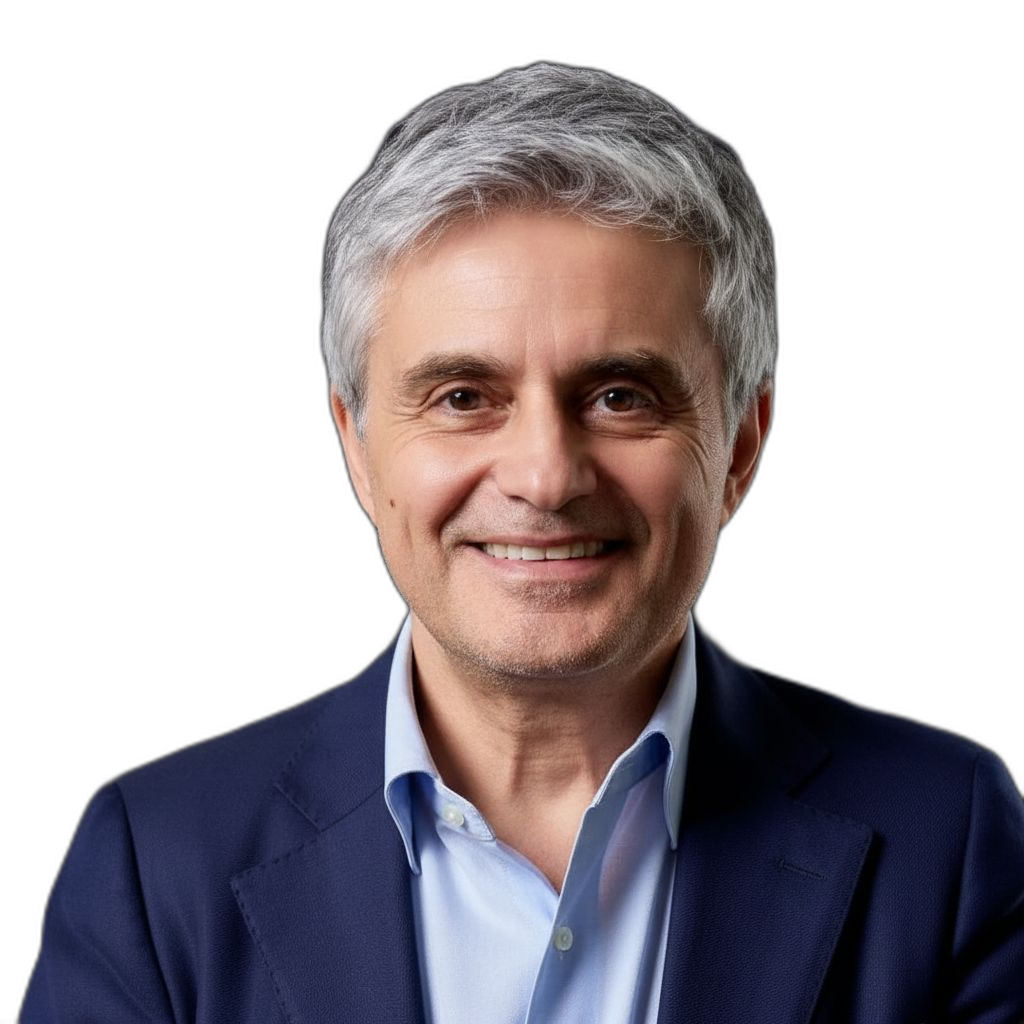
Fredric Lean Has Always Been Telling the Same Story
From documentary film to fine art, a French-born creative entrepreneur has spent a lifetime building worlds at the intersection of image, emotion, and culture - and his most ambitious chapter is unfolding right now in Miami.
- The Profile -
One Language, Many Forms
There is a particular kind of creative mind that refuses to be contained by a single medium. Film, publishing, visual art, gallery leadership - to an outside observer, these look like separate careers, separate chapters, separate identities. But for the rare practitioner who understands that all of it flows from the same source, the movement between forms is not restlessness. It is fluency. It is the recognition that storytelling is not a genre. It is a way of seeing the world.
Fredric Lean has spent his career demonstrating exactly that. Born in France to a French-Italian family, he grew up surrounded by music, cinema, art, and conversation - an atmosphere, as he describes it, in which creativity was simply part of the air. He later studied Film and Television at UCLA, formalizing an instinct that had been present long before any classroom. What followed was a multidisciplinary career spanning documentary filmmaking, comic book development, digital art, media production, and, most recently, the co-founding of Lina Cerrone Fine Art Gallery in Miami's Wynwood Arts District.
The stakes of that kind of career are real. Building across disciplines means building without a guaranteed audience at every turn. It means making films about Iraqi immigrants and exiles when that story is not the obvious commercial choice, and championing women in aerobatic aviation when that world sits just outside the center of mainstream attention. It means believing in the value of a story before the market has confirmed it - and having the discipline to see it through regardless.
That thread of conviction runs from Lean's earliest creative work all the way to the gallery he helps lead today. His documentary Iraq: The Wind of Hope - The Wind of Al-Amal was eventually screened at the United Nations High Commissioner for Refugees headquarters in New York. His documentary Skydancers, focused on women in aerobatic aviation, received multiple festival honors including recognition for directing, documentary filmmaking, concept, and cinematography. These were not accidental outcomes. They were the product of a creative sensibility shaped by patience, persistence, and an unwillingness to simplify difficult subjects.
"Film, comic books, digital art, and the gallery world may seem separate from the outside, but they all come back to storytelling. Once I understood that, my career made more sense. I was not changing paths. I was expanding the same language."
- Fredric LeanThe discipline behind that body of work is not glamorous to describe. Documentary filmmaking, particularly on subjects as sensitive as displacement and exile, requires trust that is built slowly and cannot be manufactured. Lean has spoken about his film on Iraqi immigrants and exiles as a project that required years of persistence - one that could not be rushed or treated lightly. That same patience, applied across different creative forms, is the throughline of everything he has built.
In the gallery context, that method translates into something concrete: the ability to stand behind an artist before the market fully understands them, to educate collectors not just about what a work looks like but about the larger narrative behind it, and to protect the integrity of the work even when uncertainty is present. It is a form of creative leadership that draws directly on the skills Lean developed as a filmmaker - the capacity to see potential early and hold a vision long enough for it to become real.
He is direct about where that capacity comes from. "Film taught me how to see. Documentary taught me how to listen. Comic books taught me how to build a world from imagination. Art taught me that a single image can contain an entire life." Each discipline, in his account, did not replace the previous one. It added to a growing vocabulary that he now brings to every artist conversation, every collector relationship, and every exhibition decision at the gallery.
A Gallery Built on Story
Lina Cerrone Fine Art Gallery occupies a deliberate position in Miami's Wynwood Arts District. Co-founded by Lina Cerrone and Fredric Lean, the gallery represents a curated selection of established and emerging artists from around the world, with a focus on distinctive visual language, cultural depth, and collector education. It functions as both an exhibition space and a cultural platform - hosting artist showcases, collector events, private viewings, educational experiences, and brand collaborations.
What distinguishes the gallery's approach is the insistence that art and business need not be adversaries. Lean's philosophy holds that artists need freedom but also structure, and that collectors need emotion but also knowledge - and that a gallery's job is to honor both sides of that equation simultaneously. That is not a common framing in the art world, where the commercial and the creative are often treated as separate concerns. For Lean, they are inseparable, and the failure to integrate them is what leaves both artists and collectors underserved.
The gallery's mission, as Lean describes it, is to make art feel alive, accessible, and meaningful while supporting collectors who want to engage with art as both an emotional experience and a long-term cultural asset. That dual emphasis - on feeling and on value, on the immediate and the enduring - reflects the same sensibility that shaped his documentary work: the belief that a story is not complete until it reaches the right audience, and that reaching that audience requires both creative integrity and strategic clarity.
"Success is building something that has meaning beyond you. In the gallery world, success is when an artist feels understood, a collector feels connected, and the work finds the right home."
- Fredric LeanWhat Lean's approach asks of him is considerable. Championing artists before the market confirms their value means absorbing uncertainty that most people would rather avoid. It means making decisions based on a long-term vision when short-term pressures are constant. It is the same temperament that allowed him to spend years on a documentary about Iraqi exiles before it found its audience at the United Nations, and to make a film about women in aerobatic aviation before that story had a mainstream platform.
He has reconciled that trade-off through a leadership philosophy grounded in vision, trust, and persistence. He does not describe leadership as controlling every detail or being the loudest voice in a room. He describes it as seeing potential early and having the discipline to protect it - and as creating an environment where artists feel respected, collectors feel guided, and the art remains at the center of every decision. That is a standard he applies to himself as much as to anyone around him.
The people who notice are the artists who feel genuinely understood, the collectors who develop a deeper relationship with the work they acquire, and the broader community of collaborators - curators, designers, writers, partners - who are drawn to a gallery culture built around purpose rather than transaction. In Miami's Wynwood Arts District, that kind of cultural seriousness is both rare and necessary.
Expanding the Reach, Keeping It Personal
The next chapter for Lina Cerrone Fine Art Gallery, as Lean describes it, is about expanding reach while keeping the experience personal. More exhibitions, more collector programming, more partnerships, and more opportunities for artists to be seen in the right context. He is paying close attention to a shift he sees among collectors - a move away from art as decoration or status symbol and toward art as something with meaning, provenance, cultural relevance, and a deeper connection to the artist behind it.
That shift, if it continues, positions a gallery like Lina Cerrone - built from the beginning around education, discovery, and long-term value - ahead of a market that is only now catching up to what Lean has believed for years. His background as a filmmaker who sought out overlooked stories, who spent years building trust with subjects before a camera ever rolled, is not incidental to that positioning. It is the foundation of it.
He is also clear about what drives him forward. It is not recognition, though that has come. It is not financial reward alone, though that matters. It is discovery - the next artist, the next story, the next way to connect people through art. As he puts it: the moment you think you know everything, you stop seeing clearly. For a man who has moved through film, publishing, digital art, and fine art without losing the thread, that clarity of vision is the most consistent thing about him.
The unusual path, he has learned, is not a liability. The things that make a story difficult to explain at the beginning may become the things that make it valuable later. That lesson, drawn from a career built across continents and creative forms, is the quiet argument that everything Fredric Lean has built has been making all along.
- Closing -
The Work That Continues to Matter
Fredric Lean stands today as a co-founder of one of Miami's distinctive international contemporary art galleries, an award-winning documentary filmmaker, and a creative entrepreneur whose career has moved through film, publishing, digital art, and fine art without losing its essential coherence. He operates at the intersection of cultural discovery and long-term vision, in a city and a district - Wynwood - that has become one of the most closely watched art communities in the Americas.
What his approach offers is a model for creative leadership that takes both the art and the audience seriously - that refuses to treat emotion and knowledge, freedom and structure, as opposites. What it asks is the willingness to stand behind something before the world has confirmed it, to build trust slowly, and to protect the integrity of the work even when the outcome is not guaranteed. That is not a comfortable position. It is a necessary one.
For collectors who want a deeper relationship with art, for artists who want to be understood rather than simply displayed, and for anyone paying attention to where cultural seriousness is being practiced in contemporary Miami, the gallery Lean has helped build is worth knowing. His career, taken whole, is a case study in what happens when a creative instinct is given the discipline and the patience to become something lasting.
The story is still being written - and he has always known how to tell one.
- About the Subject -
Fredric Lean
Co-Founder, Artist and Award-Winning Documentary Filmmaker
Fredric Lean is the Co-Founder of Lina Cerrone Fine Art Gallery in Miami's Wynwood Arts District, an artist, award-winning documentary filmmaker, producer, writer, and creative entrepreneur. Born in France to a French-Italian family, he studied Film and Television at UCLA and built a multidisciplinary career spanning documentary film, comic books, digital art, and fine art gallery leadership. His documentary Skydancers received multiple festival honors for directing, documentary filmmaking, concept, and cinematography, while his film Iraq: The Wind of Hope - The Wind of Al-Amal was screened at the United Nations High Commissioner for Refugees headquarters in New York. Today, through Lina Cerrone Fine Art Gallery, he champions international contemporary artists and connects collectors with art as both an emotional experience and a long-term cultural asset.