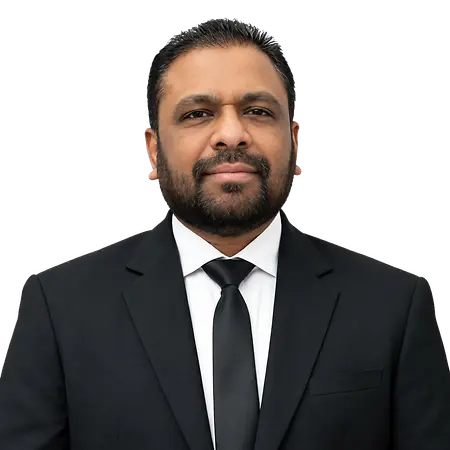
Kumar Singirikonda: A Technology Leader Advancing Innovation, Engineering Excellence, and Human-Centered Leadership
Introduction
Kumar Singirikonda is a technology executive, engineering leader, and technology thought leader whose professional journey reflects a commitment to innovation, operational excellence, continuous learning, and people development. With extensive experience in DevOps engineering, platform engineering, cloud infrastructure, site reliability engineering, data platforms, and enterprise technology transformation, Kumar has focused his career on helping organizations build reliable technology environments, improve engineering productivity, and translate technical capabilities into measurable business outcomes.
As a technology leader at Toyota North America, Kumar has led global engineering teams supporting mission-critical enterprise applications and data platforms. His leadership encompasses multiple disciplines, including DevOps enablement, platform engineering, site reliability engineering, infrastructure operations, release engineering, and technology compliance. Through these responsibilities, he has developed a broad perspective on the relationship between technology strategy, operational performance, organizational culture, and business value.
Beyond his technical expertise, Kumar believes that the most important responsibility of a leader is to create an environment where people can grow, teams can perform at their highest potential, and organizations can adapt to changing business demands. His leadership philosophy emphasizes trust, accountability, empowerment, collaboration, and the continuous development of future leaders.
Building a Career Around Technology and Business Transformation
Technology has become a fundamental driver of organizational success. Businesses increasingly depend on digital platforms, cloud infrastructure, enterprise applications, and data-driven decision-making to remain competitive. However, adopting new technologies is only one part of the transformation journey. Organizations must also develop the engineering capabilities, operational practices, and leadership cultures necessary to use technology effectively.
Kumar's professional focus reflects this broader understanding of technology transformation.
Throughout his career, he has worked across disciplines that connect infrastructure, application delivery, operational reliability, automation, and enterprise data capabilities. His experience has reinforced the importance of treating technology not simply as a collection of systems and tools, but as an integrated business capability.
His approach emphasizes identifying operational challenges, simplifying processes, reducing unnecessary manual work, improving service reliability, and creating repeatable engineering practices. By connecting technology initiatives to business priorities, he advocates for investments that deliver sustainable improvements rather than short-term technical achievements.
This perspective has become particularly important as enterprises manage increasingly complex technology environments. Hybrid infrastructure, cloud adoption, distributed applications, expanding data requirements, and growing security obligations demand coordinated engineering practices and disciplined execution.
For Kumar, successful transformation requires a combination of technical understanding, strategic thinking, effective communication, and a clear focus on outcomes.
Advancing DevOps and Platform Engineering
One of Kumar's principal areas of expertise is DevOps engineering, an approach that brings development and operations practices together to improve software delivery, collaboration, and operational performance.
Traditional technology organizations often struggle with fragmented responsibilities, manual processes, inconsistent deployment practices, and lengthy release cycles. These challenges can delay innovation, increase operational risk, and consume valuable engineering resources.
DevOps addresses these challenges by promoting automation, continuous integration and continuous delivery, standardized workflows, and shared responsibility for application performance.
Kumar has championed the importance of these practices in enterprise engineering environments. His perspective emphasizes that DevOps should not be viewed merely as a collection of tools or automation scripts. Instead, it should be treated as an operating model that improves the way people, processes, and technology work together.
Platform engineering extends this philosophy by providing reusable capabilities that enable development teams to build, deploy, and operate applications more efficiently.
Well-designed internal platforms can reduce duplicated effort, standardize security and compliance requirements, simplify infrastructure provisioning, and improve developer productivity. They also allow engineering teams to focus on delivering business capabilities rather than repeatedly solving common infrastructure problems.
Kumar's leadership interests include building engineering environments that balance standardization with flexibility. He believes successful platforms should make the preferred engineering approach easier to adopt while preserving the ability to accommodate legitimate business and technical requirements.
This balance is essential for organizations seeking to scale engineering capabilities without introducing unnecessary complexity.
Reliability, Automation, and Operational Excellence
As organizations become increasingly dependent on digital services, reliability has become a business priority rather than a purely technical concern.
Application interruptions, infrastructure failures, deployment problems, and performance degradation can affect customer experiences, employee productivity, operational continuity, and financial results.
Site reliability engineering provides a structured approach to addressing these challenges through measurable service objectives, automation, observability, incident management, and continuous improvement.
Kumar's professional interests encompass the development of reliable technology platforms and the operational practices required to sustain them. He recognizes that reliability cannot be achieved through monitoring alone. It requires a disciplined approach to architecture, deployment processes, capacity management, incident response, and problem prevention.
Automation is an important component of this strategy.
By automating repetitive operational activities, organizations can reduce human error, improve consistency, accelerate recovery, and release engineering capacity for higher-value work. However, automation must be designed carefully, with appropriate access controls, testing, monitoring, and recovery mechanisms.
Kumar advocates for a practical approach that begins with well-understood operational problems and expands as the organization develops confidence in its processes.
The objective is not to automate every activity indiscriminately. It is to identify where automation can deliver meaningful improvements in reliability, efficiency, security, and business performance.
Exploring Artificial Intelligence and Autonomous Operations
Artificial intelligence is creating new opportunities to transform how enterprises build, operate, and manage technology platforms.
AI can help engineering teams analyze operational data, identify unusual patterns, correlate events, summarize incidents, recommend corrective actions, and improve troubleshooting efficiency. When combined with established automation and observability practices, these capabilities can support more proactive and intelligent operations.
Kumar is particularly interested in the intersection of AI and DevOps, including AI-driven operations, intelligent automation, self-healing platforms, and autonomous infrastructure management.
A self-healing platform can detect a defined operational problem, evaluate possible responses, and initiate an approved corrective action. For example, an automated workflow might respond to an unhealthy application component, adjust capacity, or roll back a problematic deployment when predefined conditions are satisfied.
Such capabilities can help organizations reduce repetitive incident response and improve service recovery.
However, Kumar's approach to technological innovation is grounded in the importance of responsible implementation. AI-generated recommendations must be evaluated, automated actions must operate within defined boundaries, and high-impact decisions must retain appropriate human oversight.
Trustworthy AI-driven operations require reliable data, strong governance, clear accountability, and measurable results.
For enterprise leaders, the opportunity is to use AI not simply to introduce another technology layer, but to improve the quality and speed of operational decision-making.
Connecting Technology Investments to Business Value
Technology transformation must ultimately deliver business value.
Cloud migration, infrastructure modernization, automation, and platform engineering can generate substantial benefits, but those benefits are not automatic. Poorly governed implementations can increase complexity, create unnecessary costs, or introduce new operational challenges.
Kumar's professional interests include FinOps, cloud financial management, and the relationship between engineering decisions and financial outcomes.
FinOps encourages organizations to develop shared accountability for technology spending by bringing engineering, finance, and business teams together. It promotes visibility into cloud consumption, informed resource decisions, financial accountability, and continuous optimization.
This approach is especially valuable as organizations expand their use of cloud platforms, data services, and AI capabilities.
Kumar believes technology leaders should evaluate initiatives using measures that reflect their intended outcomes. These may include service availability, incident recovery time, deployment performance, engineering productivity, infrastructure utilization, operating costs, and customer impact.
The broader principle is that technology investments should be assessed according to the problems they solve and the value they create.
By establishing clear objectives and measuring results, leaders can make more informed investment decisions, prioritize meaningful improvements, and communicate technology's contribution to organizational performance.
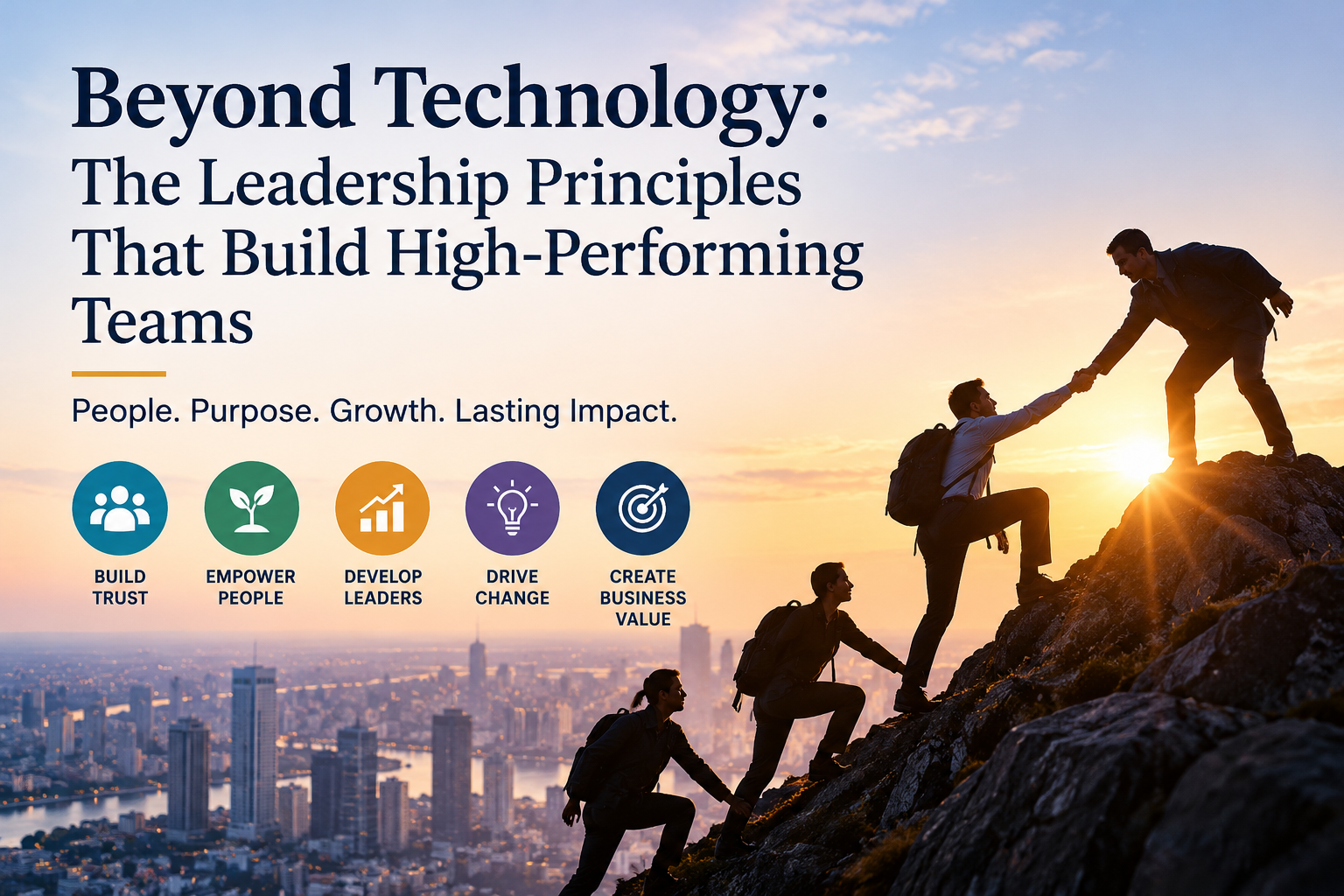
A Leadership Philosophy Centered on People
While technology provides the foundation for digital transformation, people determine how effectively organizations use it.
Kumar believes that effective leadership begins with trust and a clear sense of purpose. Employees perform more effectively when they understand organizational objectives, recognize the value of their contributions, and have the confidence to take ownership of their responsibilities.
His leadership philosophy emphasizes empowering people rather than micromanaging them.
Leaders must establish clear expectations, provide the necessary resources, define appropriate boundaries, and allow capable individuals to make decisions. This approach encourages initiative, strengthens accountability, and creates opportunities for professional growth.
Trust must also be supported by honest communication and consistent behavior. Leaders build credibility by listening to different perspectives, acknowledging challenges, keeping commitments, and accepting responsibility for their decisions.
In complex engineering environments, these qualities are particularly important. Teams must collaborate across functions, communicate risks, challenge assumptions, and respond constructively when unexpected problems occur.
Kumar believes that creating an environment where people can raise concerns and learn from mistakes strengthens organizational resilience. Accountability remains essential, but it should be combined with a commitment to understanding problems and preventing their recurrence.
For him, leadership is not about having every answer. It is about creating the conditions in which teams can identify problems, develop solutions, and continuously improve.
Developing Future Leaders and High-Performing Teams
An organization's long-term success depends on its ability to develop people who can take on greater responsibilities.
Kumar views mentoring and leadership development as important elements of effective management. Experienced leaders have an opportunity to share knowledge, provide guidance, create meaningful learning experiences, and help emerging professionals build confidence.
Leadership development extends beyond formal training. It involves giving people opportunities to lead projects, coordinate across teams, present recommendations, make decisions, and learn from the results.
These experiences help individuals develop judgment, communication skills, accountability, and the ability to navigate uncertainty.
Kumar also believes that leaders should avoid creating organizations that depend excessively on individual expertise. When knowledge and decision-making remain concentrated in a small number of people, organizations become vulnerable to disruption and growth becomes more difficult.
Developing future leaders, documenting important knowledge, establishing clear responsibilities, and encouraging collaboration help create stronger and more sustainable organizations.
His philosophy is captured in a simple principle: the value of leadership extends beyond personal achievement to include the growth and success of others.
Contributing to the Professional Community
Kumar's professional interests extend beyond his immediate organizational responsibilities. Through industry engagement, professional advisory activities, and thought leadership, he contributes to discussions about technology innovation, engineering practices, and organizational development.
His involvement in professional and academic communities reflects an interest in connecting practical industry experience with broader conversations about business and technology.
He is particularly interested in how organizations can prepare their workforces for emerging technologies, develop future-ready engineering capabilities, and create leadership cultures that support continuous learning.
Kumar also recognizes the importance of sharing knowledge across professional communities. Technology evolves rapidly, and no individual or organization has all the answers. Industry collaboration allows professionals to exchange experiences, discuss emerging challenges, and learn from different approaches.
For aspiring leaders, he believes curiosity and continuous learning are essential. Professional growth requires remaining open to new ideas, questioning established assumptions, and adapting leadership practices to changing circumstances.
Looking Ahead: Building Organizations Prepared for the Future
The next phase of enterprise transformation will be shaped by artificial intelligence, automation, platform engineering, cloud technologies, data-driven decision-making, and evolving expectations for digital services.
These developments will create opportunities to improve productivity and innovation, but they will also introduce new challenges involving governance, security, financial accountability, workforce development, and organizational change.
Kumar believes technology leaders must prepare for these changes by building strong foundations rather than pursuing innovation without a clear purpose.
Organizations need reliable engineering practices, scalable platforms, effective governance, and people who can combine technical expertise with sound judgment.
They must also create cultures in which employees are encouraged to learn, experiment responsibly, collaborate across boundaries, and take ownership of outcomes.
For Kumar, the future of technology leadership lies in bringing these elements together: technical excellence, business awareness, responsible innovation, and human-centered leadership.
Conclusion: Creating a Legacy Through People and Purpose
A successful leadership career is often associated with organizational achievements, technological innovation, and measurable business results. These accomplishments matter, but they represent only part of a leader's lasting contribution.
The deeper measure of leadership is what continues after a leader moves on.
Have people developed the confidence and capabilities to lead? Are teams better equipped to solve complex problems? Has the organization established stronger practices, improved its resilience, and created opportunities for others to succeed?
These questions reflect the leadership philosophy that guides Kumar's professional perspective.
He believes that technology creates its greatest value when it empowers people, solves meaningful problems, and supports sustainable business outcomes.
As organizations navigate an increasingly complex digital landscape, leaders must look beyond immediate targets and consider the capabilities, cultures, and relationships they are building for the future.
Ultimately, enduring leadership is not defined solely by personal accomplishments or professional recognition. It is defined by the people who grow, the organizations that become stronger, and the positive impact that continues long after individual achievements have been celebrated.
For Kumar Singirikonda, that is the true purpose of leadership: to combine innovation with responsibility, performance with empowerment, and professional success with a lasting commitment to helping others succeed.