In today's rapidly changing business environment, leadership is often measured by results, innovation, and the ability to navigate uncertainty. Organizations expect leaders to deliver business outcomes, embrace new technologies, improve operational efficiency, and prepare their teams for the future.
Yet, behind every successful transformation is something more fundamental than strategy, technology, or process: people.
Throughout my career in technology leadership, I have learned that building a successful organization requires more than technical expertise or strong execution. It requires creating an environment where people feel trusted, understand their purpose, take ownership of their work, and have the opportunity to grow.
Technology changes constantly. Business priorities evolve. Organizational structures shift. But the principles of effective leadership remain remarkably consistent.
The most successful leaders are not those who attempt to have every answer. They are those who build teams capable of finding answers together.
1. Lead with Purpose, Not Just Targets
Every organization has performance indicators, delivery commitments, financial objectives, and operational goals. These measures are important, but they do not automatically inspire people to perform at their best.
People need to understand why their work matters.
A leader's responsibility is to connect everyday activities with the organization's broader mission. Engineers should understand how improving platform reliability supports customers. Operations teams should see how reducing recurring incidents improves business continuity. Project teams should understand how their work contributes to organizational growth.
When people understand the purpose behind their responsibilities, they can make better decisions without waiting for constant direction.
I believe effective leaders communicate the destination clearly while giving their teams the flexibility to determine the best route.
This approach creates alignment without unnecessary control. It encourages individuals to think beyond their immediate assignments and consider the larger business impact of their decisions.
Leadership principle: Give people a clear purpose, measurable outcomes, and the freedom to determine how they will achieve them.
2. Build Trust Before Demanding Results
Trust is one of the most important foundations of a high-performing organization.
Employees are more likely to take initiative, raise concerns, share ideas, and accept responsibility when they believe their leaders will treat them fairly.
Trust is not built through speeches or organizational announcements. It develops through consistent behavior.
Leaders build trust when they keep their commitments, communicate honestly, listen to different perspectives, and accept accountability for their own decisions.
Equally important is how leaders respond when something goes wrong.
In technology organizations, incidents, unsuccessful deployments, missed deadlines, and unexpected challenges are inevitable. When leaders respond by immediately assigning blame, employees may become reluctant to report problems or challenge assumptions.
A better approach is to understand what happened, identify contributing factors, and determine how the organization can prevent similar problems in the future.
Accountability remains essential, but it should focus on learning, ownership, and improvement rather than creating a culture of fear.
Trust does not mean lowering expectations. It means creating an environment where people can meet high expectations without worrying that every mistake will become a personal failure.
3. Empower People Instead of Micromanaging Them
One of the most important transitions in leadership is learning to move from personally solving problems to developing people who can solve them independently.
Early in a career, individual expertise often creates value through direct execution. As responsibilities expand, a leader must recognize that personal productivity has limits.
A leader responsible for a large or geographically distributed organization cannot make every decision, review every detail, or personally resolve every operational issue.
Trying to do so creates bottlenecks and prevents employees from developing their own judgment.
Empowerment begins by establishing clear expectations, defining decision-making boundaries, providing the necessary resources, and trusting capable people to take ownership.
This does not mean abandoning oversight. Leaders must remain engaged in priorities, risks, performance, and outcomes. The difference is that they focus on enabling success rather than controlling every activity.
For example, instead of prescribing every technical decision, a leader can establish architectural principles, security requirements, financial guardrails, and service reliability objectives. Teams can then make implementation decisions within those boundaries.
This model creates consistency while allowing teams to move faster.
The true measure of a leader is not how many decisions they make personally, but how many good decisions their organization can make without them.
4. Develop Future Leaders, Not Just Strong Employees
Organizations that depend entirely on a few experienced individuals are vulnerable to disruption.
When critical knowledge, relationships, or decisions remain concentrated in a small number of people, growth becomes difficult and succession becomes risky.
Effective leaders deliberately develop the next generation of leadership.
This requires identifying potential, providing meaningful responsibilities, offering constructive feedback, and creating opportunities for employees to lead initiatives beyond their immediate roles.
It also requires allowing people to learn from challenges.
A promising employee may need opportunities to manage a complex project, coordinate across departments, present recommendations to executives, or make decisions with incomplete information.
These experiences develop capabilities that formal training alone cannot provide.
Mentoring is equally important. Leaders should share the lessons they have learned, including the decisions that did not produce the expected results. Honest conversations about mistakes and difficult trade-offs can help emerging leaders develop sound judgment.
Succession planning should not be treated as an administrative exercise performed only when someone leaves. It should be a continuous investment in organizational resilience.
When leaders help others grow into larger responsibilities, they strengthen both the individual and the organization.
5. Lead Change by Creating Clarity
Change is a permanent feature of modern business.
Organizations introduce new technologies, redesign processes, restructure teams, adopt new operating models, and respond to changing customer expectations.
Although leaders may see the strategic reasons for change, employees often experience uncertainty about what it means for their responsibilities, skills, and future.
Successful change leadership requires more than announcing a new direction.
Leaders must explain why change is necessary, what outcomes the organization expects, and how success will be measured. They must also listen to concerns and acknowledge the practical challenges of implementation.
In technology organizations, transformation frequently involves modernizing legacy platforms, introducing automation, adopting cloud services, or changing established engineering practices.
These initiatives can fail when leaders focus exclusively on tools and technical milestones while overlooking the people responsible for adopting them.
Training, communication, collaboration, and employee involvement are essential components of successful transformation.
I believe leaders should treat change as a journey that requires both direction and participation.
The destination must be clear, but the people doing the work should have opportunities to contribute ideas, identify risks, and improve the implementation approach.
6. Make Decisions with Data, but Never Ignore People
Modern leaders have access to more information than ever before.
Business intelligence, operational dashboards, financial reporting, and performance analytics can reveal trends that were previously difficult to identify.
Data helps leaders understand where performance is improving, where resources are being consumed, and where intervention may be necessary.
However, data does not tell the entire story.
A productivity metric may show that a team is delivering fewer projects, but it may not explain whether the team is managing additional complexity, supporting an unstable platform, or addressing technical debt that has accumulated over many years.
Similarly, an employee's performance cannot always be understood through a collection of numerical indicators.
Effective leaders combine evidence with context, professional judgment, and direct conversations.
They use data to ask better questions rather than to avoid difficult discussions.
This balance is particularly important when making decisions about organizational design, investment priorities, employee development, and operational performance.
The objective is not to choose between data and human judgment. It is to use both to make better decisions.
7. Create a Culture of Accountability and Psychological Safety
High-performing teams need two conditions that may initially appear contradictory: people must feel safe enough to speak honestly, and they must remain accountable for their commitments.
Psychological safety allows employees to raise concerns, challenge assumptions, admit uncertainty, and identify potential problems without fear of humiliation or retaliation.
Accountability ensures that individuals take responsibility for their decisions, communicate risks, and follow through on commitments.
One without the other creates problems.
A culture with accountability but little psychological safety can discourage people from reporting issues. A culture that emphasizes comfort without responsibility can struggle to maintain standards.
Leaders must establish both.
This begins with clear expectations, consistent feedback, transparent decision-making, and fair treatment.
When employees identify a risk early, leaders should encourage the behavior even when the information is uncomfortable. When commitments are missed, leaders should examine the circumstances, address performance gaps, and agree on corrective actions.
The objective is to create an environment where people can be honest about problems and remain committed to solving them.
Such a culture improves collaboration, accelerates learning, and strengthens organizational resilience.
8. Connect Operational Excellence with Business Value
Leadership effectiveness is ultimately demonstrated through outcomes.
In technology organizations, those outcomes include service reliability, customer experience, security, innovation, delivery speed, and financial performance.
However, technical activity alone does not guarantee business value.
An organization can deploy new tools without improving productivity. It can migrate infrastructure to the cloud without controlling costs. It can automate processes without eliminating unnecessary complexity.
Leaders must therefore connect technical investments to measurable business objectives.
Before launching an initiative, they should ask several questions:
- What business problem are we solving?
- How will this initiative improve customer or employee outcomes?
- What risks will it reduce?
- How will we measure success?
- Are the expected benefits greater than the cost and effort required?
This perspective encourages teams to prioritize meaningful outcomes rather than activity for its own sake.
It also helps technology leaders communicate more effectively with business stakeholders, finance teams, and executive leadership.
The strongest technology organizations understand that engineering excellence and business performance are not separate objectives. They reinforce each other.
9. Remain a Student of Leadership
Experience is valuable, but experience alone does not guarantee growth.
Business environments change, new generations enter the workforce, and technologies reshape how organizations operate. Leadership approaches that worked well in one situation may not be effective in another.
Great leaders remain curious.
They seek feedback, learn from peers, study emerging trends, and question their own assumptions. They recognize that listening is as important as communicating and that expertise in one area does not eliminate the need to learn in another.
Continuous learning also requires humility.
Leaders do not need to demonstrate that they know everything. They need to create the conditions in which the organization can continue learning.
In my view, leadership maturity is reflected not only in the decisions a person makes but also in their willingness to reconsider those decisions when new evidence emerges.
The willingness to learn keeps leaders relevant and helps organizations adapt without losing sight of their values.
Conclusion: Leadership Is Measured by What Continues After You
Leadership is often associated with titles, authority, recognition, and business achievements. These measures may describe a person's position or accomplishments, but they do not fully capture the lasting impact of leadership.
A more meaningful measure is what remains after a leader moves on.
Are there people who have developed the confidence and capability to take on greater responsibilities? Can the organization continue to perform without depending on a few individuals? Have better processes, stronger values, and a more collaborative culture taken root? Are teams better prepared to handle the next challenge?
These are the outcomes that define enduring leadership.
Throughout a leadership career, there will be difficult decisions, unexpected setbacks, and moments when the right path is not immediately clear. In those moments, purpose, trust, accountability, and a commitment to learning become essential.
Organizations succeed when leaders recognize that their responsibility extends beyond delivering immediate results. They must build environments where people can grow, teams can innovate, and future leaders can emerge.
Ultimately, leadership is not about becoming indispensable. It is about building people and organizations that are capable of achieving more than they could before you arrived.
That is the legacy worth building.
About the Author
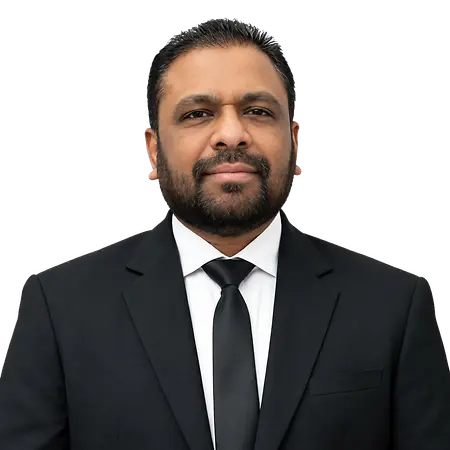
Kumar Singirikonda is a technology executive and engineering leader with expertise in DevOps, platform engineering, site reliability engineering, cloud engineering, infrastructure automation, and enterprise transformation.
He has led global engineering teams supporting mission-critical enterprise applications and data platforms, focusing on operational excellence, engineering productivity, technology modernization, and business value creation.
Kumar is passionate about developing high-performing teams, empowering future leaders, and helping organizations navigate technological change. His leadership philosophy emphasizes trust, accountability, continuous learning, and aligning technology strategy with measurable business outcomes.
Through his professional leadership and industry engagement, he advocates for a collaborative approach to innovation in which people, processes, and technology work together to build resilient organizations and sustainable business success.