Worth Doing Right
After 25 years in the dirt, Jimmy Steudl still measures a career by the work that holds—and by the people who have to live with it.
North Myrtle Beach, South Carolina
There is a moment at the end of a day when the machines go quiet and a man can tell the truth about the work. Either the grade will hold, or it will not. Either somebody went home safe, or they did not. Jimmy Steudl has been answering those two questions for 25 years. He has never learned to separate them, and he has never found a meeting that answered them better than standing on the dirt.
Steudl currently works as field operations manager for L.M. McLamb & Son Construction Co., Inc., the Calabash contractor that began in 1961 when tobacco farmers Lennon McLamb and his son, Jimmy Allison McLamb, rented a dozer and went to work. The company is still family-owned, still in its third generation, and still built on civil work that cannot be faked. Over 25 years, his jobs have run the full range of that work: residential and commercial site development, state and local government contracts, highway and bridge-adjacent construction, land clearing, utilities, storm drainage, grading, water treatment, and even a concrete fishing pier. A pier has to live in salt and weather. A treatment plant has to work when nobody is watching. A subdivision pad has to drain after the first hard rain. Different owners. Same standard. Nobody ever put a storm pipe on a billboard. That is fine with him.
The work runs from Calabash north through Wilmington and everywhere in between. Steudl lives on the South Carolina side, in North Myrtle Beach, and drives through the same coastal weather the jobs do. He knows what a two-day rain does to a haul road. He knows that idle iron is not a maintenance note. It is a promise you made to a crew and an owner that you are about to break. Forecasts, in his experience, are a suggestion. Mud is a fact.
His professional standard is firm because the work is unforgiving. Equipment has to stay productive. Bottlenecks have to come out of the week before they become speeches. Crews need a clear target at daylight, not a pep talk. Projects under his direction are consistently finished ahead of schedule and on or under budget. He is not romantic about that record. He is protective of it. A job that comes in early and under budget still fails if the work will not last or if somebody gets hurt putting it in. Coming in early does not impress him if the first rain has to finish the job.
If the job’s worth doing, it’s worth doing right.
He says it without raising his voice. That is the point. Quality, in his hands, is not a speech. It is the decision to leave a grade alone until it is actually finished. It is stopping work when conditions are wrong, even when production is hungry for the day. It is looking a younger operator in the eye and refusing the shortcut that would make the afternoon easier and the next rain expensive. He has never met a shortcut that stayed short.
The crews still call him Noodle. The nickname has outlasted titles, and he lets it. He has been called worse by people who liked him less. Affection on a jobsite is not the same thing as softness. He leads with respect and with a directness that does not leave people guessing where they stand. Hard conversations are part of the obligation. Panic is not. Panic, he has noticed, is excellent at creating extra work and poor at moving dirt. A crew that is treated like adults will tell you the truth while there is still time to fix it. A crew that is only managed by pressure will hide the problem until it costs real money—and sometimes more than money.
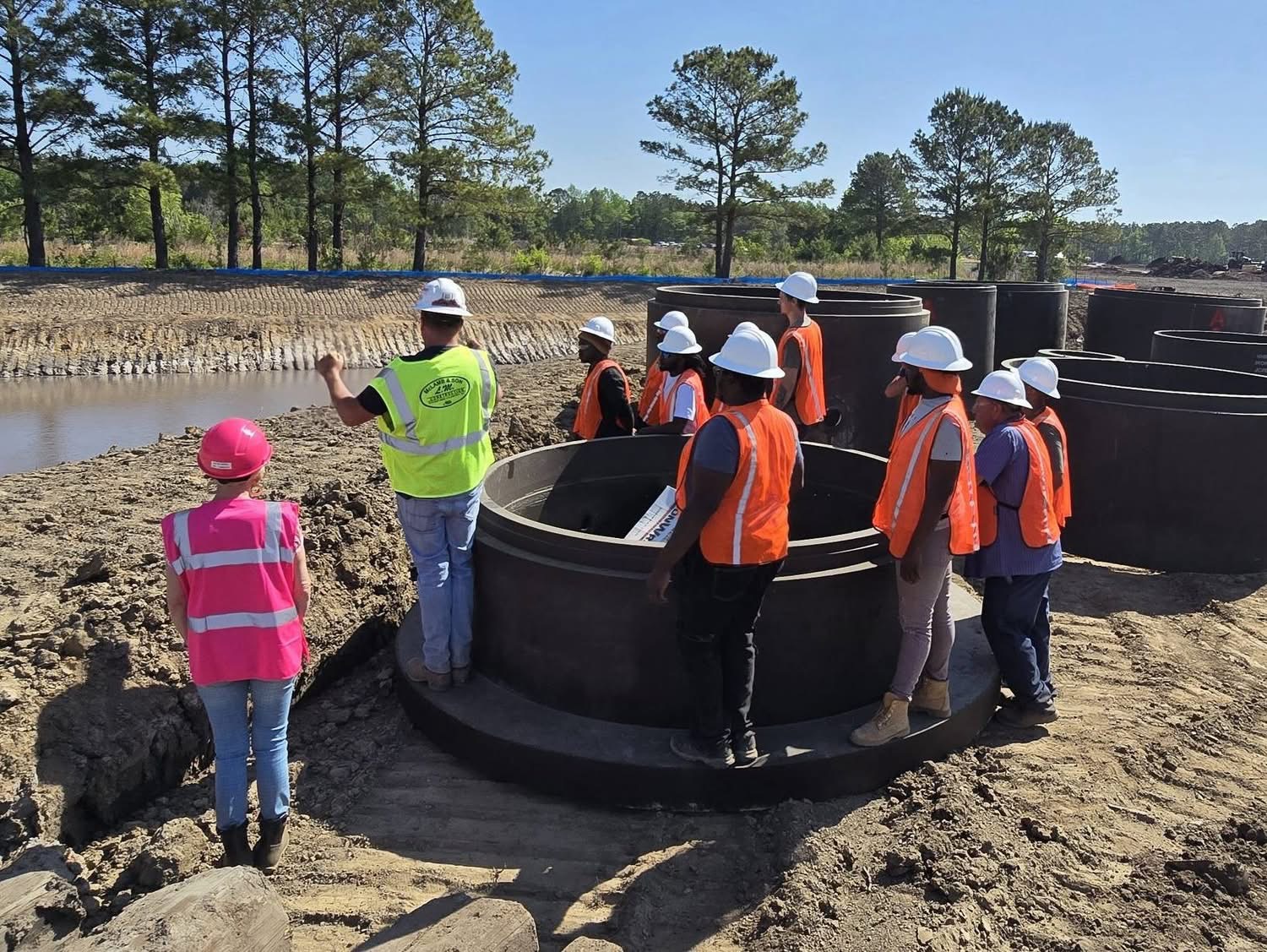
What he wants to leave behind is not a title on a card. Titles change. Habits last. He wants a younger superintendent or foreman who already knows how to weigh a day’s production against a day’s risk and who will not accept work that only looks finished. That is not only a jobsite habit. Steudl has spoken to construction management and heavy equipment operator classes at Horry-Georgetown Technical College and Southeastern Community College, standing in a room instead of on a pad and still talking about the same things: production, safety, and work that holds. He does not treat those visits as community service. He treats them as part of the job.
It’s been an honor to talk with these students who are interested in a construction career, something I’ve greatly enjoyed.
Twenty-five years means nothing, he believes, if the next man in line has to learn every hard lesson over again. He would rather be slightly boring and correct than interesting and wet.
When the trucks shut down, he goes home to Susan, his two sons, Evan and Mason, and Roxanna, the family’s Brittany spaniel, who is unimpressed with production numbers and very impressed with the door opening. That is not a caption. It is the reason the standard stays high. The people who wait for him at the house are the same kind of people who wait for every man on his jobs. They deserve a husband and a father who comes home. They deserve work in the ground that does not come back as someone else’s problem.
The Carolinas will keep growing. The question is whether field leadership can still deliver in a market short of operators, tight on equipment, and impatient with delay. Steudl’s answer is the same one he gives a crew at daylight, and it has not improved with age, which is the idea. Keep the iron running. Tell the truth early. Finish the work so it holds. And if the job is worth doing, do it right.