When the Church Leaves You
“I didn’t walk away from the faith. The denomination I loved began treating Scripture as a book to be updated by the culture instead of the absolute Word that judges the culture, and I was not the only one who had to choose.”
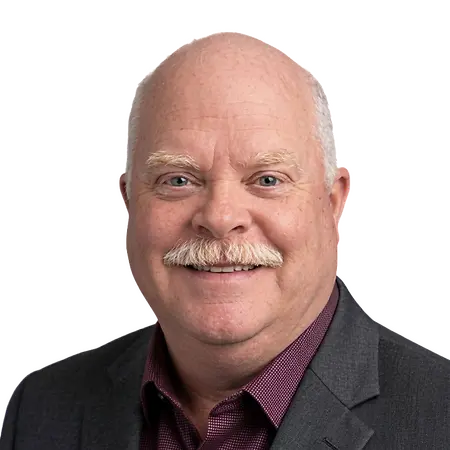
R. Kent Wise, D.Min.
I. The Leaving
In May 2019, I handed back my credentials as an ordained elder in the United Methodist Church. I had served in that church for seventeen years.
That is not a small thing to say. Those credentials were not a card in my wallet. They were the church saying to me, "We trust you with the Word and with the people." I served churches in Virginia: Union, Dillwyn, North Mecklenburg, and Bellevue. I loved the people in every one of them. I still do.
And I love Wesleyan theology. I always have. John Wesley's insistence that Scripture comes first—before tradition, before reason, before experience—is the faith I was formed in. Nobody had to talk me into it. It was home.
So I did not leave because I stopped loving Wesley or because I stopped loving the people. I left because the leadership of the church I loved had begun to read the Bible a different way. Scripture was no longer the absolute Word that judges the culture. It had become a book we adjust so the culture will accept it: relevant first, true second. When the question is no longer "What does God say?" but "What will the world still listen to?" something essential has already been lost.
I want to be honest about what that leaving cost. It was not a victory. I did not walk out feeling like I had won an argument. I walked out grieving. You do not give back seventeen years of ministry without feeling it. The church had been my home, my calling, my people. Leaving it felt like leaving home.
But I could not stay and pretend. If the Word is not absolute, then nothing underneath us is solid. And I had to choose between the institution I loved and the Scripture I believed. I chose the Scripture.
That is what this article is about. Not bitterness. Not a score to settle. It is about what happens when the Church leaves you, when the people who are supposed to guard the Word begin to let it go, and the ones who still believe it have to decide where they stand.
II. Relevancy vs. Absoluteness: What Actually Changed
The change did not happen all at once. It never does. It happened the way a river changes course, a little at a time, until one day you look up and the water is running somewhere else entirely.
The question used to be simple: "What does God say?" That was the starting point. Scripture was the absolute Word. It was fixed, settled, given. Our job was not to improve it. Our job was to obey it, preach it, and let it judge us.
Somewhere along the way, the question changed. It became: "What will people still listen to?" Scripture was still quoted, still loved in words, but it was treated as a living document, something to be adjusted so the culture would accept it. Relevant first. True second. And once relevance becomes the measure, the Word stops being the authority. It becomes a resource we use when it agrees with us and set aside when it doesn't.
Paul saw this coming. He told Timothy, "The time will come when people will not put up with sound doctrine. Instead, to suit their own desires, they will gather around them a great number of teachers to say what their itching ears want to hear" (2 Timothy 4:3). That is not a prediction about the world outside the church. That is a warning to the church itself. Paul stated that the day would come when the people of God would rather be comforted than corrected.
John Wesley understood the danger. He gave us the quadrilateral: Scripture, tradition, reason, and experience. However, he never meant them to be equal partners. Scripture comes first. It tests the tradition, guides reason, and judges experience. Wesley said it plainly: "O give me that book! At any price, give me the book of God!" A man of one book. That is the Wesleyan faith I was formed in, and it is the faith I still hold.
Here is the difference, stated as plainly as I can: when Scripture is absolute, the church can change the world because the church has something solid to stand on. When Scripture is only relevant, the world changes the church because the church has nothing left to stand on that the world hasn't already approved.
That is what changed. Not the hymns. Not the people in the pews. The foundation. And once the foundation moves, everything built on it moves with it.
III. The Numbers: A Nation Drifting
I did not only feel the change. I can see it in the numbers. And the numbers tell the same story my own leaving told. We were witnessing a nation, and a church, slowly letting go of the Word.
Pew Research talked to about 37,000 American adults in 2023 and 2024. In 2007, 78 out of every 100 Americans called themselves Christian. Today, it is 62. In that same time, the number of people who claim no religion at all rose from 16 to 29 out of every 100. That is not a small shift. That is nearly a third of the country walking away from any religious home at all.
And the sharpest drop was not somewhere out on the edges. It was in the mainline churches. Churches like the one I served. Mainline Protestants fell from 18 percent to 11 percent. The churches that tried hardest to stay relevant lost the most people.
Take the church I served. The United Methodist Church was once the largest Protestant denomination in America, with 11 million members in 1968. By 2019, the year I left, it was down to about 6 million. Today, it is 3.8 million. Between 2019 and 2023, more than 7,600 congregations, representing a quarter of the denomination's churches in America, walked out and disaffiliated. And the bleeding has not stopped: it lost another 174,000 members in a single year. That is not a denomination trimming its edges. That is a denomination losing its center. All because when the Word stops being absolute, the people stop seeing a reason to stay.
Gallup found the same thing from another angle. For more than eighty years, Gallup asked Americans whether they belonged to a church. Through most of the last century, about seven in ten said yes. In 2020, for the first time ever, that figure fell below half, to 47 percent. Only 36 percent of millennials belong to a church at all.
Barna looked closer still, at what they call "practicing Christians." These are people who say they are Christian, go to church at least once a month, and say their faith is very important to them. In 2000, that was 46 out of every 100 adults. In 2025, it was 24. Nearly halved. Half the country still carries the name, but only a quarter is actually practicing the faith.
I want to be honest about what the numbers do not say, too. Pew found that the decline has leveled off since about 2019. The free fall has slowed. But a plateau is not a recovery. Sixty-two percent is still a long way from seventy-eight. The bleeding slowed, but it did not reverse.
So here is the plain truth the numbers leave us with: we are becoming a nation that keeps the name Christian and loses the very thing itself. Fewer people believe. Fewer belong. Fewer practice. And the churches that adjusted the Word to keep the culture listening are the ones that emptied fastest.
That is not an accident. When the Word stops being absolute, there is nothing left worth belonging to.
IV. The UMC as a Case Study
If you want to see the national numbers up close, look at the church I served.
The United Methodist Church was once the largest Protestant denomination in America. But the argument that finally split it had been running for fifty years. The argument was over same-sex marriage and ordination, but underneath it all was the authority of Scripture. In 2019, the church held a special General Conference to settle it. The traditional position won the vote, barely. And then the denomination did something it had never done: it opened a door and let churches leave with their property, as long as they paid for it.
That door was Paragraph 2553, and it stayed open from 2019 to the end of 2023. More than 7,600 congregations walked through it—about a quarter of all United Methodist churches in America and about a quarter of its members. About half of them joined the new Global Methodist Church. The rest went independent. Then the door closed. The 2024 General Conference ended the disaffiliation path and removed the old restrictions. The debate, officially, was over.
But the leaving is not over. In October 2026, Highland Park in Dallas, the denomination's second-largest church, with 15,000 members, voted about 90 percent to leave. Churches in Texas, South Carolina, and Alabama are in court right now, trying to get out. The window closed, but the people keep going.
That tells me something the national numbers alone cannot. This was not a slow drift. It was a decision made by thousands of congregations, one vote at a time. Why? Because when a church stops treating the Word as absolute, the people who still believe it will find somewhere else to stand. The split was not the cause. The split was the symptom. The cause was the foundation moving.
And that is why I tell this story. Not to bury a denomination, but to warn the rest of the church: the same choice is in front of every congregation now.
V. “Lord, Lord”
Jesus said something that should stop every churchgoer in their tracks.
"Not everyone who says to me, 'Lord, Lord,' will enter the kingdom of heaven, but only the one who does the will of my Father who is in heaven. Many will say to me on that day, 'Lord, Lord, did we not prophesy in your name and in your name drive out demons and in your name perform many miracles?' Then I will tell them plainly, 'I never knew you. Away from me, you evildoers!'" (Matthew 7:21–23).
Read those words slowly. These are not atheists Jesus is talking to. These are not people who rejected Him. These are religious people. They are the people who prophesied, who cast out demons, who did mighty works in His name. People who were sure they belonged to Him. And His answer to them is the most terrible sentence in all of Scripture: "I never knew you."
That is the verse this whole article has been walking toward, and it is the verse our moment in history is living out. The numbers tell the same story the verse tells. Sixty-two percent of Americans still call themselves Christian. Only 24 percent actually practice the faith. A nation can keep the name and lose the thing itself. A church can keep the building, the hymns, the language—and lose the Lord it claims to serve.
Here is what I need you to hear: this warning is not aimed at the world. The world never claimed to know Him. This warning is aimed at us. It is aimed at religious people, at church people, at people like me who have spent their lives in sanctuaries and pulpits. Jesus is not warning the far country. He is warning the front pew.
So the question is not whether we say "Lord, Lord." Plenty of people say it. The question is whether He knows us. Whether our faith is a living relationship with the living Christ or a label we wear and a building we attend. A label will not answer for you on that day. Only a life given to Him will.
That is why the absolute Word matters. It is the only thing that can tell us the truth about ourselves before it is too late to hear it.
VI. What Remains: The Hope and the Call
But I did not write this article to end in despair. The same data that tells the hard truth tells another one, too, and it is worth hearing.
Barna found that 66 percent of American adults say they have made a personal commitment to Jesus that is still important to them. That number is up twelve points since 2021. That number represents roughly 30 million more people. Think about that. While church membership fell and practicing faith shrank, personal commitment to Jesus grew. People have not stopped wanting Him. They have stopped trusting the institutions that left the Word.
That is the hope, and it is a real one. The remnant is real. In every generation, God keeps a people who still believe the Book, still pray, still gather, still stand on the Word when the ground shifts under them. I have met them. I preach to some of them every Sunday. They are not loud, and they are not many by the world's count, but they are there, and they have not moved.
And here is the other thing the numbers say: the free fall has slowed. Pew found the decline leveling off since about 2019. That is not a revival. But it is a floor. It means the bleeding can stop. It means the question is no longer whether the fall will end, but what we will build on the ground where it ended.
So here is the call for those who were left, and for any church willing to hear it. Come back to the absolute Word. Not the Word as a resource. Not the Word as a suggestion. The Word as the authority that judges us, corrects us, and saves us. The church that leaves you cannot take Scripture from you. It is still there. It has not moved an inch. Open it again. Stand on it again. Preach it again, all of it, not just the parts the culture applauds.
The future of the church will not be built on relevance. It will be built on the ones who stayed with the Book when staying cost them something. That is where the hope is. That is where I am standing.
VII. Closing
I left a denomination. I did not leave the Lord.
That is the sentence I keep coming back to, and it is the sentence I want to leave with you. The grief is real. I will not pretend otherwise. I still love the church I served for seventeen years, and I still love the people in it. Leaving cost me something, and it still does.
But the ground under my feet has not moved. The Word that called me, the Word I preached, the Word I built my life on is still there, unchanged, unmoved, and true. A denomination can leave you. A church can leave you. The Lord does not leave you, and His Word does not change.
So if the church has left you, if you have watched the institution you loved trade the absolute Word for the approval of the culture, hear me: you are not alone, and you are not lost. The Book is still open. The door is still open. Come back to the Word, and you will find that the One who spoke it has been standing there all along, waiting for you to come home.
Sources for the Statistics
The figures in this article are drawn from published sources, named here so the reader can check them:
- Pew Research Center, Religious Landscape Study 2023–24 (about 37,000 U.S. adults) — pewresearch.org
- Gallup, “U.S. Church Membership Falls Below Majority for First Time” (March 2021) — news.gallup.com
- Barna Group, State of the Church / practicing Christians and commitment to Jesus data (2000–2025) — barna.com
- The United Methodist Church, “Ending disaffiliation” reporting and General Council on Finance and Administration membership data, as reported by The Christian Post (October 2026) — umc.org
Scripture quotations are given in the text with their references: 2 Timothy 4:3 and Matthew 7:21–23.