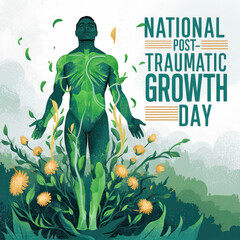
When Survival Becomes Leadership: Turning Personal Trauma Into Social Change
How the most difficult chapters of our lives can become the foundation for purpose, advocacy, and lasting impact.
By Daniel Ryan Cotler
Founder, Heal Loudly Movement | Author, Voiceless No More: The Legal War on Narcissistic Abuse
There is a kind of leadership that is not born in boardrooms, cultivated through professional ambition, or measured by titles and achievements. It emerges in the aftermath of experiences that fundamentally change a human being. It develops when someone who has been silenced discovers the courage to speak, when someone who has been stripped of their identity begins rebuilding it, and when someone who has witnessed the failures of a system decides that surviving those failures is not enough.
Some of the most transformative leaders are not people who set out to lead. They are people who encountered something so profoundly wrong that remaining silent became impossible.
But there is an important distinction between surviving adversity and transforming it into meaningful change. Pain does not automatically create wisdom. Trauma does not inherently make someone stronger. And suffering, despite the inspirational narratives society often attaches to it, is not a prerequisite for leadership.
What matters is what happens when lived experience becomes a source of understanding, when understanding develops into purpose, and when that purpose evolves into something capable of improving the lives of others.
This is where survival can become leadership.
The Leadership We Rarely Recognize
Society has traditionally defined leadership through authority, achievement, influence, and the ability to direct others. We celebrate entrepreneurs who build companies, executives who transform industries, and public figures who command attention. Yet some of the most important forms of leadership begin without resources, recognition, or institutional support.
They begin with a person asking a question that nobody seems willing to answer.
Why are certain forms of suffering consistently overlooked? Why do institutions designed to protect people sometimes fail to recognize the very harm they are supposed to prevent? Why are individuals experiencing psychological abuse so frequently misunderstood, disbelieved, or expected to demonstrate injuries that cannot be photographed?
These questions are not merely personal. They expose gaps in how society understands human vulnerability, power, and accountability.
For survivors of prolonged psychological abuse, the journey toward finding those answers can be particularly difficult. Emotional manipulation, coercive control, intimidation, humiliation, and systematic attacks on a person's credibility can leave consequences that extend far beyond the relationship itself. The effects can reach into employment, friendships, physical health, financial security, and the fundamental ability to feel safe.
Yet the public conversation surrounding abuse still frequently centers on isolated incidents rather than sustained patterns of behavior.
That disconnect creates an opportunity for a different kind of leadership: one grounded in recognizing what conventional systems have failed to see.
When the Experience Becomes Bigger Than the Individual
My own journey into advocacy did not begin with a desire to establish a movement or become a public voice on psychological abuse. It began with the experience of trying to make sense of profound harm and discovering how difficult it could be to communicate that harm to people and institutions that did not understand its complexity.
What I eventually recognized was that my experience was not occurring in isolation.
Across different communities, backgrounds, genders, and relationships, people were describing remarkably similar experiences. They spoke about losing their identities within abusive relationships, struggling to explain manipulation that unfolded over months or years, and encountering disbelief when they attempted to seek help.
Many described a second layer of suffering that emerged after the original abuse: the experience of having their reality questioned, their credibility attacked, or their requests for protection dismissed.
This realization changed the direction of my work.
The question was no longer simply how one person could recover from what had happened. It became how society could develop a more sophisticated understanding of psychological abuse so that fewer people would have to navigate these experiences without recognition, resources, or meaningful protection.
That shift—from personal survival to collective responsibility—became central to the creation of the Heal Loudly Movement and my book, Voiceless No More: The Legal War on Narcissistic Abuse.
The purpose was not to build an identity around victimization. It was to challenge the conditions that allow certain forms of victimization to remain invisible.
The Difference Between Having a Voice and Creating Change
Finding your voice after being silenced is an extraordinary personal milestone. But leadership requires something beyond being heard.
It requires asking what that voice can accomplish.
There is a temptation, particularly in an era dominated by social media, to confuse visibility with impact. A message can reach thousands of people without changing a single institution. A personal story can generate enormous attention without creating a pathway toward prevention, education, or reform.
Awareness matters, but awareness alone is not transformation.
The challenge for survivor-led advocacy is to translate personal experiences into broader conversations that can influence how people recognize harm, how professionals respond to it, and how communities support those affected.
That means moving beyond individual stories to examine recurring patterns. It means encouraging more informed conversations about coercive control, psychological trauma, post-separation abuse, and the ways abusive dynamics can continue through social, financial, technological, and legal channels.
It also means recognizing that lived experience, while valuable, must work alongside credible research, professional expertise, and careful examination of existing laws and institutional practices.
The strongest advocacy does not ask society to replace evidence with emotion. It asks society to become better at recognizing evidence it has historically overlooked.
Leadership becomes meaningful when it connects human experience with practical solutions.
Why Men Must Be Part of This Conversation
For men, particularly those raised with rigid expectations surrounding masculinity, admitting vulnerability can carry an additional burden.
Men are frequently taught that strength means independence, emotional control, and the ability to endure hardship without asking for help. Even as conversations about men's mental health have become more visible, many still struggle to reconcile the expectation of strength with the reality of experiencing fear, humiliation, helplessness, or psychological injury.
For male survivors of intimate partner violence, these expectations can become barriers to disclosure and recovery.
Gay and bisexual men may encounter additional challenges, including stigma, assumptions about what abuse looks like between two men, and concerns about whether their experiences will be taken seriously.
Abuse does not become less damaging because the person experiencing it is male. Psychological trauma does not distinguish between genders, sexual orientations, professional accomplishments, or social standing.
Yet our cultural understanding of victimization has not always reflected that reality.
We need a broader definition of masculine strength, one that does not require men to deny their humanity to preserve their dignity.
There is strength in acknowledging that something harmed you. There is strength in seeking support, establishing boundaries, and refusing to perpetuate destructive patterns. And there is leadership in creating spaces where other men no longer feel compelled to suffer in silence.
The goal is not to redefine men as victims. It is to recognize that vulnerability and strength have never been mutually exclusive.
The Responsibility That Comes With Turning Pain Into Purpose
Survivor-led leadership carries enormous potential, but it also carries responsibility.
Personal experiences can provide powerful insight into problems that institutions have failed to address. They can expose blind spots, challenge assumptions, and bring urgency to conversations that have remained abstract for too long.
But experience alone does not make every conclusion correct, nor does suffering place someone beyond accountability.
Effective advocacy requires intellectual honesty, a willingness to examine evidence, and the ability to distinguish personal interpretation from established fact. It requires recognizing that complex social problems rarely have simple explanations and that meaningful reform depends on more than identifying what is wrong.
This is especially important when discussing psychological abuse, trauma, and mental health. Popular language can sometimes move faster than scientific understanding, creating confusion between clinical diagnoses, behavioral patterns, and personal experiences.
Survivors deserve language that helps them understand what happened without reducing complicated human behavior to simplistic labels.
They deserve systems that respond to credible evidence, recognize patterns of coercion, and protect due process for everyone involved.
And they deserve advocacy that is grounded not only in passion but also in accuracy, fairness, and an unwavering commitment to improving outcomes.
The credibility of a movement is strengthened when its principles remain consistent, even when those principles require difficult conversations.
From Personal Advocacy to Institutional Change
One of the most significant challenges facing social reform is the tendency of institutions to evaluate problems individually while overlooking the patterns connecting them.
This is particularly relevant to psychological abuse.
A threatening message may be examined as a single communication. A campaign of humiliation may be treated as a series of unrelated incidents. Repeated unwanted contact, intimidation, manipulation, and interference with a person's daily life may be considered separately, even when the cumulative pattern reveals something more significant.
Understanding the relationship between individual acts and sustained patterns is essential to recognizing coercive control and other forms of prolonged abuse.
Through the Heal Loudly Movement, I have sought to contribute to a broader conversation about these gaps, including the need for better survivor education, stronger institutional awareness, and legal approaches that can more effectively evaluate patterns of harmful behavior while preserving fundamental protections.
The long-term objective is not simply to encourage people to tell their stories. It is to help create conditions in which those stories can lead to better prevention, more informed responses, and meaningful accountability.
This work also requires collaboration.
Survivors bring lived experience. Researchers bring scientific understanding. Attorneys and policymakers bring knowledge of legal structures. Mental health professionals bring clinical expertise. Educators and community leaders help translate these perspectives into resources people can use.
No single voice can accomplish systemic change alone.
The role of leadership is to bring those voices into a conversation that is larger than any one person.
Healing and Leadership Are Not the Same Thing
There is another distinction that deserves attention: becoming an advocate does not mean someone has completed their healing.
Public narratives often present recovery as a linear progression. A person experiences adversity, overcomes it, discovers a purpose, and emerges transformed.
Real life is rarely that simple.
Healing can be uneven. Someone may become highly effective at supporting others while continuing to navigate the emotional consequences of their own experiences. They may achieve professional success while still struggling with trust, grief, exhaustion, or the loss of the life they once imagined.
This does not invalidate their leadership. It makes the need for boundaries and self-awareness even more important.
Purpose can provide meaning, but it cannot substitute for recovery. Advocacy can create community, but it cannot replace personal support. And helping others should never require someone to continuously expose their most painful experiences for public consumption.
Survivors do not owe the world their suffering.
Their value is not determined by how much pain they can transform into something productive.
A healthy movement must recognize that people deserve the opportunity to heal privately, live peacefully, and build fulfilling lives beyond the experiences that brought them into advocacy.
The ultimate measure of success should not be how effectively survivors continue telling stories about their trauma. It should include whether future survivors encounter fewer barriers, greater understanding, and more opportunities to reclaim their lives.
Redefining What It Means to Leave a Legacy
We often associate legacy with wealth, influence, recognition, or accomplishments that endure beyond an individual's lifetime.
But there is another way to measure what a person leaves behind.
Did they make it easier for someone else to ask for help? Did they challenge a harmful assumption? Did they create language that helped someone understand an experience they had never been able to explain? Did they contribute to changing a system that had failed others?
These accomplishments may not always come with public recognition, but their consequences can be profound.
For me, the meaning of leadership has increasingly become connected to this understanding of legacy.
The goal is not to be remembered simply as someone who survived extraordinary adversity. It is to contribute to a world in which people experiencing psychological abuse have access to better information, stronger support, and institutions capable of responding with greater understanding.
That is a far more meaningful ambition than recognition alone.
It transforms the question from "What happened to me?" into "What can be changed because I understand what happened?"
And perhaps most importantly, it shifts the focus from the person who experienced the harm to the people who might be spared similar suffering in the future.
The Courage to Become More Than What Happened to Us
There is no obligation for survivors to become advocates, authors, leaders, or agents of social change. Surviving is enough. Healing is enough. Choosing an ordinary, peaceful life after extraordinary adversity is itself a meaningful achievement.
But for those who feel compelled to turn their experiences into something larger, there is an opportunity to challenge the way society understands both leadership and resilience.
Leadership does not always begin with confidence. Sometimes it begins with uncertainty, grief, and the realization that something needs to change.
It does not require a person to have all the answers. It requires the willingness to ask difficult questions, listen to perspectives beyond their own, and remain committed to progress even when that progress is slow.
And it does not demand that people erase their past. It allows them to acknowledge that their experiences have shaped their understanding without allowing those experiences to define the limits of their future.
Perhaps the most powerful transformation is not when a survivor becomes a leader.
It is when a person who once struggled to be heard helps create a world where others no longer have to fight so hard for their voices to matter.
Because the greatest legacy of survival is not proving how much one person can endure.
It is helping build a world where fewer people have to endure it.
About the Author
Daniel Ryan Cotler is an author, survivor advocate, and founder of the Heal Loudly Movement, an initiative dedicated to raising awareness of psychological abuse, supporting survivors, and advancing conversations about institutional accountability and legal reform. He is the author of Voiceless No More: The Legal War on Narcissistic Abuse, a work examining the intersection of psychological abuse, survivor experiences, and the systems intended to provide protection. Through his writing and advocacy, Cotler seeks to elevate overlooked experiences, encourage meaningful public dialogue, and help transform survivor awareness into lasting social change.
Website: www.healloudlymovement.com