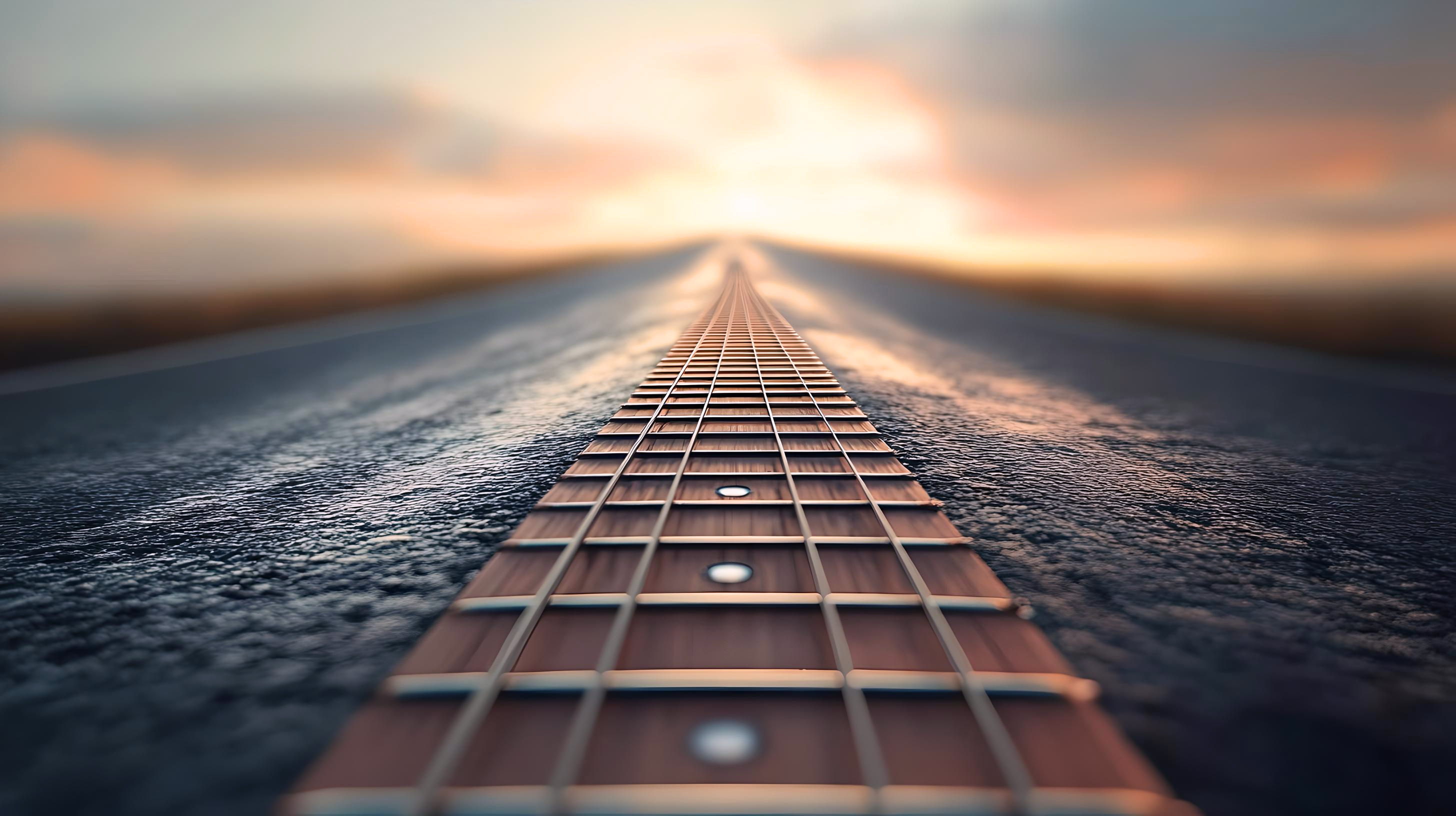
Music has been part of my life for as long as I can remember. Over the years, I have experienced it from many different perspectives—as a student, performer, teacher, percussionist, private instructor, marching band instructor, adjudicator, arranger, and worship leader. Each of those roles has taught me something different about music, but perhaps more importantly, they have taught me something about people and the way we learn.
For more than 25 years, I have worked with musicians at nearly every level. I have taught young students holding an instrument for the first time, high school students preparing for performances and competitions, adults returning to music after years away, and experienced musicians trying to reach the next level. I have watched students struggle with something for weeks and then suddenly experience that moment when everything clicks. Those moments are still some of my favorite parts of teaching.
The longer I teach, however, the more I realize that what happens in those moments is much bigger than learning a note, rhythm, scale, or song. When we teach music, we are touching many areas of education at once. Mathematics, science, history, language, physical development, technology, creativity, problem-solving, communication, leadership, and teamwork can all exist within a single music lesson or rehearsal. Often, students are experiencing several of them simultaneously without ever stopping to think about which academic subject they are using.
They are simply making music.
Consider something as basic as rhythm. A student learning whole notes, half notes, quarter notes, eighth notes, sixteenth notes, dotted rhythms, triplets, subdivisions, meter, and tempo is constantly dealing with numbers, patterns, fractions, and relationships. When I ask a student to subdivide a beat, I may not call it a mathematics lesson, but that student is learning how a larger unit can be divided into smaller units and how those units relate to one another.
What I find particularly interesting is that music takes those mathematical ideas off the page. Students don't simply calculate a fraction; they have to hear it, feel it, and reproduce it in real time. The mathematical relationship becomes something physical and audible. A concept that might seem abstract on a worksheet suddenly has a sound.
Science is just as present. Every instrument is, in its own way, an experiment in physics. Strings vibrate. Air moves through tubes. Drumheads resonate. Cymbals produce complex frequencies. Changing the length, tension, speed, or shape of something changes the resulting sound. Musicians experience frequency, vibration, resonance, acoustics, harmonics, and sound waves every time they play.
Because I have spent much of my career teaching different instruments, I enjoy helping students understand not only what they need to do but why it works. Why does tightening a drumhead raise its pitch? Why does changing an embouchure affect the sound of a brass instrument? Why does changing the effective length of a string produce a different note? Those questions connect musicianship directly with science. A student begins to understand that the sound coming from an instrument isn't mysterious. There are physical principles behind it.
Music also carries history in a way that few other subjects can. Music was created by real people living in specific times and places. Wars, migration, religion, technology, economics, cultural movements, and social change have all influenced the music people created. Jazz tells a story. Blues tells a story. Classical music tells countless stories across centuries. Gospel, folk, rock, marching music, popular music, and musical traditions from around the world reflect something about the people and communities that created them.
When students understand that background, a piece of music can become more than notes printed on a page. Instead of asking only, “What notes am I supposed to play?” they can begin asking larger questions. Where did this music come from? Why does it sound this way? What was happening when it was created? What was the composer or performer trying to communicate?
Language is woven throughout music as well. Musicians learn an extensive vocabulary, including terminology originating in Italian and other languages. Vocalists may perform in languages they don't speak conversationally and must learn pronunciation, meaning, phrasing, and context. Instrumentalists learn a system of symbols capable of communicating musical ideas between people who may not even speak the same language.
Reading music itself is a remarkable exercise in literacy and information processing. A musician looks at symbols on a page and translates them into timing, movement, pitch, sound, articulation, dynamics, expression, and emotion. An experienced musician may process all of that information almost instantaneously.
Then add other musicians.
Now the student must read, perform, listen, adjust, and communicate at the same time. An ensemble communicates constantly, even when nobody is speaking. Musicians respond to changes in tempo, balance, articulation, phrasing, dynamics, and tone. They learn when to lead and when to support. Some of the most important communication happening in a strong ensemble is never spoken aloud.
There is also a physical side to music education that is sometimes overlooked. A drummer can be coordinating all four limbs independently. A pianist develops control and independence between ten fingers. Wind and brass musicians learn breath control and air support. String musicians develop incredibly precise fine-motor movements.
Marching music takes this even further. Students are asked to perform musically while moving through space, maintaining posture, controlling their bodies, responding visually to the people around them, and sometimes doing it in heat, wind, or other difficult conditions. They learn quickly that posture matters. Breathing matters. Coordination matters. Endurance matters.
Music requires the mind and body to work together.
Yet one of the most valuable things I believe music teaches is something that doesn't fit neatly into a traditional academic category: how to solve a problem.
Students fail constantly in music, and I don't mean that negatively. Failure is part of the process. A note cracks. A rhythm is incorrect. A drummer hits the wrong surface. A student misses an entrance. A difficult passage doesn't work.
So they try again.
And sometimes again.
Eventually, simply repeating the mistake isn't enough. The student has to determine why something isn't working. Perhaps the tempo needs to be slower. Maybe the passage needs to be divided into smaller pieces. Perhaps the fingering is inefficient, the rhythm was misunderstood, or physical tension is interfering with the technique.
The student identifies a problem, experiments with possible solutions, evaluates the result, makes an adjustment, and tries again.
I have watched students go from saying, “I can't do this,” to performing something they once believed was impossible. I have seen that transformation thousands of times, and it never gets old. What matters to me is not only that the student eventually played the passage correctly. They discovered something about themselves in the process.
They learned that inability today does not necessarily mean inability tomorrow.
They learned how to learn.
Music also gives students something increasingly important: a place to create. Even when two musicians perform exactly the same notes, they may not create the same performance. Musicians make decisions about tone, dynamics, articulation, phrasing, balance, timing, style, and emotion. Improvisation, composition, and arranging expand those possibilities even further.
Technical accuracy matters, of course, but eventually a musician has to move beyond simply playing the correct notes. At some point, the question becomes: What do you want to say?
That balance between discipline and creativity is one of music's great educational strengths.
Some of the most meaningful lessons I have witnessed have also happened when students make music together. A band, choir, orchestra, marching band, worship team, or small ensemble cannot function at its highest level if every person is concerned only with themselves. Students have to listen to the people around them. Sometimes they need to play louder. Sometimes they need to play softer. Sometimes they lead, and sometimes they follow. Sometimes their job is to provide the foundation that allows somebody else to succeed.
They also learn accountability. When you are part of an ensemble, other people are depending on you to know your music, be prepared, and fulfill your responsibility.
Leadership grows naturally from that environment, and it doesn't always come with a title. Certainly, we see leadership in drum majors, section leaders, ensemble leaders, and other formal positions. But some of the best leadership I have seen has come from students without a title.
It is the student who notices someone struggling and offers help. It is the musician who consistently arrives prepared. It is the student who encourages someone after a difficult rehearsal. It is the person who understands that sometimes the success of the group matters more than receiving individual attention.
Those are lessons worth teaching.
Schools have an essential role in making those experiences possible. Band, choir, orchestra, general music, music appreciation, theory, and other programs can introduce young people to opportunities they might never encounter otherwise. School music programs also provide something uniquely valuable: the experience of creating something collectively with peers and working toward a shared goal.
Those programs deserve our support.
At the same time, I believe our understanding of music education cannot end at the schoolhouse door.
Much of my own career has allowed me to see music education from both sides. I have worked within school programs, but I have also spent years teaching private lessons and working with marching organizations, churches, ensembles, and musicians outside the traditional classroom. Those experiences have convinced me that music education works best when we view it as an ecosystem rather than a single class on a student's schedule.
A student might discover an instrument in school and develop those skills through private lessons. Another may begin playing at church and eventually join a school ensemble. A student might discover marching band and find an entirely new sense of purpose, confidence, or community. An adult who hasn't played for 20 or 30 years might decide that it is time to pick up an instrument again.
Learning doesn't fit neatly into one building, one schedule, or even one period of our lives.
That is why I believe private teachers, school educators, families, community ensembles, churches, youth organizations, marching programs, professional musicians, and local arts organizations all have a role to play. We shouldn't think of these opportunities as competing versions of music education. They can reinforce one another.
Most importantly, we need to remember that the goal of music education is bigger than producing professional musicians.
Most students who participate in music will eventually choose careers outside of music. They may become engineers, teachers, nurses, mechanics, business owners, scientists, accountants, attorneys, tradespeople, parents, or enter professions that don't even exist yet.
That does not make the years they spent making music any less valuable.
They carry those experiences with them.
They have practiced discipline. They have experienced creativity. They have learned to collaborate. They have solved problems. They have performed under pressure. They have learned what it feels like to struggle with something and eventually succeed. They have learned to listen—not simply to sound, but to the people around them.
And hopefully, they have discovered something that can continue bringing meaning, community, expression, and enjoyment to their lives long after their formal education has ended.
After more than 25 years of teaching, I still enjoy watching a student finally accomplish something that once seemed impossible. The smile after finally playing the passage correctly is rewarding. So is the excitement of a first performance, a successful audition, a great marching-band run, or simply the realization that yesterday's difficult music isn't quite as difficult today.
But I have come to understand that those moments represent something much larger than music.
The student didn't just learn the notes.
They learned persistence. They learned to listen. They learned to create. They learned to work with others. They learned to solve problems. They learned something about themselves.
Most importantly, they learned how to learn.
That is why I continue to believe so strongly in the importance of music education—not simply as another subject on a school schedule, and not simply as an activity students participate in after school.
Music has the ability to connect subjects, people, and experiences in ways that are difficult to duplicate anywhere else.
That is why music education matters.
Inside school.
Outside school.