Introduction: A New Digital Frontier
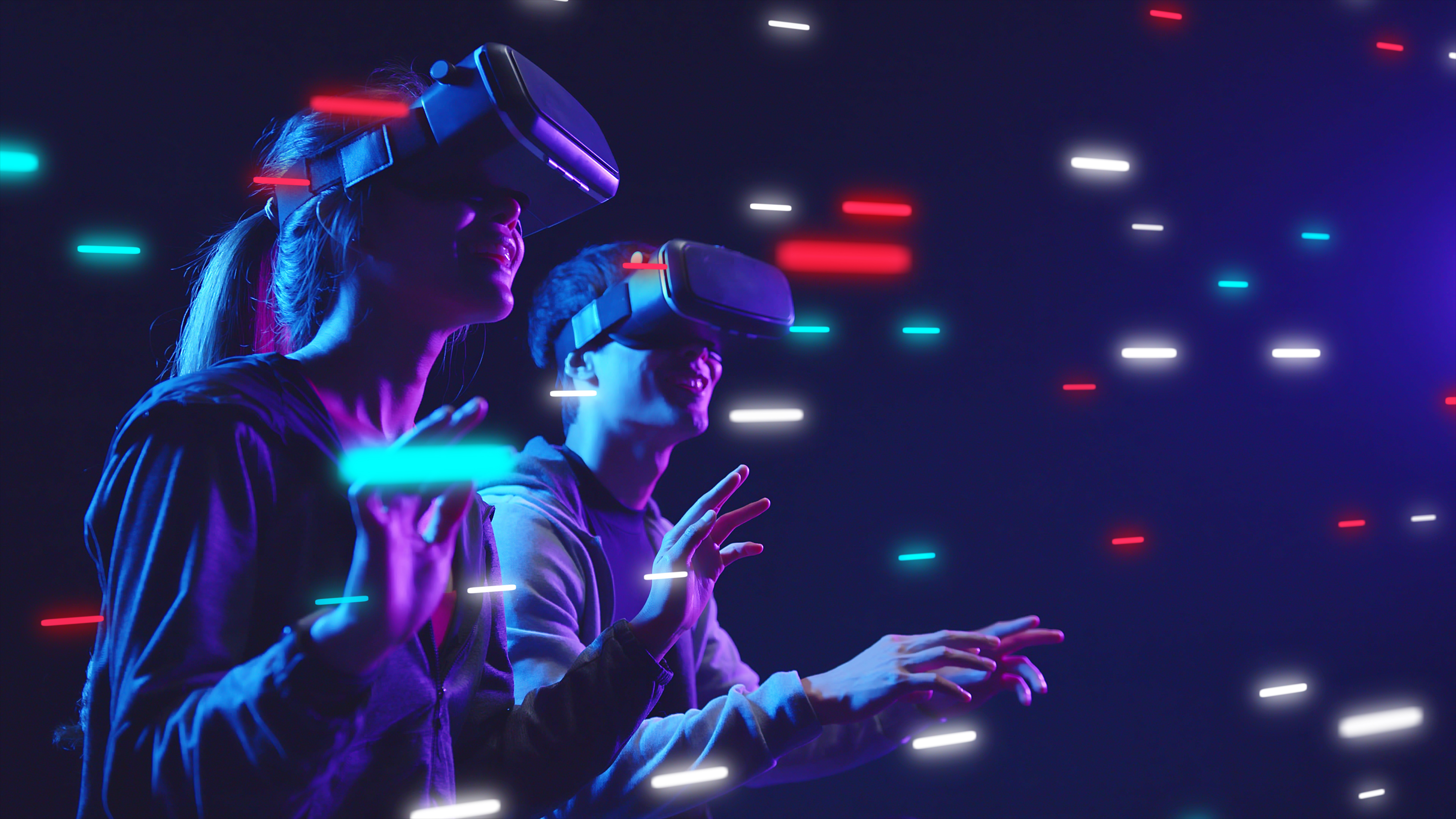
The term “metaverse” has rapidly entered global discourse. Some hail it as the next iteration of the internet, while others dismiss it as hype fueled by Silicon Valley. Yet beneath the buzz lies a profound technological shift. The metaverse represents a persistent, shared, and immersive virtual universe that blends extended reality (XR) technologies—including virtual reality (VR), augmented reality (AR), and mixed reality (MR)—with artificial intelligence (AI), blockchain, cloud computing, and edge computing. It envisions a future in which digital and physical experiences converge seamlessly, redefining how we work, play, shop, learn, and socialize.
If the internet connected information and Web 2.0 connected people through platforms, the metaverse aims to connect experiences, creating environments that feel tangible, interactive, and enduring. For businesses, policymakers, and society, the metaverse represents more than gaming or virtual worlds: it is a new layer of human interaction with significant economic, cultural, and ethical implications.
Defining the Metaverse
Despite its widespread use, the term lacks a universal definition. Broadly, the metaverse refers to a network of interconnected, immersive 3D environments in which users, represented by avatars, can interact with one another and with digital assets in real time. Key characteristics include:
- Persistence: The environment continues to exist even when individual users log out.
- Interoperability: Virtual worlds can connect, allowing digital assets to move across platforms.
- Real-time interaction: Users and AI-driven agents can engage dynamically.
- Embodied presence: Avatars and sensory interfaces create a sense of “being there.”
- Digital economy: Virtual goods, services, and currencies support commerce.
The metaverse is not a single product or platform but an ecosystem of converging technologies, including:
- VR/AR headsets and wearables, such as Oculus Quest, Apple Vision Pro, and Microsoft HoloLens.
- 3D engines, such as Unreal Engine and Unity.
- Blockchain and non-fungible tokens (NFTs) for ownership and identity.
- AI and natural language processing to support interaction and simulation.
- Cloud and edge computing to provide scalability and real-time responsiveness.
Why the Metaverse Matters
1. Economic Potential
McKinsey & Company projects that the metaverse economy could reach $5 trillion by 2030, spanning commerce, entertainment, manufacturing, and education. Major companies—including Meta, Microsoft, NVIDIA, Apple, and Tencent—are investing billions.
- Virtual goods and services already generate billions of dollars through gaming platforms such as Roblox and Fortnite.
- Digital real estate is bought, sold, and leased on platforms such as Decentraland.
- Enterprise metaverse platforms support simulation, design, and collaboration.
These developments suggest that the metaverse could be as economically transformative as the internet and mobile revolutions.
2. Redefining Work
The COVID-19 pandemic accelerated the adoption of remote collaboration and exposed the limitations of traditional video calls. The metaverse promises immersive workspaces in which employees can brainstorm around 3D prototypes, attend virtual conferences, or collaborate using persistent digital twins of factories and offices.
Microsoft Mesh and Meta’s Horizon Workrooms are early examples. In industries such as aerospace, automotive, and healthcare, metaverse-enabled collaboration could reduce costs, accelerate innovation, and improve training.
3. Education and Training
The metaverse enables experiential learning. Students can explore historical events in 3D, conduct virtual science experiments, or practice surgical procedures without real-world risks. Companies such as Labster, ENGAGE, and ClassVR are developing educational platforms that could broaden access to learning worldwide.
4. Healthcare Transformation
Virtual environments allow doctors to collaborate on patient cases, train in simulated surgical settings, and treat patients through immersive telemedicine. Patients can participate in therapy or rehabilitation through gamified VR experiences, while hospitals can use digital twins to model infrastructure and patient flow.
5. Culture and Social Interaction
From concerts in Fortnite and Roblox to immersive art galleries, the metaverse is reshaping cultural experiences. It allows creators to bypass traditional gatekeepers and build new forms of community. Social interactions in persistent virtual spaces could eventually become as natural as messaging is today.
6. Industrial Applications
Manufacturing and logistics are early adopters of the industrial metaverse. Siemens and NVIDIA are developing photorealistic digital twins to optimize factories, while BMW uses virtual simulations to test assembly lines before building them. These applications demonstrate that the metaverse extends far beyond consumer entertainment.
Technical Foundations of the Metaverse
Extended Reality (XR)
The metaverse relies on VR, which provides fully immersive experiences; AR, which overlays digital information on the real world; and MR, which blends digital and physical elements. Advances in optics, haptics, and sensors are critical to wider adoption.
Digital Twins
A digital twin is a virtual replica of a physical system that updates in real time. It enables predictive maintenance, optimization, and risk-free experimentation. The metaverse could extend this approach to entire cities, industries, and even the human body.
Blockchain and Decentralization
Ownership, identity, and interoperability in the metaverse may rely on blockchain technology. NFTs can provide evidence of digital ownership, while decentralized autonomous organizations (DAOs) could govern communities and economies.
Artificial Intelligence
AI supports natural interactions in the metaverse, from non-player characters (NPCs) that behave intelligently to real-time translation and the generation of content such as avatars, virtual worlds, and music. Generative AI could significantly expand the metaverse’s creative capabilities.
Cloud and Edge Computing
Rendering 3D environments in real time requires substantial computing power. Cloud platforms such as AWS, Azure, and Google Cloud, combined with edge computing, can reduce latency and make immersive experiences more practical at scale.
Challenges and Risks
Technical Barriers
- Hardware adoption is limited by cost, bulkiness, and motion sickness.
- Standards for interoperability remain underdeveloped.
Privacy and Security
The metaverse can collect intimate biometric and behavioral data, including eye-tracking information, gestures, and data from brain-computer interfaces. This creates significant privacy risks. Cybersecurity in immersive environments also remains a major challenge.
Digital Inequality
Access to advanced hardware, high-speed internet, and digital literacy remains uneven, potentially excluding large populations from the benefits of the metaverse.
Regulation and Governance
Who will own and govern the metaverse: technology giants, decentralized communities, or governments? Regulatory frameworks governing digital identity, taxation, property rights, and competition remain underdeveloped.
Psychological and Social Risks
Critics warn of addiction, escapism, identity fragmentation, and mental health risks. As with social media, the psychological effects of widespread metaverse use may be significant and difficult to predict.
Future Outlook: Evolution Toward Web 4.0
Some analysts view the metaverse as a step toward Web 4.0—an embodied internet that integrates physical and digital reality. Over time, AR glasses, brain-computer interfaces, and ubiquitous connectivity may make digital overlays increasingly inseparable from everyday life.
Industry-by-Industry Impact
- Retail: Virtual showrooms, augmented reality (AR) try-before-you-buy experiences, and immersive e-commerce.
- Real estate: Digital property markets and virtual tourism.
- Healthcare: Personalized medicine and AI-driven digital twins of patients.
- Education: Borderless classrooms and lifelong learning.
- Manufacturing: Fully virtualized supply chains and predictive optimization.
The Human Question
Ultimately, the metaverse is not just about technology; it is also about human meaning and values. Will it empower creativity, connection, and inclusion, or will it deepen inequality and surveillance? The outcome will depend on how stakeholders—including businesses, governments, and civil society—shape its evolution.
Conclusion: Beyond Hype, Toward Human-Centered Design
The metaverse is more than a buzzword. It represents a paradigm shift in how humans interact with technology, moving from screens and devices toward immersive environments in which the physical and digital worlds blur.
Its importance lies in its potential to reshape economies, workplaces, education, healthcare, and culture. Realizing this potential, however, requires careful management of the associated risks and a commitment to openness, interoperability, privacy, inclusion, and ethical design.
Just as the internet redefined the 20th century, the metaverse could redefine the 21st. Businesses cannot afford to ignore it, but society should not embrace it blindly. The challenge ahead is to build a metaverse that augments humanity rather than diminishes it—a digital frontier in which progress is measured not only in profits but also in the quality of human experience.
References
- McKinsey & Company. Value Creation in the Metaverse (2022).
- Matthew Ball. The Metaverse: And How It Will Revolutionize Everything (2022).
- Deloitte Insights. The Metaverse Overview: Vision, Technology, and Applications (2023).
- PwC. Seeing Is Believing: How Virtual Reality and Augmented Reality Are Transforming Business and the Economy (2022).
- Accenture. Meet Me in the Metaverse: The Future of Work and Experience (2023).
- Gartner. Emerging Technologies: The Metaverse (2023).
- NVIDIA Omniverse Documentation. Digital Twins and Industrial Metaverse Use Cases (2024).
- World Economic Forum. Privacy and Safety in the Metaverse (2023).
- Meta. The Future of Social Presence in the Metaverse (2022).
- IEEE Standards Association. Metaverse Standards Forum Whitepaper (2024).