Leadership, Legacy, and the Responsibility to Bring Others Along
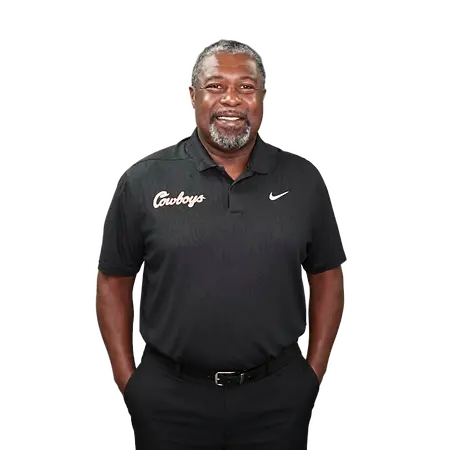
By Leon P. Jones
For many years, I thought leadership was about being prepared to take the next position.
Learn more. Work harder. Accept greater responsibility. Become a supervisor. Become a commander. Become a chief.
Experience eventually taught me something different.
Leadership isn't about how high you climb. It is about what you do for other people once you get there.
I spent thirty years in law enforcement, eventually having the privilege of serving as Chief of Police at Oklahoma State University. During those years, I accumulated thousands of hours of training, attended the FBI National Academy, earned degrees, supervised officers, made difficult decisions, responded to crises, and learned lessons that could never have been taught in a classroom.
But after retirement, something became increasingly clear to me:
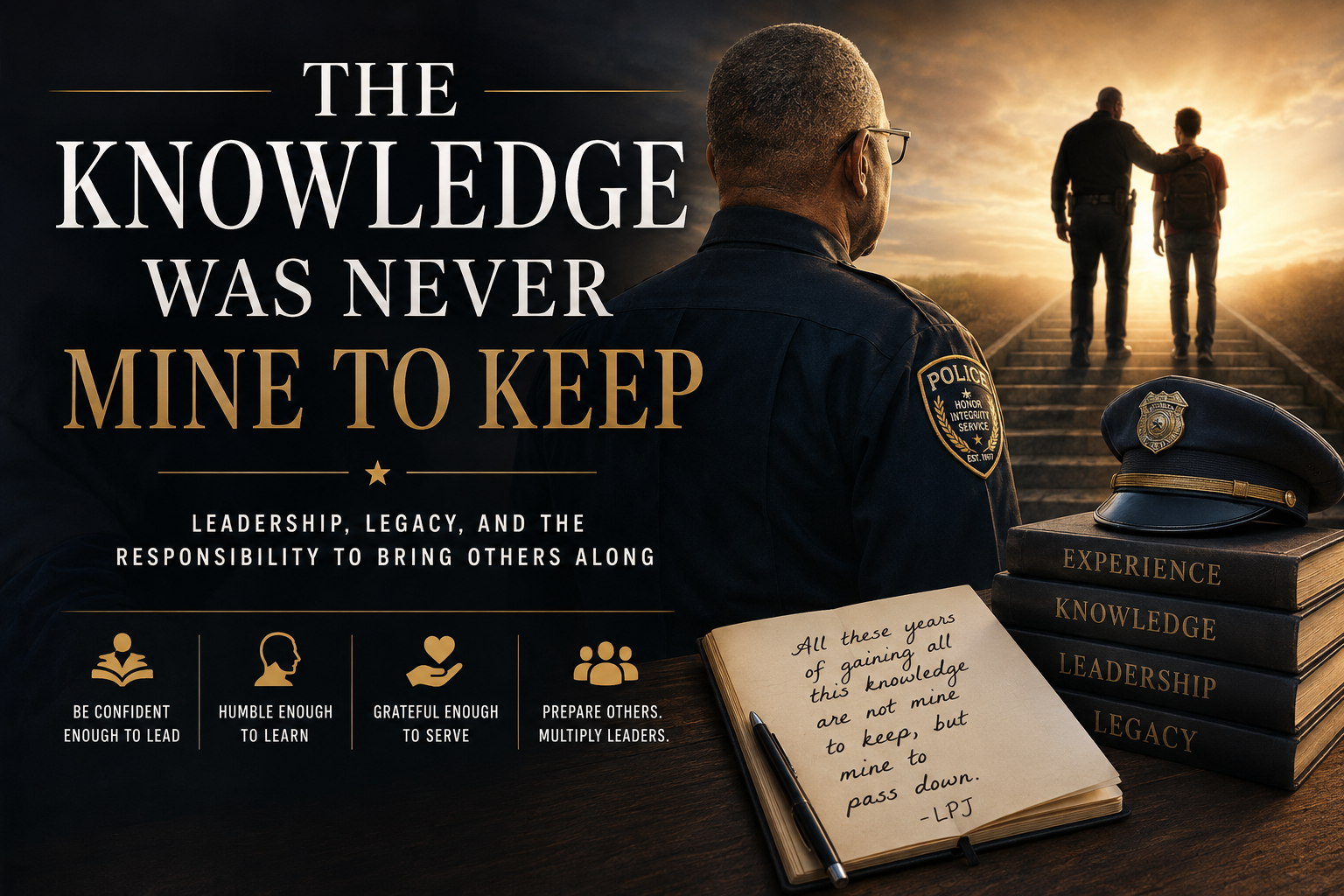
All these years of gaining all this knowledge are not mine to keep, but mine to pass down.
That realization changed the way I looked at leadership.
Leadership Is Not Ownership
One of the mistakes leaders can make is believing that their knowledge belongs to them.
We protect what we know because knowledge helped us become successful. We may even begin believing that keeping certain information, relationships, or opportunities to ourselves protects our value.
I believe the opposite.
If thirty years of experience ends with me, then much of its value ends with me.
But if something I learned helps a young person avoid one of my mistakes, gives an emerging leader confidence, helps someone make a better decision, or encourages another person to keep moving when the path becomes difficult, then those thirty years continue producing value long after my career is over.
That is legacy.
Legacy isn't your name on a building or the title you once held.
Legacy is what continues in other people because you were willing to give something away.
Success Gives Us a Responsibility
Over the years, another belief has become central to my leadership philosophy:
Success doesn't make you better. It gives you the opportunity to help others reach their success.
There is an important difference.
Titles can create authority. Awards can create recognition. Accomplishments can create credibility.
None of them automatically create leadership.
Leadership begins when we recognize that whatever position we have reached gives us an opportunity—and, I believe, a responsibility—to help somebody else move forward.
That might mean mentoring someone.
It might mean opening a door.
Sometimes it means telling someone the truth when that truth is difficult to hear.
Sometimes it is simply looking at a young person who isn't sure what he or she is capable of becoming and saying, “I believe in you.”
A student needs someone to believe in them.
So does a young employee.
So does an emerging leader.
Most of us can remember someone who did that for us.
Good leaders never forget those people.
Confidence and Humility Can Exist Together
Leadership requires confidence.
People need leaders who can make decisions, accept responsibility, establish expectations, and move an organization forward.
But confidence without humility can easily become arrogance.
That is why one statement has become particularly important to me:
Be confident enough to lead, humble enough to learn, and grateful enough to serve.
Those three things belong together.
Confidence allows us to step forward.
Humility reminds us that we don't have all the answers.
Gratitude reminds us that leadership is a privilege.
I have held leadership positions, but I have also made mistakes. I have been right, and I have been wrong. I have succeeded, failed, learned, adjusted, and tried again.
Experience does not mean having all the answers.
Experience means having enough history to recognize that you never will.
The moment a leader believes there is nothing left to learn is probably the moment that leader has stopped growing.
Leaders Have to Learn to Follow
Before anyone can lead effectively, that person must understand what it means to follow.
Some of my greatest leadership lessons came long before I became chief.
I watched good leaders.
I watched ineffective leaders.
I learned from supervisors I respected, and I learned from people whose leadership styles I promised myself I would never imitate.
Both were valuable.
Leadership development does not begin when someone gives you a title. It happens every day you are paying attention.
Watch how people treat others when there is nothing to gain.
Watch how they handle criticism.
Watch what happens when something goes wrong.
Watch whether they accept responsibility or immediately begin looking for someone to blame.
Character becomes much easier to see when circumstances become difficult.
Setbacks Are Part of the Path
My own path was never perfectly straight.
Very few meaningful ones are.
There were disappointments, difficult decisions, personal challenges, professional obstacles, and moments when I could not see exactly where life was taking me.
Those experiences helped form another philosophy I try to share:
The path is much easier to follow if you take each step with a positive attitude and look at each setback as an opportunity for a learning lesson.
That does not mean setbacks are enjoyable.
It means they can be useful.
Some of the most important things I know today came from situations I would never have voluntarily chosen.
Leadership requires us to ask a different question when things go wrong.
Instead of only asking, “Why did this happen to me?”
Ask:
“What can this teach me?”
That question turns adversity into education.
Leadership After the Title
Retirement gave me an unexpected opportunity to test what I believed about leadership.
For decades, much of my identity had been connected to a badge, a uniform, and eventually the title of Chief of Police.
Then one day, those things were gone.
But leadership wasn't.
That may have been one of the greatest lessons of my career.
Leadership doesn't retire when the title does.
Today, I have the privilege of teaching Criminal Justice students. Instead of preparing officers for their next assignment, I am helping young people prepare for their first opportunities.
The environment changed.
The responsibility did not.
My job is still to prepare people.
Still to encourage them.
Still to challenge them.
Still to hold them accountable.
Still to help them recognize possibilities they may not yet see in themselves.
In many ways, everything I learned during thirty years of law enforcement was preparing me for this chapter.
I simply couldn't see it at the time.
Leadership Is About What Remains
Eventually, every leader leaves the office.
Someone else gets the title.
Someone else sits behind the desk.
Someone else makes the decisions.
The question becomes:
What remains after you leave?
If the organization cannot function without you, perhaps you built dependence instead of leadership.
If the people you supervised never became capable of leading without you, perhaps you protected your position more than you developed your people.
The goal should never be to create people who constantly need us.
The goal should be to prepare people who eventually don't.
And hopefully, they will do the same thing for someone else.
That is how leadership multiplies.
Pass It Down
I am proud of my career in law enforcement. I am proud of having served as Chief of Police. I am proud of the books I have written and the opportunities that have followed.
But those accomplishments mean more to me today because they give me another platform to help somebody else.
My definition of success has changed.
I no longer measure leadership primarily by the position a person reaches.
I look at the people coming behind them.
Who did you teach?
Who did you encourage?
Who did you prepare?
Who became more confident because you believed in them?
Whose path became a little easier because you were willing to share what you learned on yours?
Those are much more important questions.
Because eventually, our careers end.
Our titles disappear.
Someone else occupies the office.
But what we invested in people can continue for generations.
That is why I believe, now more than ever:
All these years of gaining all this knowledge are not mine to keep, but mine to pass down.
And perhaps that is one of the greatest responsibilities leadership gives us.