When we talk about growth, leadership, relationships, or even success, we usually talk about communication, decision-making, performance, strategy, and how to deal with other people. And all of that is important. But one thing I have learned over the years is that before you can really change what is happening around you, you have to understand what is happening within you.
The truth of the matter is, all of us have a voice within us. We have experiences we have gone through, things people have said to us, things that have happened to us, and conclusions we have made because of those things. Some of those experiences helped build us. Some of them hurt us. Some of them made us stronger. And some of them created beliefs that we may still be carrying today.
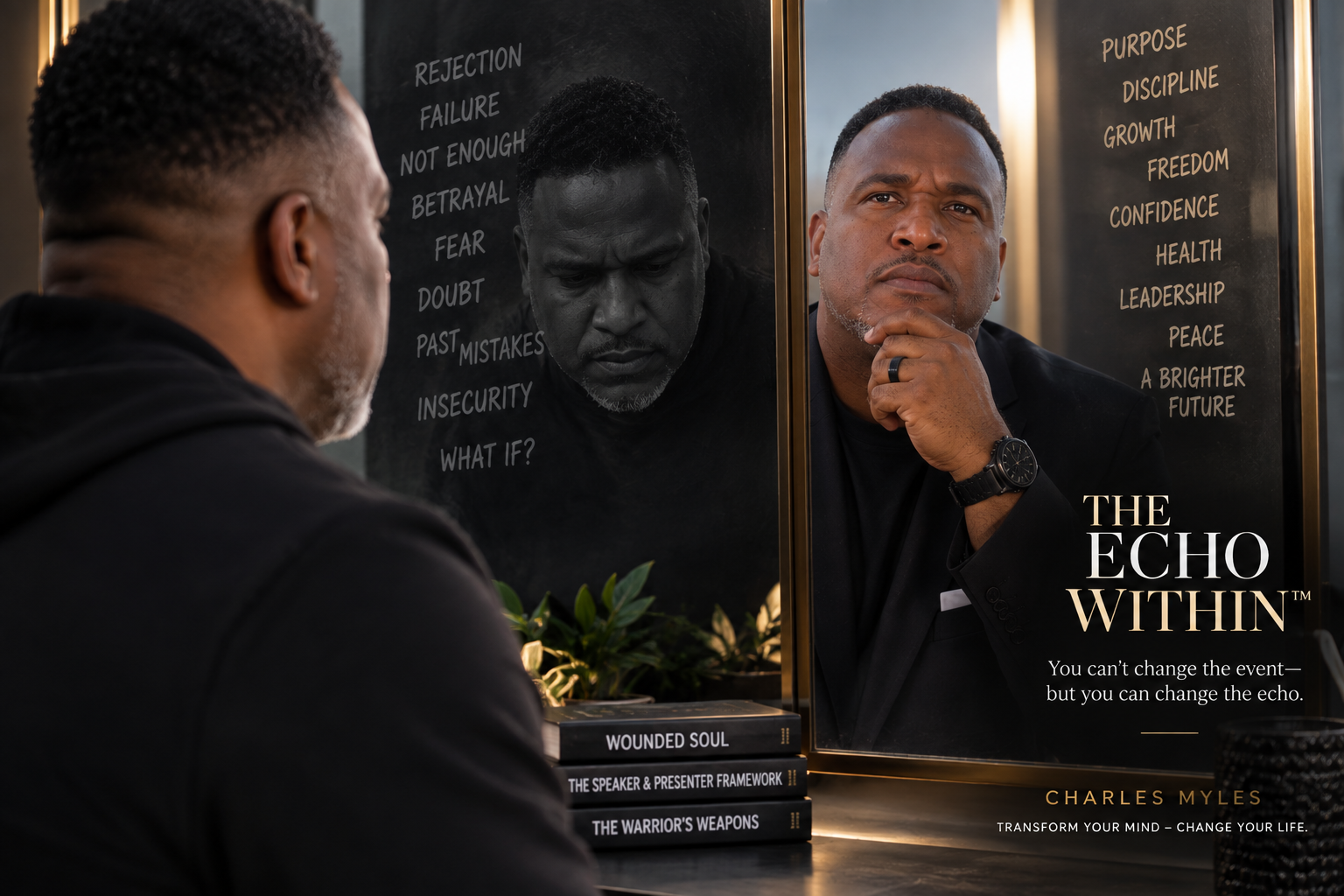
That is what I call The Echo Within™. The echo is what keeps speaking after the moment is over. I often say, “The most influential voice in your life is not the one that spoke to you. It’s the one that keeps speaking within you.”
Think about that for a moment. Someone may have said something to you 20 years ago, and that person may not even be in your life anymore, but what they said may still be speaking. Something may have happened to you years ago, and the event itself is over, but the conclusion you formed from that event may still be affecting how you see yourself, how you see other people, how you respond in relationships, and how you handle pressure.
That is why I say, “People don’t live from events; they live from the conclusions that continue speaking.” The event happens, but then we give the event meaning. That meaning becomes a belief, and that belief can eventually become a rule. Maybe you failed at something, and the rule became, “I’m not good enough.” Maybe somebody betrayed you, and the rule became, “I can’t trust people.” Maybe you grew up in an environment where you were rarely affirmed, so somewhere along the way, the rule became, “I have to prove myself.”
Those rules do not stay in one area of your life. They can show up in your relationships, your career, your confidence, your decision-making, and yes, in the way you lead others.
You can have the title. You can have the education. You can have the experience. Or maybe you do not have any formal title at all. Either way, if you never deal with what is speaking within you, you can still find yourself making decisions out of an old wound, an old fear, or an old conclusion.
Pressure has a way of revealing that. When everything is going well, it is easy to look patient, confident, and composed. But what happens when someone challenges you? What happens when somebody disappoints you? What happens when a relationship becomes difficult? What happens when you make a mistake? What happens when somebody else succeeds and you are still waiting on your opportunity? What happens when you are under pressure and you do not have all the answers?
That is when what is inside of you starts talking.
An insecure person may become controlling. Someone who is afraid of rejection may avoid difficult conversations. Someone who associates mistakes with punishment may become afraid to take risks. Someone who has been betrayed may push good people away before they ever get close enough to hurt them.
Sometimes we think we have a people problem, a relationship problem, or a leadership problem when the truth is we may have a belief problem. And that is why one of the questions I believe all of us should ask is, “What is driving me?”
Not just, “What am I doing?” but, “What is driving what I am doing?”
That question can change everything.
My own understanding of this started long before I ever became a professional speaker or trainer. I played football at the University of Arizona, and I was a fullback. If you know anything about the fullback position, the fullback is not always the person getting all of the attention. You are doing a lot of blocking. You are doing a lot of hitting. You are taking on linebackers. You are creating a hole so somebody else can run through it. A lot of what you do is about helping somebody else succeed.
I did not really think about that at the time, but later in life, I started realizing how much that position taught me about people, teamwork, sacrifice, and leadership. I learned how to be part of a team. I learned how to follow. I learned how to sacrifice. I learned that sometimes your success is connected to whether somebody else succeeds because you did your job.
And the truth is, that is still a big part of what I do today. Whether I am speaking, training, pastoring, coaching, working with law enforcement professionals, teaching correctional officers, or walking into a prison to speak with incarcerated men and women, one of my main responsibilities is still the same: do my best to help create a path for somebody else to move forward.
But life has also taught me another lesson: your past can explain you without having to control you.
All of us have gone through something. Some of us have experienced loss. Some have experienced betrayal. Some have experienced rejection. Some have experienced failure. Some have had people walk away. Some have had doors close. Some have had moments where life did not look anything like what they thought it was supposed to look like.
You cannot always change the event. It happened. But I believe something very strongly: “You can’t change the event—but you can change the echo.”
That is where transformation begins. You may not be able to go back and change what somebody said to you. You may not be able to change what happened in your childhood. You may not be able to change the fact that somebody betrayed you, disappointed you, fired you, rejected you, or walked away from you. But you can decide whether the conclusion created by that experience is going to keep leading your life.
That is why awareness is so important. You cannot change something you refuse to identify. Sometimes you have to look at your own patterns and ask yourself some hard questions.
Why do I keep responding this way? Why do I shut down when someone challenges me? Why do I feel threatened when someone else succeeds? Why do I have such a hard time trusting? Why do I always feel like I have to prove myself? Why do I avoid certain conversations?
And then you have to go deeper: What belief is underneath that? Where did I learn that? What happened that made me start thinking that way?
And here is the big question: Is it still true?
Because sometimes what we call our personality is actually protection. Sometimes what we call independence is really an inability to trust. Sometimes what we call being strong is really an inability to be vulnerable. Sometimes what we call high standards are actually fear of failure. And sometimes what we call avoiding drama is really avoiding necessary conflict.
If we never challenge those things, we can spend our whole lives being controlled by rules we never consciously chose.
That is why my message has always been “Transform Your Mind – Change Your Life.” I believe transformation starts inside. You do not have to wait for everything around you to change before you start changing. You do not have to wait until you get the promotion, until you have more money, until the relationship changes, or until everybody finally understands you. You can begin transforming your mind right where you are.
And when the mind changes, the way you respond starts changing. When your response changes, your behavior starts changing. When your behavior changes consistently, your results can begin changing.
That affects every area of life. It affects how you show up in relationships. It affects how you handle pressure. It affects how you make decisions. It affects how you recover from disappointment. It affects the way you lead yourself, and if you are responsible for other people, it affects how you lead them, too.
If I am insecure, eventually my insecurity will show up somewhere. If I am fearful, eventually my fear will influence my decisions. If I am emotionally unhealthy, eventually the people closest to me are going to feel it.
But the opposite is also true. When a person becomes more self-aware, relationships can improve. When someone learns how to manage emotion under pressure, they become more stable. When someone stops being threatened by other people’s gifts, they become freer to celebrate others. When a person becomes secure enough to listen, admit mistakes, forgive, and grow, life changes.
That is why I believe growth is not just about becoming more influential. It is also about understanding what is influencing you.
Every one of us has an echo. The question is not whether you have one. The question is: What is yours saying?
Is it telling you that you cannot? Is it telling you that you are not enough? Is it telling you not to trust anybody? Is it telling you that failure is final? Is it telling you that you always have to prove yourself?
Or have you learned how to challenge the voice that no longer belongs in your future?
The echo may explain why you respond the way you do, but it does not have to determine who you become. “The most influential voice in your life is not the one that spoke to you. It’s the one that keeps speaking within you.”
And if you can change what keeps speaking within you, you can begin changing the person who walks into the room.
That is The Echo Within™. And for me, it comes back to one simple truth: Transform Your Mind – Change Your Life.
About Charles Myles
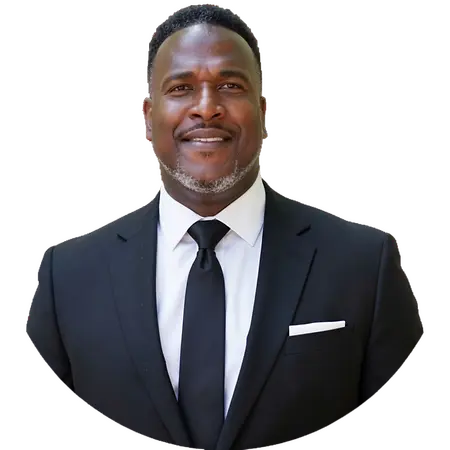
Charles Myles is a professional speaker, leadership trainer, pastor, coach, and author with more than 20 years of leadership experience. He is the founder of Powerful Days, a training and development organization focused on leadership, emotional intelligence, resilience, communication, conflict resolution, and personal transformation.
A former University of Arizona football player, Charles draws from his experiences in athletics, government contracting, ministry, leadership, law enforcement training, correctional environments, and personal adversity to help people think differently, lead more effectively, and move forward with greater purpose.
He is the creator of The Echo Within™ and the author of Wounded Soul: Death Lived Inside Me, The Speaker & Presenter Framework, and The Warrior’s Weapons. His guiding message is “Transform Your Mind – Change Your Life.”