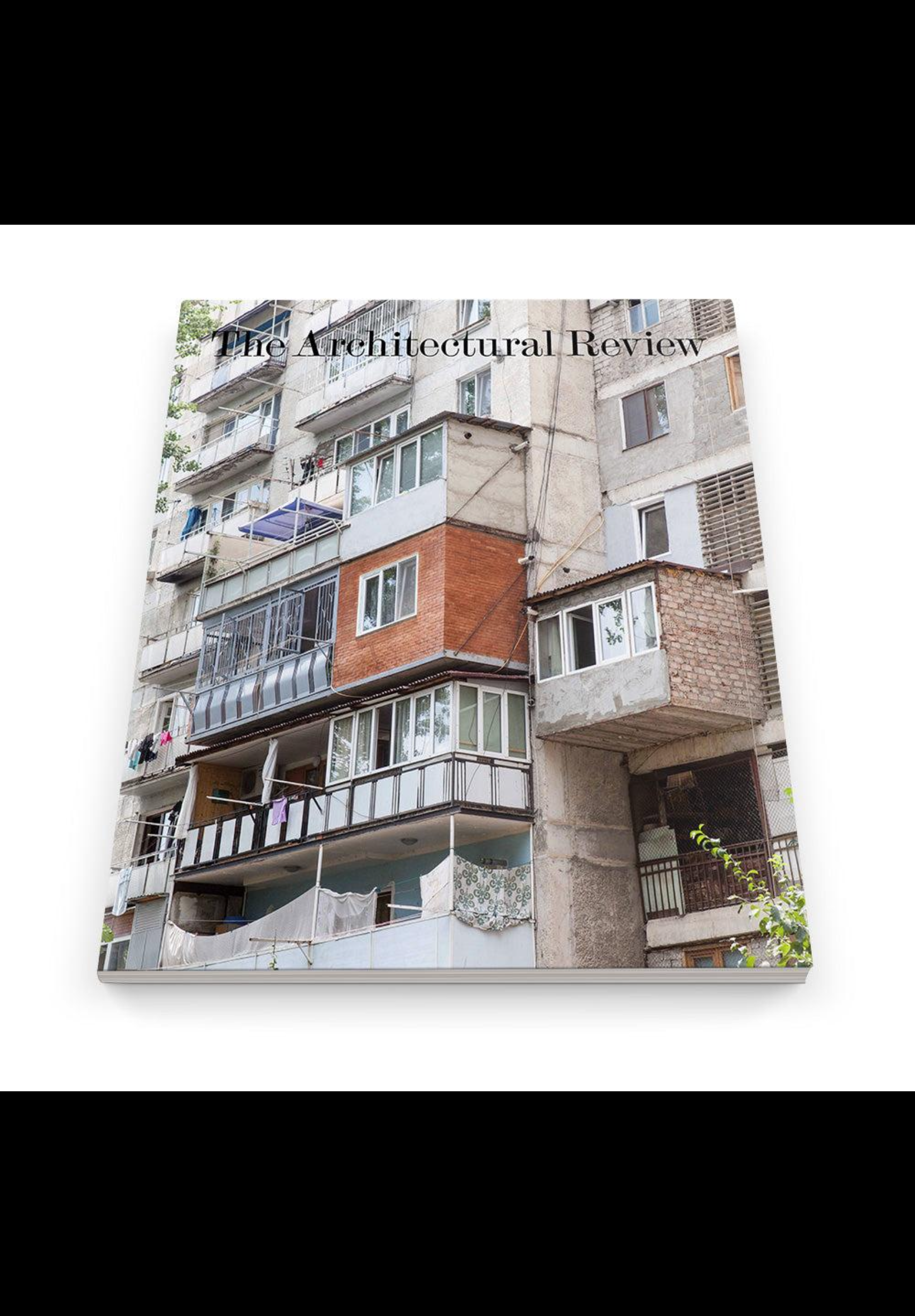
You can know the architectural style of a house without knowing what it’s like to live inside it.
I’ve been thinking about that distinction for a while.
We spend a great deal of time trying to understand how people’s minds work. We classify behaviors, identify diagnoses, measure symptoms, and compare patterns. We have developed entire scientific disciplines around understanding what happens inside the human brain.
And thank goodness we have.
But sometimes I wonder whether our language captures everything we’re trying to describe.
Because a human mind isn’t simply a diagnosis. It isn’t a collection of symptoms arranged neatly on a clipboard.
It’s an entire structure, built over time, shaped by circumstances, and occupied by someone whose experience cannot be fully understood from the outside.
I call this idea The Architectural Review.
It’s a metaphor I originally developed while thinking about psychiatric and neurodevelopmental conditions. My mother has helped me refine it through our conversations.
And the more I’ve explored it, the more I’ve come to appreciate a simple observation:
Not every house is built on the same floor plan.
The Neighborhood
Walk through an older American neighborhood and you’ll encounter all kinds of architecture.
Victorian houses with elaborate woodwork. Modest ranch homes. Colonial revivals. Modern additions attached to buildings constructed generations earlier.
Sometimes you’ll encounter something that doesn’t quite fit any recognizable category.
A building with a Gothic exterior and a contemporary interior.
A farmhouse with an industrial workshop.
An old brick house whose electrical systems have been replaced three times.
None of these descriptions tells you everything about the building.
And none of them tells you what it’s like to live there.
Architecture has always fascinated me because it represents the interaction between design, necessity, environment, and human intention.
A structure is more than its appearance.
There are systems behind the walls.
There are modifications made by previous occupants.
There are repairs nobody notices, and features that only make sense once you understand how the building is used.
Some structures are remarkably adaptable.
Others have particular limitations that require careful attention.
Most are combinations of strengths and compromises.
That’s where I began seeing a parallel with the human mind.
Hybrid Architecture
Consider the way we discuss bipolar disorder, ADHD, depression, or schizoaffective disorder.
These are distinct clinical conditions. Their differences matter, and understanding those differences is important for appropriate care.
But people don’t always experience their characteristics in isolation.
Attention can be affected by several different conditions. Mood can influence concentration and motivation. The same individual may experience enduring neurodevelopmental traits alongside psychiatric symptoms that change over time.
Sometimes multiple diagnoses coexist. Sometimes seemingly similar symptoms have different underlying explanations.
And sometimes two people with the same diagnosis have remarkably different experiences.
This is why I find hybrid architecture such a compelling metaphor.
A Victorian home doesn’t stop being Victorian because someone installed modern electrical wiring.
A contemporary addition doesn’t erase the history of the original building.
And two houses constructed from the same blueprint may become entirely different places after decades of use, renovation, and adaptation.
Likewise, understanding one aspect of a person’s cognitive or psychiatric experience doesn’t mean we understand the whole person.
The architecture is not merely the collection of its parts. It’s the relationship between them.
That relationship deserves attention.
The Midnight Purple
There’s a particular kind of purple I like.
Not the loud, fluorescent kind demanding everybody’s attention.
I’m thinking of midnight purple. A dark, grounded color that almost disappears until the light catches it.
Imagine an old house at dusk.
From the street, its exterior appears ordinary. Solid brick, weathered trim, perhaps a porch that’s seen better years.
Then the light shifts.
Suddenly, you notice a deep purple beneath the familiar colors. Maybe it’s in the painted woodwork. Maybe it’s reflected in a window. Maybe it was always there, but the afternoon sunlight made it difficult to distinguish.
Nothing about the house changed.
Your ability to notice something about it did.
That’s a useful reminder when we encounter people whose experiences differ from our own.
We don’t always know what we’re looking at.
A person may appear perfectly comfortable in one environment and struggle in another.
Someone may communicate confidently while privately expending considerable effort to maintain their concentration or composure.
A person may have spent years developing routines and adaptations that make their everyday life appear effortless.
What looks simple from the street may involve substantial work behind the walls.
And sometimes, what we interpret as an unusual feature isn’t a problem at all.
It’s simply part of the architecture.
Not everything important announces itself in daylight.
The Occupant Is Not the Blueprint
This might be the most important part of the entire metaphor.
We can spend so much time inspecting a building that we forget somebody lives there.
We examine its foundation, evaluate its systems, compare it to neighboring structures, and recommend improvements.
Sometimes those evaluations are necessary.
A damaged roof needs attention. Faulty wiring deserves repair. Structural problems shouldn’t be ignored because somebody finds them aesthetically interesting.
The same is true of mental health.
Psychiatric symptoms can cause serious distress and impairment. Treatment and support can be essential. A colorful metaphor should never obscure that reality.
But there’s a distinction between helping someone maintain a livable structure and assuming we know everything about their life because we’ve examined the exterior.
A diagnosis can describe important characteristics.
It cannot fully describe the occupant.
It cannot tell us every memory they’ve made, every relationship they’ve formed, every adaptation they’ve discovered, or everything they hope to accomplish.
And it cannot automatically tell us which changes they would find meaningful.
That requires listening.
The person living within the architecture has firsthand knowledge that matters, even when outside expertise is needed.
Understanding the building is important. Understanding the person living inside it is indispensable.
Maintenance Is Not Failure
One thing we understand intuitively about houses is that they require maintenance.
Even extraordinary architecture deteriorates without care.
Roofs need replacing. Foundations occasionally need attention. Electrical systems require inspection. Sometimes an addition that made sense twenty years ago no longer serves the people who live there.
We don’t usually interpret routine maintenance as proof that a building should never have existed.
Yet people can become remarkably harsh when discussing their own needs for support.
They may feel ashamed of requiring accommodations, changing routines, seeking treatment, or acknowledging limitations.
I think architecture gives us a useful language for approaching these realities without automatically attaching moral judgment.
Maintenance is part of inhabiting a structure.
Adaptation is part of responding to circumstances.
And recognizing a limitation doesn’t erase the value of everything that functions well.
None of this means that all psychiatric symptoms are architectural preferences. Some require medical attention regardless of environmental fit.
It simply means that needing care and possessing dignity are not competing conditions.
Who Wrote the Building Code?
There’s another question worth asking.
What happens when an entire society assumes that every building should function according to the same design?
Imagine evaluating a historic Victorian house exclusively according to the expectations of modern open-concept architecture.
You might identify genuine problems.
But you might also mistake deliberate differences for deficiencies.
The same danger exists when we measure human functioning against narrow expectations.
Different environments reward different abilities.
A workplace may value constant multitasking. Another may reward sustained concentration. A classroom might emphasize verbal participation while overlooking equally meaningful forms of engagement.
None of those preferences automatically establishes a universal standard for human capability.
This doesn’t mean eliminating expectations or abandoning evidence-based standards.
It means asking whether the standards we’re applying are appropriate to the person and the circumstances.
Sometimes the structure needs modification.
Sometimes the environment does.
Sometimes both need attention.
And occasionally, the problem is that somebody keeps insisting every house should have an identical kitchen.
The Architecture Is Not the Whole Story
I don’t believe the Architectural Review replaces the clinical idea of a spectrum.
Many contemporary scientific approaches already recognize that psychological characteristics are multidimensional and that diagnostic boundaries don’t always capture every relevant pattern.
The architectural metaphor offers something different.
It’s a way to bring those complexities into ordinary conversation.
It offers language for discussing overlapping characteristics without assuming that different diagnoses are interchangeable.
It allows us to acknowledge relatively enduring traits while recognizing that symptoms and functioning can change.
And it encourages us to consider individual history, environmental demands, adaptations, and personal agency together.
But metaphors have limits.
Human minds aren’t literally buildings. A diagnosis isn’t an architectural style in any scientifically established sense. And the metaphor hasn’t been validated as a clinical or educational framework.
I see it as an invitation to think differently, not a declaration that we’ve discovered a new psychological law.
Which brings me back to that house at midnight.
The dark purple beneath the ordinary exterior.
The systems nobody sees.
The rooms whose purpose only becomes clear when someone explains how they’re used.
The repairs, additions, contradictions, and history.
There’s something wonderfully human about all of that.
Because every structure has a story.
And the story cannot be understood solely through its classification.
Let There Be Purple
I developed the Architectural Review because I wanted a better way to talk about complexity without losing the person inside it.
My mother’s contributions helped me think more carefully about how different architectural styles can coexist.
And the metaphor continues to change as I encounter new ideas, experiences, and perspectives.
I don’t expect it to explain every mind.
I wouldn’t trust a metaphor that claimed it could.
But perhaps it can encourage a more thoughtful question when we encounter someone whose way of experiencing the world differs from our own.
Instead of immediately asking what’s wrong with the structure, we might ask how it works.
What supports it?
What pressures does it face?
What has changed over time?
What does the person living there need?
And, most importantly, what does that person want their life to look like?
Because even the most detailed architectural review can overlook the obvious.
A house was never built merely to be inspected.
It was built to be lived in.
And somewhere beneath the familiar surfaces, behind the walls and under the changing light, there may be a little midnight purple.
Not demanding admiration.
Not asking to be fixed simply because it’s unfamiliar.
Just another part of the architecture.
Let there be purple.
The Architectural Review is an original conceptual framework developed by Jonathan P. Beckman, with contributions from his mother. It is intended to encourage conversation and understanding, not replace clinical diagnosis or individualized mental-health care.