RESTORED, NOT JUST RENEWED
The Night My Life Changed—and the Journey That Taught Me What Real Strength Means
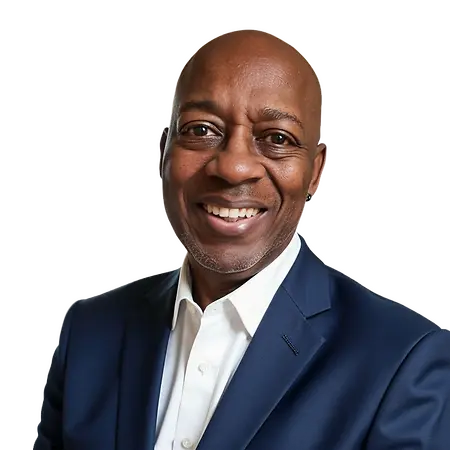
By Philip M. Baker
Author | Master Mindset Coach | Founder, Elevatio Collective Group
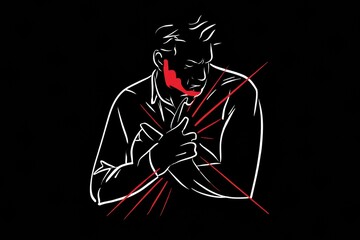
At 2:30 in the morning, I stood in front of a mirror, looked at my face, and said three words I never imagined I would have to say: “I'm having a stroke.”
One side of my face had dropped. My leg would not support my weight. In that moment, I knew something was terribly wrong.
But looking back, I realize my story didn't begin at 2:30 that morning.
It began weeks earlier, when my body was trying to tell me something I wasn't ready to hear.
My blood pressure was elevated. I wasn't sleeping properly, sometimes getting only three or four hours at a time. I was tired, feeling slightly disconnected, and experiencing moments when my balance didn't feel right.
Yet I kept going.
I had responsibilities. People depended on me. There were things to accomplish, places to be, and expectations to meet.
Like so many people, I had convinced myself that being strong meant pushing through whatever I was feeling.
I didn't realize how much I had confused staying busy with being well.
The Warning Signs I Kept Dismissing
The Sunday before my stroke, I was standing in worship when I noticed a slight wobble. Something about my balance wasn't right.
I noticed it, but I didn't stop.
Later that afternoon, I took a nap, something I rarely did. At a 4:00 p.m. meeting, I still felt a little off balance. By 10:30 that night, I was exhausted and went to bed.
I can look back now and see how those moments connected.
But at the time, I was doing what many of us do: explaining away the signs because life felt too busy to stop.
We tell ourselves it's just stress. We're tired. We need a good night's sleep. We'll make an appointment when things slow down.
But sometimes, things don't slow down on their own.
Sometimes, life stops us.
That night, at 2:30 a.m., mine did.
I share this because I want people to understand how easy it is to live on autopilot. We become so focused on meeting expectations that we forget to pay attention to ourselves.
I learned a lesson I wish I had understood sooner: taking care of yourself is not weakness, and listening to your body is not something you should keep postponing.
When I Could No Longer Rely on My Voice
After the stroke, I faced challenges that reached far beyond physical strength.
For years, communication had been an important part of who I was and how I served others. Through podcasting and conversations, I had used my voice to encourage people, challenge their thinking, and help them recognize possibilities beyond their circumstances.
Speaking came naturally to me.
Then I found myself in speech therapy, struggling to pronounce simple sounds such as “S” and “T.”
Think about that for a moment.
Something I had done without thinking—something that had become central to my work—was suddenly difficult.
Recordings of my previous voice were used during therapy as a point of comparison. I could hear how I used to sound while working to regain abilities I once took for granted.
That experience was humbling in a way I struggle to fully describe.
It also forced me to ask a question that went deeper than speech or recovery:
If I could no longer do what I had always done, who was I?
Maybe you've asked yourself a version of that question.
Perhaps you lost a job that gave you a sense of identity. Maybe a diagnosis changed what your body could do. Maybe a relationship ended, a business failed, or life took away something you believed you couldn't live without.
When the things we've depended on begin to change, it's easy to feel as though we're losing ourselves.
I had to learn that my abilities were not the whole of my identity.
My voice was one way I expressed my purpose. It wasn't the source of my worth.
And even when I struggled to express myself as I once had, I was still here.
My purpose had not disappeared.
That realization became a turning point in how I understood restoration.
Learning That Accepting Help Is Also Strength
Another part of my recovery challenged something I had carried for years: the belief that I always had to be the strong one.
I was accustomed to being dependable, handling responsibilities, and being there when others needed something.
But after the stroke, I had to learn how to receive support.
I needed to lean on my partner.
And I won't pretend that was easy.
There was a part of me that felt I should be strong enough to handle things myself so she wouldn't have to carry that burden.
But I eventually had to confront the pride hidden inside that thinking.
I had spent so much time associating strength with independence that I hadn't fully recognized the strength required to let someone walk alongside me.
I began to understand that accepting help doesn't make you less capable, less valuable, or less worthy of respect.
It makes you human.
And being human means there will be seasons when we give and seasons when we need to receive.
If you're going through something difficult right now, I want you to hear this:
You don't have to prove your strength by carrying everything alone.
Sometimes restoration begins when you finally allow yourself to be supported.
I Had to Stop Performing Strength and Start Being Honest
My stroke forced me to examine more than my health. It challenged the version of myself I had spent years presenting to the world.
I call that the Polished Version.
It's the version that always appears capable, dependable, composed, and ready to handle whatever comes next.
Many of us know that version well.
It's the person who says, “I'm fine,” even when things are falling apart.
It's the person who keeps smiling because everyone expects them to be strong.
It's the person who shows up for everyone else but rarely admits when they need someone to show up for them.
I recognized parts of myself in that description.
And I had to confront a difficult truth: looking strong and being honest about what you're experiencing are not always the same thing.
Restoration required me to become more authentic.
I had to acknowledge where I was, what I was feeling, and what I needed—without treating those admissions as failures.
I began to understand that I could experience frustration without becoming a frustrated person. I could feel afraid without allowing fear to define my identity. I could need help without becoming less of a man.
What I was experiencing was real, but it was not the entirety of who I was.
That distinction changed the way I approached my recovery and the way I now think about helping others.
From “Why Me?” to “What Do I Do Next?”
When something painful happens, it's natural to ask, “Why me?”
Why did this happen?
Why now?
Haven't I already been through enough?
Those questions can be difficult to escape, especially when you've worked hard, tried to do the right things, and believed you were moving in the right direction.
But I came to recognize that asking why something happened could keep me focused on what I couldn't change.
I needed to become more honest about where I was and more intentional about how I would respond.
For me, that meant learning to move beyond the question “Why me?” and consider a different perspective: “Why not me?”
Not because the stroke was easy. Not because I deserved it. And certainly not because pain should be dismissed.
But because adversity isn't something any of us can assume we'll be exempt from.
My faith helped me face that reality without accepting the idea that my experience was punishment or that my purpose had ended.
I couldn't change what had happened.
But I could participate in what came next.
That was where rebuilding my mindset became essential.
The Deeper Meaning of Being Restored
There's a reason I titled my book Restored, Not Just Renewed: Overcoming the Odds to Walk in Faith and Abundance.
I believe renewal and restoration are connected, but they are not identical.
Renewal can mean starting fresh.
Restoration asks us to go deeper.
It asks us to look honestly at what has been shaken, what we've been avoiding, and what needs to change—not just around us, but within us.
I didn't want to simply look as though I had recovered.
I wanted to become more aware, more authentic, more intentional, and more grounded in who I was created to be.
I wanted to rebuild my strength without losing myself in the process.
And I learned that restoration isn't always about returning to exactly who you were before adversity.
Sometimes it's about discovering who you are when the roles, expectations, and appearances you've relied upon are stripped away.
That discovery can be uncomfortable.
But it can also be freeing.
Why I Now Help Others Rebuild Their Mindset
My experience has shaped my work as a Master Mindset Coach and founder of Elevatio Collective Group.
I know that telling someone to “stay positive” is not enough when they're facing a serious challenge.
When life has shaken your confidence, you need more than a motivational phrase.
You need space to be honest about where you are.
You need guidance to recognize the thought patterns that may be keeping you stuck.
You need practical ways to develop resilience, rebuild confidence, and begin making intentional decisions again.
And sometimes, you need someone who understands that progress isn't always a straight line.
That's why I'm committed to reimagining life coaching.
I want to help people move beyond temporary inspiration toward meaningful, lasting transformation.
Through Elevatio Collective Group and the Elevatio Minds Media Podcast, I want to create opportunities for people to examine their thinking, share their experiences, strengthen their personal leadership, and recognize that difficult circumstances do not erase their potential.
I don't want to stand in front of someone and simply tell them to be resilient.
I want to walk alongside them as they discover what resilience can look like in their own lives.
Because I understand that rebuilding takes more than a moment of encouragement.
It takes honesty, support, patience, faith, and intentional action.
If You're Facing Your Own Life-Changing Moment
I don't know what you're going through as you read this.
Maybe you're recovering from an illness or injury.
Maybe you've lost something that once gave your life structure.
Maybe you're carrying responsibilities that feel heavier than anyone realizes.
Or maybe you're simply exhausted from being the person everyone expects to be strong.
Whatever your situation, I want to offer you something that helped reshape my own thinking:
Be honest about where you are without allowing where you are to become your identity.
Pay attention to what your body and mind are telling you.
Ask for help when you need it.
Give yourself permission to acknowledge the hard days.
And remember that making progress doesn't always mean moving quickly.
Sometimes it means learning to listen.
Sometimes it means accepting support.
Sometimes it means finding the courage to tell the truth about how you're really doing.
You don't have to pretend that everything is fine to begin moving forward.
You can start from where you actually are.
My Stroke Changed My Life. It Did Not End My Purpose.
When I think back to that moment at 2:30 in the morning, standing in front of the mirror and realizing I was having a stroke, I know my life was changing in ways I could not yet understand.
I would face challenges I hadn't planned for.
I would have to rebuild abilities I once took for granted.
I would have to examine my pride, my identity, my faith, and my understanding of strength.
But I also began discovering something that has become central to the way I live and the work I do today.
I am more than what happened to me.
And so are you.
My journey isn't about pretending adversity doesn't hurt or suggesting that faith makes recovery effortless.
It's about learning that we can face difficult realities honestly while still believing our lives have purpose.
It's about understanding that resilience isn't always loud or impressive. Sometimes it looks like patience, vulnerability, accepting help, or simply refusing to give up on yourself.
And it's about recognizing that restoration begins when we stop trying to appear whole and start doing the work of rebuilding from within.
I wrote Restored, Not Just Renewed because I wanted to share what this journey taught me—and offer others a way to reflect on their own lives with greater honesty, faith, and intention.
I survived a stroke.
But the story I want to tell is bigger than survival.
It's about rediscovering who I am, rebuilding what I can, accepting what I need, and using my experiences to help someone else find their way forward.
My life changed at 2:30 that morning. My purpose didn't end there.
And if you're facing a moment that has changed your life, I want you to remember this:
What happened to you is part of your story. It does not have to be the end of it.
— Philip M. Baker
ABOUT THE AUTHOR
Philip M. Baker is an author, entrepreneur, Master Mindset Coach, and founder of Elevatio Collective Group and the Elevatio Minds Media Podcast. Through his writing, coaching, and conversations, he helps people develop resilience, strengthen their mindset, navigate adversity, and pursue purposeful personal transformation. His books include Restored, Not Just Renewed: Overcoming the Odds to Walk in Faith and Abundance and Hardwired for Growth.
SUGGESTED PHOTO CAPTIONS
Before the Stroke: Philip M. Baker before the health crisis that would profoundly change his perspective on life, strength, and purpose.
After the Stroke: Philip M. Baker on his continuing journey of restoration, resilience, and helping others rebuild their lives with intention.