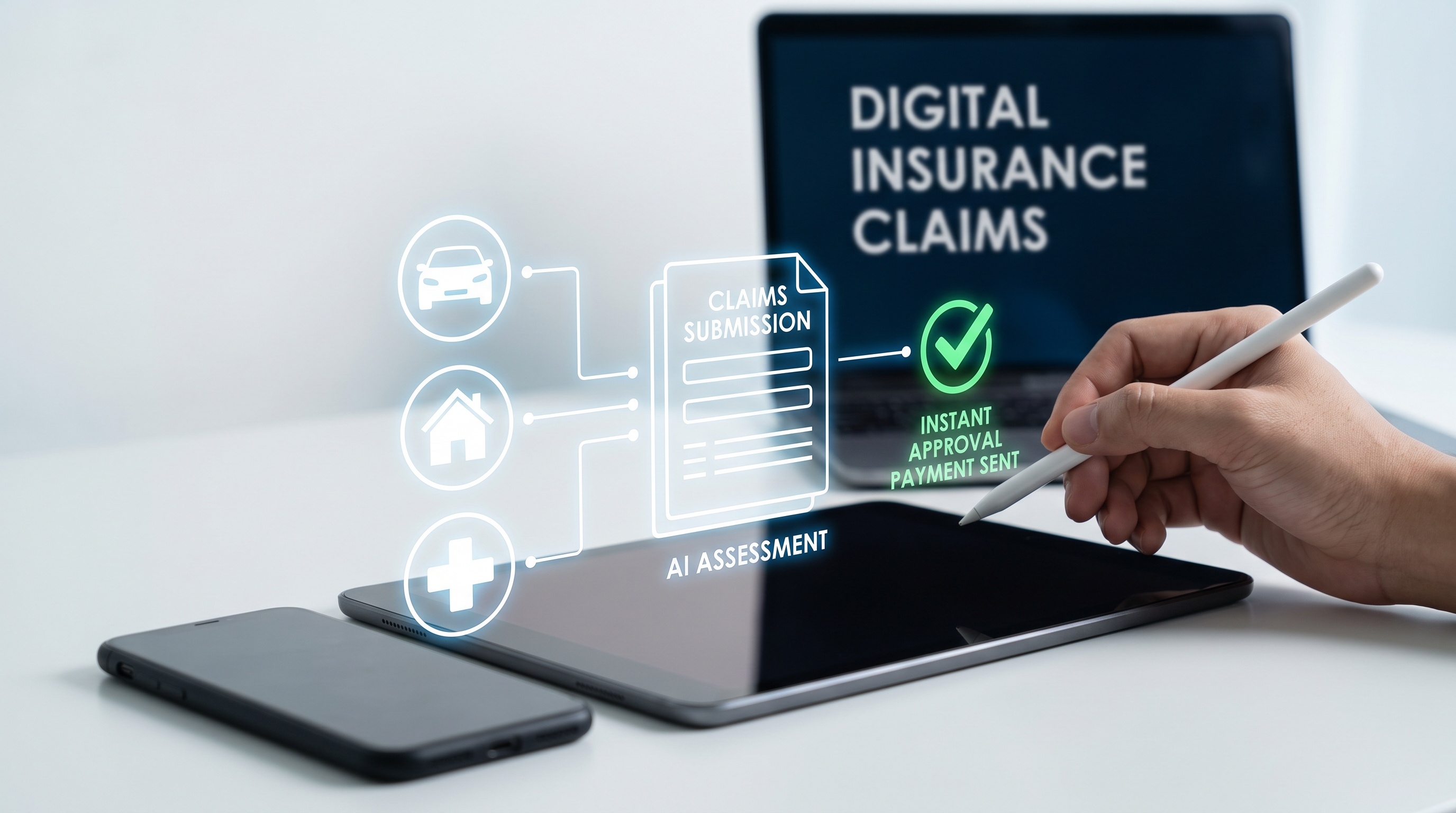
Insurance is investing heavily in artificial intelligence, predictive analytics, remote inspections, automated estimating, and digital claims platforms.
But the industry may be automating the wrong problem.
The central challenge in property claims is not simply that decisions take too long. It is that the people and systems making those decisions often lack complete, consistent, and accessible information about the property itself.
Roof conditions. Exterior and interior damage. Measurements. Photographs. Building components. Weather conditions. Scope details. Repair considerations.
When those facts are incomplete or scattered across disconnected systems, more technology downstream cannot reliably compensate. It may only help incomplete information move faster.
The opportunity in claims technology is not replacing adjusters. It is giving them better information sooner and eliminating the administrative friction that keeps them from using their judgment where it matters most.
That thinking is why we built FoxScope: a connected platform designed to work within the claims workflow, with an adjuster portal that brings the inspection process and its information into one place.
The Real Opportunity Is Upstream
Property claims involve a long chain of people, information, and decisions.
An inspection may happen in the field. Photos may be uploaded somewhere else. Measurements may come from another platform. Weather data may live in another system. A scope report may arrive separately. Estimating may occur later.
The adjuster is then left assembling the information needed to evaluate the claim.
None of those processes is necessarily inefficient on its own.
The inefficiency comes from the separation between them.
The insurance industry does not have a shortage of technology.
It has a fragmentation problem.
Every time information must be located, requested, re-entered, emailed, downloaded, or transferred between systems, friction enters the claim.
Across thousands of claims, those small moments become substantial.
The better question for the industry is not simply, “What else can we automate?”
It is, “How can we improve the flow of information from the property to the person making the decision?”
FoxScope™ was built around that challenge by connecting inspection activity, documentation, and adjuster access within a single workflow. Instead of treating an inspection as an isolated event that produces files for someone else to organize, the inspection becomes part of the connected claim.
AI Is Only as Good as the Information Feeding It
Artificial intelligence will undoubtedly play an increasingly important role in insurance.
It can organize information, identify patterns, assist with estimating, prioritize tasks, and reduce repetitive administrative work.
But AI does not eliminate the importance of what happens in the field.
It increases it.
A sophisticated claims platform cannot determine what was never documented.
An automated estimating system cannot account for a building component that was never identified.
A decision-support system cannot evaluate photographs that were never taken.
Technology performs best when the information feeding it is complete, structured, and accessible.
That means claims technology must evolve in both directions.
Carriers should continue improving the systems that analyze and process claims. At the same time, the industry must improve how information is collected at the property and delivered to the people and systems responsible for making decisions.
Connecting the inspection process, field documentation, and adjuster access can make that information more organized, visible, and usable from the beginning.
Technology Should Make Adjusters More Valuable
The goal of claims technology should not simply be reducing human involvement.
It should be reducing unnecessary human work.
There is an important difference.
Experienced adjusters bring judgment to a claim. They evaluate circumstances, interpret policy language, consider documentation, and make decisions that frequently cannot be reduced to a single data point.
Yet claims professionals can spend significant time tracking down documentation, checking inspection status, requesting additional photographs, finding measurements, locating reports, waiting for information, and moving between systems.
Those are areas where technology can create immediate value.
The most successful claims organizations will not necessarily be the ones that automate the most tasks. They will be the organizations that identify which tasks require human judgment and build systems that protect that time.
The biggest opportunity in claims technology is not automating the adjuster. It is eliminating the friction surrounding the adjuster.
Giving claims professionals a clearer view of inspection progress, documentation, and outstanding information can help create that environment without asking them to reconstruct a claim across multiple systems.
From Fragmented Claims to Connected Claims
The future property claim should increasingly operate as one connected information flow.
Scheduling should connect to the inspection. The inspection should connect to structured field documentation. Photos, measurements, and scope information should remain accessible alongside the claim. Weather information should be available when relevant. Estimating should build from information already collected.
And the people managing the claim should know what has happened, what is happening, and what still needs to happen.
Think of it as a connected property claim:
Scheduling → Inspection → Structured Field Data → Photos & Measurements → Weather → Scope → Estimate → Documentation → Adjuster Review
That does not mean every carrier must use one piece of software.
It means information should move through the claim as though the systems were designed to work together.
FoxScope is designed around that principle by creating a more direct connection between what happens at the property and what happens inside the claim.
The next generation of claims technology may not be defined by which company builds the most features.
It may be defined by which companies connect the right information at the right time.
Connect the Claim Before You Automate It
Better field information benefits the entire claims ecosystem.
Adjusters gain visibility and more time for judgment. Inspection teams understand what must be documented. Estimators work from more complete records. Claims leaders gain greater visibility into performance. And policyholders can experience fewer avoidable delays.
The future of property claims is not AI versus people, digital versus traditional, or automation for its own sake.
It is a connected process in which accurate information moves from the property to the systems and professionals responsible for making decisions.
For carriers, that means identifying where information is lost, delayed, or re-entered and prioritizing integrations and field standards that close those gaps.
For adjusters, it means identifying administrative tasks that consume time without improving decision-making and advocating for tools that put information into an accessible workflow.
For claims technology leaders, it means designing around interoperability, structured field data, and human decision support—not simply adding more automation.
At Fox Claims Consultants, our work across property inspections, claims documentation, estimating, and technology has reinforced a simple belief:
The industry does not need fewer adjusters. It needs fewer information gaps.
Connect the claim before you automate it, and technology can do what it was meant to do: help claims professionals make better decisions faster.