NEUROLOGICAL BATTERY: THE INVISIBLE INJURIES OF PSYCHOLOGICAL WARFARE
Www.healloudlymovement.com
When psychological abuse attacks the brain, nervous system, identity, and ability to function, we need terminology that recognizes the full extent of the damage.
For far too long, victims of severe narcissistic abuse and coercive control have been told they suffered emotional abuse, psychological manipulation, or trauma. While those descriptions are accurate, they often fail to communicate the devastating extent of what prolonged psychological warfare can do to another human being. These are not simply people who have been hurt emotionally or who are struggling to recover from a difficult relationship. We are talking about human beings who can experience profound psychological, neurological, physiological, and functional deterioration after being subjected to sustained patterns of fear, coercion, humiliation, manipulation, and psychological torment.
We are talking about victims who develop severe Complex Post-Traumatic Stress Disorder (CPTSD), experience debilitating cognitive and neurological-related symptoms, lose their ability to regulate their emotions, suffer serious physical health consequences, and sometimes become so psychologically overwhelmed that they can no longer maintain employment, relationships, housing, or even their basic daily functioning. We are talking about people whose entire sense of identity, safety, reality, and independence can be dismantled through prolonged psychological warfare. People who may have once been confident, successful, independent, and emotionally stable, only to find themselves struggling to accomplish the most basic tasks of everyday life.
THIS IS WHAT I CALL NEUROLOGICAL BATTERY.
Neurological battery is the term I have introduced to encompass the devastating psychological, neurological, physiological, cognitive, emotional, behavioral, and functional injuries that can result from severe, prolonged psychological warfare and coercive control. It recognizes that the consequences of this abuse are not limited to hurt feelings, emotional distress, or psychological discomfort. They can affect the very systems that allow a human being to think, remember, regulate emotions, recognize danger, experience safety, maintain relationships, make decisions, and function independently. When these systems become overwhelmed by prolonged traumatic stress, the consequences can reach into nearly every aspect of a person's existence, fundamentally altering the way they experience themselves, other people, and the world around them.
THE BRAIN AND NERVOUS SYSTEM UNDER PSYCHOLOGICAL WARFARE
The human brain is designed to recognize threats and respond to danger. When someone experiences fear, the body's stress-response systems activate to help them survive. These responses are essential during moments of genuine danger because they prepare the body to fight, flee, freeze, or otherwise protect itself. But what happens when the danger is not a single traumatic event? What happens when the threat becomes a person's everyday reality, when there is no predictable moment of safety, and when the very person who is supposed to provide love, security, and emotional connection becomes the source of repeated psychological injury?
Imagine living with someone who repeatedly manipulates your perceptions, threatens your stability, exploits your emotional attachments, humiliates you, isolates you, and creates an environment where you never know what will happen next. Imagine constantly monitoring their mood, their words, their facial expressions, and their behavior because even the smallest change could signal another confrontation, accusation, punishment, or psychological attack. Over time, the victim may begin organizing their entire existence around preventing the next episode of abuse, sacrificing their own needs, independence, boundaries, and emotional well-being simply to maintain some sense of peace.
Now imagine being subjected to this for months or years, only to discover that the abuse continues after separation through stalking, intimidation, character assassination, financial destruction, threats, or the misuse of institutions. The relationship may have ended, but the victim's exposure to fear and uncertainty has not. Their nervous system may remain in a state of heightened alertness because the circumstances surrounding the abuse continue to reinforce the perception that danger is never far away. Even ordinary situations, unfamiliar people, unexpected telephone calls, or official correspondence may trigger intense physiological and emotional responses.
Prolonged traumatic stress can affect the way the brain and nervous system respond to perceived danger. Survivors may experience persistent hyperarousal, problems with concentration and memory, disrupted sleep, emotional dysregulation, intrusive memories, and difficulty distinguishing present safety from reminders of past threats. These symptoms are not evidence of weakness or an inability to cope with ordinary life. They can be manifestations of serious trauma-related conditions that interfere with the neurological, psychological, and physiological processes necessary for everyday functioning. When these injuries affect nearly every aspect of someone's life, describing the experience as simply emotional abuse fails to communicate the magnitude of what that person has endured.
THE 90 SYMPTOMS AND CONSEQUENCES ENCOMPASSED BY NEUROLOGICAL BATTERY
Neurological battery, as I define it, brings together the wide-ranging injuries and impairments associated with prolonged psychological abuse and coercive control. The following 90 symptoms and consequences illustrate how extensively psychological warfare can affect a human being. They include trauma-related symptoms, associated health complaints, coping responses, and functional consequences that may develop in severe cases. Not every survivor will experience every symptom, and the severity of these injuries can vary considerably. What matters is understanding that these consequences are interconnected and that their cumulative impact can be devastating.
PSYCHOLOGICAL AND EMOTIONAL DESTRUCTION
- Persistent terror, even when physically safe.
- Severe and overwhelming anxiety.
- Debilitating panic attacks.
- Chronic feelings of impending doom.
- Emotional flashbacks that recreate the terror of past abuse.
- Uncontrollable crying episodes.
- Emotional numbness and detachment.
- Severe depression and hopelessness.
- Intense shame and humiliation.
- Persistent guilt and self-blame.
- Profound feelings of worthlessness.
- Loss of personal identity.
- Inability to experience happiness or pleasure.
- Extreme sensitivity to criticism or rejection.
- Sudden anger, irritability, or emotional outbursts.
- Severe emotional dysregulation.
- Persistent feelings of helplessness.
- Suicidal thoughts and overwhelming desires to escape psychological suffering.
The psychological and emotional destruction associated with prolonged coercive control can fundamentally change the way survivors experience themselves and the world around them. Someone who was once confident, outgoing, independent, and emotionally stable may become fearful, withdrawn, overwhelmed, and unable to recognize the person they have become. Their emotional responses may feel unpredictable, their confidence may disappear, and the ordinary challenges of daily life may become almost impossible to manage. What outsiders sometimes interpret as excessive sensitivity, instability, or an unwillingness to move forward may actually reflect the cumulative impact of prolonged traumatic exposure.
These injuries can also create a devastating internal conflict because victims often remember who they were before the abuse. They remember their confidence, their ambition, their ability to laugh freely, their relationships, and the life they were building. They may desperately want to return to that version of themselves while simultaneously struggling with symptoms that make recovery feel impossible. This loss of identity can become an additional source of grief, particularly when the survivor is surrounded by people who do not understand why the effects of psychological abuse can persist long after the relationship has ended.
COGNITIVE AND NEUROLOGICAL-RELATED IMPAIRMENTS
- Severe brain fog.
- Short-term memory difficulties.
- Impaired concentration.
- Difficulty processing information.
- Confusion about past events.
- Persistent doubt about personal memories and perceptions.
- Difficulty making simple decisions.
- Intrusive traumatic memories.
- Racing thoughts.
- Obsessive rumination about the abuse.
- Difficulty organizing thoughts or communicating clearly.
- Dissociation and detachment from one's body.
- Derealization, where the surrounding world feels unreal.
- Depersonalization, where someone feels disconnected from themselves.
- Freeze responses and temporary inability to act.
- Impaired planning, organization, and task completion.
- Exaggerated startle responses.
The cognitive consequences of prolonged psychological warfare can be particularly devastating because they interfere with a victim's ability to explain what happened, organize information, make decisions, and advocate for themselves. Severe traumatic stress can disrupt attention, memory retrieval, concentration, and executive functioning, leaving survivors struggling with tasks that once required little effort. A person may know exactly what happened to them but find themselves unable to communicate the experience in a clear, organized, chronological manner, particularly when they are frightened, overwhelmed, or being questioned by someone in a position of authority.
Imagine trying to explain years of complicated psychological abuse while struggling with memory, concentration, emotional regulation, and the ability to organize your thoughts. Now imagine being placed in a courtroom, police interview, or institutional proceeding where those very difficulties are interpreted as dishonesty, instability, or a lack of credibility. A victim may become visibly distressed, struggle to remember exact dates, lose their train of thought, or provide information out of sequence, not because they are deliberately being deceptive, but because the circumstances of the interview are activating the very trauma-related symptoms they are attempting to explain.
THE CONSEQUENCES OF THE TRAUMA CAN BECOME THE VERY REASONS A VICTIM IS NOT BELIEVED.
This is one of the most devastating ways institutional misunderstanding can compound psychological injury. When professionals fail to recognize how trauma can affect communication, memory, and emotional regulation, victims may experience additional humiliation, disbelief, and psychological distress. Instead of receiving meaningful protection, they may find themselves forced to repeatedly defend their credibility while the underlying pattern of abuse receives insufficient examination. The victim is left attempting to prove the reality of their suffering while struggling with injuries that make that process increasingly difficult.
PHYSICAL AND NERVOUS SYSTEM CONSEQUENCES
- Persistent hypervigilance.
- Chronic muscle tension.
- Frequent headaches and migraines.
- Severe fatigue and exhaustion.
- Chronic insomnia.
- Recurring traumatic nightmares.
- Heart palpitations and racing heartbeat.
- Trembling and shaking.
- Excessive sweating during stress responses.
- Gastrointestinal distress.
- Significant appetite changes.
- Chronic or stress-exacerbated physical pain.
- Dizziness and lightheadedness.
- Tingling or numbness during intense anxiety.
- Jaw clenching and teeth grinding.
- Increased sensitivity to noise, crowds, and stimulation.
- Changes in sexual desire or functioning.
- Persistent exhaustion despite adequate rest.
- Rapid breathing and sensations of breathlessness.
The physical consequences of severe psychological abuse demonstrate why psychological violence cannot be understood as something that affects only a person's emotions. The brain and body are interconnected, and prolonged activation of stress-response systems can contribute to significant physiological distress. A person living in a persistent state of fear may experience chronic muscle tension, gastrointestinal problems, disrupted sleep, headaches, exhaustion, and cardiovascular symptoms associated with stress. These experiences can become so debilitating that survivors begin struggling with their physical health alongside the psychological injuries they are already attempting to manage.
For some victims, the body continues responding to danger even when there is no immediate physical threat. Their heart may race when a telephone rings, their muscles may tighten when someone raises their voice, or they may become overwhelmed in crowded environments because their nervous system remains unusually sensitive to perceived threats. Sleep may offer little relief because nightmares, intrusive memories, and hyperarousal prevent meaningful rest. Over time, the combination of physical exhaustion, emotional distress, and cognitive impairment can create a cycle in which the person has fewer and fewer resources available to manage everyday responsibilities.
These symptoms deserve serious medical attention, including evaluation for conditions that may exist independently of trauma. Their possible connection to prolonged psychological abuse should not be dismissed simply because the injuries are not visible. The absence of bruises, broken bones, or other obvious physical evidence does not mean that a person's health has remained unaffected. Psychological violence can have consequences that extend far beyond emotional suffering, and recognizing those consequences is essential to understanding the full extent of the harm.
RELATIONSHIP AND ATTACHMENT INJURIES
- Severe difficulty trusting others.
- Intense fear of abandonment.
- Difficulty establishing emotional intimacy.
- Social withdrawal and isolation.
- Emotional disconnection from loved ones.
- Fear of entering another abusive relationship.
- Difficulty establishing personal boundaries.
- Compulsive people-pleasing.
- Automatic appeasement or submission when threatened.
- Excessive reassurance-seeking.
- Conflicting feelings of attachment, fear, grief, and longing toward an abuser.
- Difficulty recognizing or maintaining healthy relationships.
One of the cruelest consequences of prolonged coercive control is that the damage can follow victims into relationships with people who have never harmed them. A survivor may desperately want love, companionship, intimacy, and emotional connection while simultaneously experiencing overwhelming fear of betrayal, abandonment, humiliation, or exploitation. The very relationships that could provide comfort and stability may become sources of anxiety because the victim's previous experiences have profoundly affected their ability to recognize and experience emotional safety.
Survivors may begin questioning the intentions of people who genuinely care about them, interpreting ordinary disagreements as warning signs of impending abuse or withdrawing from relationships before they have an opportunity to develop. Others may become excessively accommodating, repeatedly apologizing, suppressing their needs, or tolerating mistreatment because they have learned that asserting themselves can lead to punishment or rejection. These patterns can be deeply distressing because the survivor may recognize that their responses are interfering with healthy relationships while feeling unable to change them.
The isolation that follows can become devastating. A person may stop attending social gatherings, avoid meeting new people, distance themselves from family members, or abandon activities they once enjoyed. They may feel profoundly lonely while simultaneously fearing the vulnerability that comes with human connection. What appears to outsiders as withdrawal or disinterest may actually reflect a person struggling to reconcile their need for companionship with a nervous system that has learned to associate closeness with danger.
BEHAVIORAL AND FUNCTIONAL IMPAIRMENTS
- Avoidance of trauma-related people, places, and situations.
- Difficulty maintaining employment.
- Inability to manage everyday household responsibilities.
- Neglect of personal hygiene or basic self-care during severe episodes.
- Difficulty leaving the house.
- Repeated checking of doors, phones, messages, or surroundings for threats.
- Excessive apologizing.
- Difficulty communicating personal needs.
- Task paralysis and avoidance caused by overwhelm.
- Increased reliance on alcohol or other substances to cope.
- Self-destructive or reckless behavior during periods of extreme distress.
- Difficulty planning or imagining a positive future.
The functional consequences of neurological battery can be among the most destructive because they interfere directly with a person's ability to survive independently. Severe trauma-related symptoms can make it difficult to maintain employment, manage finances, complete household responsibilities, attend appointments, maintain personal hygiene, or participate in ordinary social activities. Tasks that once seemed effortless may require enormous amounts of mental and emotional energy, leaving survivors feeling defeated by responsibilities they previously handled without difficulty.
For someone experiencing severe cognitive impairment, emotional dysregulation, exhaustion, and persistent hypervigilance, maintaining a consistent work schedule may become extraordinarily difficult. They may struggle to concentrate, experience panic attacks, miss work because of sleeplessness, or become overwhelmed by ordinary workplace interactions. If they lose their employment, the resulting financial instability can intensify their psychological distress, particularly when they are already struggling with housing insecurity, legal expenses, or the financial consequences of coercive control.
Some survivors experience repeated hospitalizations, disability, homelessness, or an inability to maintain basic independence. These outcomes may develop through a combination of trauma-related impairment, continued abusive conduct, social isolation, and failures of available support systems. The consequences can become a devastating cycle in which the victim needs stability to recover, but the injuries and circumstances surrounding the abuse make stability increasingly difficult to achieve. The person may be fighting desperately to rebuild their life while the very capacities needed for that recovery have been severely compromised.
SEVERE PSYCHOLOGICAL AND EXISTENTIAL DESTRUCTION
- Profound grief over the loss of one's former identity.
- Feeling that life has been divided into before and after the abuse.
- Loss of meaning, purpose, and direction.
- Feeling fundamentally changed or damaged.
- Persistent feelings of defeat and entrapment.
- Fear that the abuse will never end.
- Feeling incapable of rebuilding a normal life.
- Inability to recognize personal strengths or accomplishments.
- Loss of confidence in one's ability to live independently.
- Severe emotional exhaustion from prolonged survival-mode functioning.
- Disconnection from former values, beliefs, and personality.
- Recurrent suicidal crises or suicide attempts in the most severe cases.
This final category reflects something that conventional descriptions of emotional abuse often fail to communicate. Severe psychological warfare can affect far more than a person's emotional state. It can fundamentally disrupt their sense of identity, autonomy, purpose, and connection to life itself. Victims may reach a point where they no longer recognize the person they have become, cannot imagine rebuilding what they have lost, and struggle to believe that meaningful recovery is possible. The devastation is not always visible to the outside world, but its consequences can affect nearly every aspect of their existence.
A HUMAN BEING CAN SURVIVE PHYSICALLY WHILE EXPERIENCING A PROFOUND COLLAPSE OF THEIR PSYCHOLOGICAL IDENTITY AND ABILITY TO FUNCTION.
Someone can still be breathing, still be walking, still be speaking, and yet feel that nearly everything they once understood about themselves has been destroyed. Their career may be gone, their relationships may be gone, their home may be gone, and the confidence, security, independence, and sense of belonging that once defined their existence may have been shattered. They may spend years attempting to reconstruct a life that was dismantled through circumstances they never imagined experiencing, all while carrying the psychological and physiological consequences of what happened.
For victims experiencing ongoing harassment, stalking, coercive control, or institutional conflict, the suffering may be intensified by the reality that the source of their distress has not completely disappeared. They are expected to recover while continuing to confront circumstances that reinforce their fear, uncertainty, and psychological exhaustion. They may be told to move forward, stop talking about what happened, or focus on rebuilding their lives without anyone recognizing that recovery becomes extraordinarily difficult when the conditions contributing to the trauma remain unresolved.
And society may look at that person and ask why they cannot simply move on.
COMPLEX PTSD AND WHAT SURVIVORS CALL NARCISSISTIC ABUSE SYNDROME
Complex Post-Traumatic Stress Disorder is recognized in the World Health Organization's ICD-11 and is associated with exposure to extremely threatening or horrific events, often involving prolonged or repeated experiences from which escape is difficult. Its defining features include the core symptoms of PTSD, such as re-experiencing traumatic events, avoidance of trauma-related reminders, and a persistent sense of current threat, alongside significant difficulties regulating emotions, maintaining a positive sense of self, and sustaining relationships. These symptoms can create serious impairments in personal, occupational, and social functioning, particularly when the individual has experienced prolonged interpersonal trauma.
The term Narcissistic Abuse Syndrome is frequently used by survivors to describe the collection of psychological and physical consequences they associate with prolonged narcissistic abuse. It reflects the experiences of individuals who report enduring manipulation, humiliation, coercion, emotional exploitation, and persistent attacks on their sense of reality and self-worth. The language resonates with many survivors because it attempts to communicate the cumulative consequences of abuse that may be difficult to explain through descriptions of isolated incidents.
Neurological battery encompasses the psychological symptoms of trauma along with the cognitive, nervous system, physiological, relational, behavioral, and functional consequences that can develop through severe psychological warfare. It brings these injuries together because the damage experienced by victims does not occur in neatly separated categories. Psychological distress can affect physical health, cognitive impairment can interfere with employment, financial instability can intensify emotional suffering, and damaged relationships can deepen isolation. Each consequence can influence the others, creating a cumulative burden that becomes increasingly difficult to overcome.
The central purpose of neurological battery is to recognize the TOTALITY OF THE INJURY. When someone has experienced prolonged psychological warfare, examining each symptom in isolation can obscure the larger pattern of harm and the circumstances that contributed to it. Understanding the full scope of the injury requires looking at how the victim's psychological, neurological, physiological, emotional, social, and functional capacities have been affected together, rather than treating every consequence as an unrelated problem.
WHEN THE VICTIM'S INJURIES ARE WEAPONIZED AGAINST THEM
One of the most disturbing aspects of prolonged psychological warfare is what can happen when a victim finally begins showing the effects of their trauma. They may become emotionally overwhelmed, struggle to communicate clearly, react defensively when threatened, or repeatedly attempt to explain what happened because they desperately want someone to understand. Their distress may become increasingly visible as they struggle with the cumulative effects of fear, humiliation, betrayal, and psychological exhaustion. Yet rather than examining the circumstances that produced those responses, other people may focus entirely on the victim's behavior.
Their emotional dysregulation becomes evidence that they are unstable. Their memory difficulties become accusations of dishonesty. Their fear becomes paranoia in the eyes of others. Their desperation to be heard becomes an accusation that they are obsessive. Their attempts to defend themselves may be characterized as aggression without sufficient consideration of the coercion, intimidation, or psychological injuries that preceded those reactions. In some cases, an abuser may deliberately exploit these responses to undermine the victim's credibility, presenting the visible consequences of prolonged psychological harm as evidence that the victim was the problem all along.
THE INJURY BECOMES THE WEAPON USED AGAINST THE INJURED.
This is why I reject language that automatically characterizes a victim's defensive reactions as equivalent to the abuse that preceded them. I use the term coerced defensive aggression to encourage a more careful examination of defensive behavior occurring within prolonged coercive control. When someone has been subjected to repeated intimidation, manipulation, humiliation, and psychological attacks, their defensive responses cannot be meaningfully understood without examining the circumstances in which those responses developed. A reaction occurring within an ongoing pattern of coercion is not automatically equivalent in purpose, context, or power to the conduct that preceded it.
This does not mean every defensive reaction is justified or that every allegation against a victim is false. It means behavior must be evaluated within its full context, including the history of coercion, threats, fear, psychological injury, and the relative power exercised by the people involved. Without that context, institutions risk misunderstanding the very people they are supposed to protect. They may focus on the victim's visible distress while overlooking the sustained pattern of psychological violence that contributed to it, allowing the consequences of abuse to become additional obstacles to justice and protection.
THE CONNECTION BETWEEN NEUROLOGICAL BATTERY AND PSYCHOLOGICAL HOMICIDE
Neurological battery and psychological homicide are connected concepts within the framework I am developing to describe the devastating consequences of severe psychological warfare. Neurological battery encompasses the broad range of psychological, neurological, physiological, cognitive, emotional, behavioral, and functional injuries that can result from sustained coercive control. Psychological homicide describes the extreme destruction of a person's psychological identity, autonomy, and will to live, including circumstances in which prolonged psychological abuse may contribute to suicide or another fatal outcome.
When someone is subjected to years of psychological torment, loses their stability, experiences severe CPTSD symptoms, becomes increasingly isolated, and reaches a point where they can no longer imagine relief from their suffering, we must examine the circumstances that brought them there. We must look beyond the final crisis and consider the prolonged exposure to coercion, intimidation, humiliation, psychological manipulation, and emotional devastation that may have contributed to their deteriorating condition. We must recognize that suicidal crises do not always emerge from a single event, but can develop within a complicated combination of psychological injury, overwhelming distress, isolation, and circumstances that leave a person feeling trapped.
We need to ask whether warning signs were ignored, whether coercive control continued after separation, whether institutions failed to recognize escalating danger, and whether deliberate acts of psychological cruelty contributed to the outcome. We need to examine whether victims repeatedly sought help, whether their concerns were dismissed, and whether the systems responsible for protection adequately considered the cumulative consequences of sustained psychological abuse. These questions become especially important when a victim has experienced repeated suicidal crises, severe functional deterioration, or escalating psychological distress while the circumstances contributing to their suffering continue.
Not every suicide following abuse is legally homicide, and establishing criminal responsibility requires careful evidence and legal analysis. But the role of prolonged abuse in suicide risk deserves serious investigation rather than automatic dismissal. When psychological cruelty contributes to a person's deteriorating mental health and increasing desperation, those circumstances deserve meaningful examination. The seriousness of psychological violence should not depend entirely on whether its consequences produce visible physical injuries or a fatal outcome.
WE SHOULD NOT HAVE TO WAIT UNTIL A VICTIM DIES TO RECOGNIZE THAT THE CONSEQUENCES OF PSYCHOLOGICAL WARFARE CAN BE LIFE-THREATENING.
WHY THE LANGUAGE MUST CHANGE
The purpose of introducing neurological battery is to challenge the way society minimizes psychological violence by treating its consequences as isolated emotional problems. When a victim experiences dozens of debilitating symptoms, loses the ability to function independently, struggles to maintain employment and housing, becomes disconnected from relationships, and experiences profound changes in their psychological and physical health, we need language that recognizes the full scope of what has happened. We need to stop treating severe psychological injury as though it is somehow less significant simply because it cannot always be photographed, measured through an ordinary physical examination, or demonstrated through visible wounds.
We need trauma-informed medical and mental health assessments that consider the cumulative consequences of prolonged coercive control. We need professionals who understand how psychological warfare can affect memory, concentration, emotional regulation, physical health, relationships, and everyday functioning. We need law enforcement and courts capable of evaluating patterns of abuse rather than looking only for individual incidents of physical violence. We need institutions that recognize how trauma-related symptoms may affect the way victims communicate, respond to questioning, organize evidence, and advocate for themselves, particularly when they are forced to repeatedly recount experiences that have caused profound psychological suffering.
We also need serious research into the long-term psychological, physiological, and neurological consequences of sustained coercive control. The effects of prolonged traumatic stress deserve examination across multiple disciplines because these injuries can involve interconnected systems that influence a person's overall health and ability to function. Understanding the relationship between psychological violence, nervous system dysregulation, cognitive impairment, chronic stress, physical illness, and functional disability is essential to improving the way victims are evaluated, treated, and protected.
Most importantly, we need to understand that the absence of visible injury does not mean the absence of serious harm. A person can experience devastating psychological and physiological consequences without ever being physically struck. Their life can be profoundly altered through sustained intimidation, humiliation, coercion, manipulation, isolation, and the destruction of their emotional and financial stability. The damage may not be immediately apparent to strangers, employers, police officers, attorneys, or judges, but that does not make the suffering any less real or the consequences any less serious.
A PERSON SHOULD NOT HAVE TO LOSE THEIR CAREER, THEIR HOME, THEIR RELATIONSHIPS, THEIR HEALTH, THEIR IDENTITY, AND THEIR WILL TO LIVE BEFORE SOCIETY ACKNOWLEDGES THE SEVERITY OF WHAT THEY HAVE ENDURED.
Neurological battery is the language I am advancing to bring these consequences together and demand that they be recognized as part of the broader conversation about psychological violence. It is about understanding that severe psychological abuse can affect the entire human experience, from the way someone processes information and responds to danger to their ability to maintain relationships, support themselves financially, experience happiness, and imagine a future beyond their suffering. These injuries should not be minimized, dismissed, or separated from the circumstances that contributed to them simply because they are complicated, difficult to observe, or uncomfortable for society to confront.
Because when psychological warfare affects someone's ability to think, remember, feel safe, regulate emotions, maintain relationships, and participate in everyday life, we are no longer talking about hurt feelings. We are talking about injuries that can fundamentally alter the course of a human life, leaving survivors struggling to rebuild capacities, relationships, opportunities, and a sense of identity that prolonged abuse may have severely damaged. Those injuries deserve recognition, treatment, protection, and meaningful accountability, and the people experiencing them deserve to be heard without having their suffering reduced to an emotional reaction or a personal inability to move forward.
PSYCHOLOGICAL VIOLENCE IS VIOLENCE. THE CONSEQUENCES CAN BE DEVASTATING. AND SURVIVING THE ABUSE DOES NOT MEAN THE VICTIM ESCAPED WITHOUT SERIOUS INJURY.
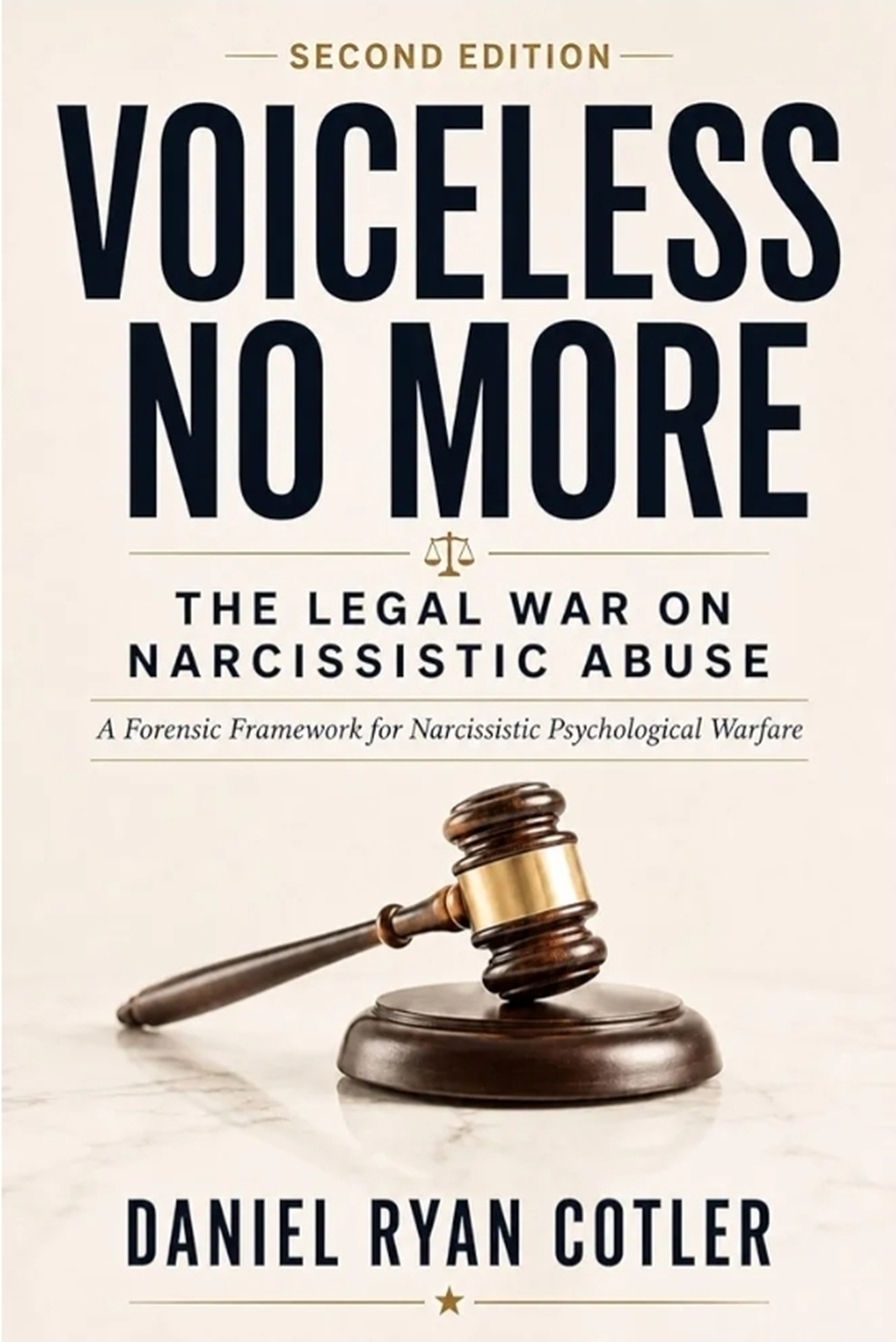
Voiceless No More: The Legal War on Narcissistic Abuse
By Daniel Ryan Cotler
Available on Amazon.