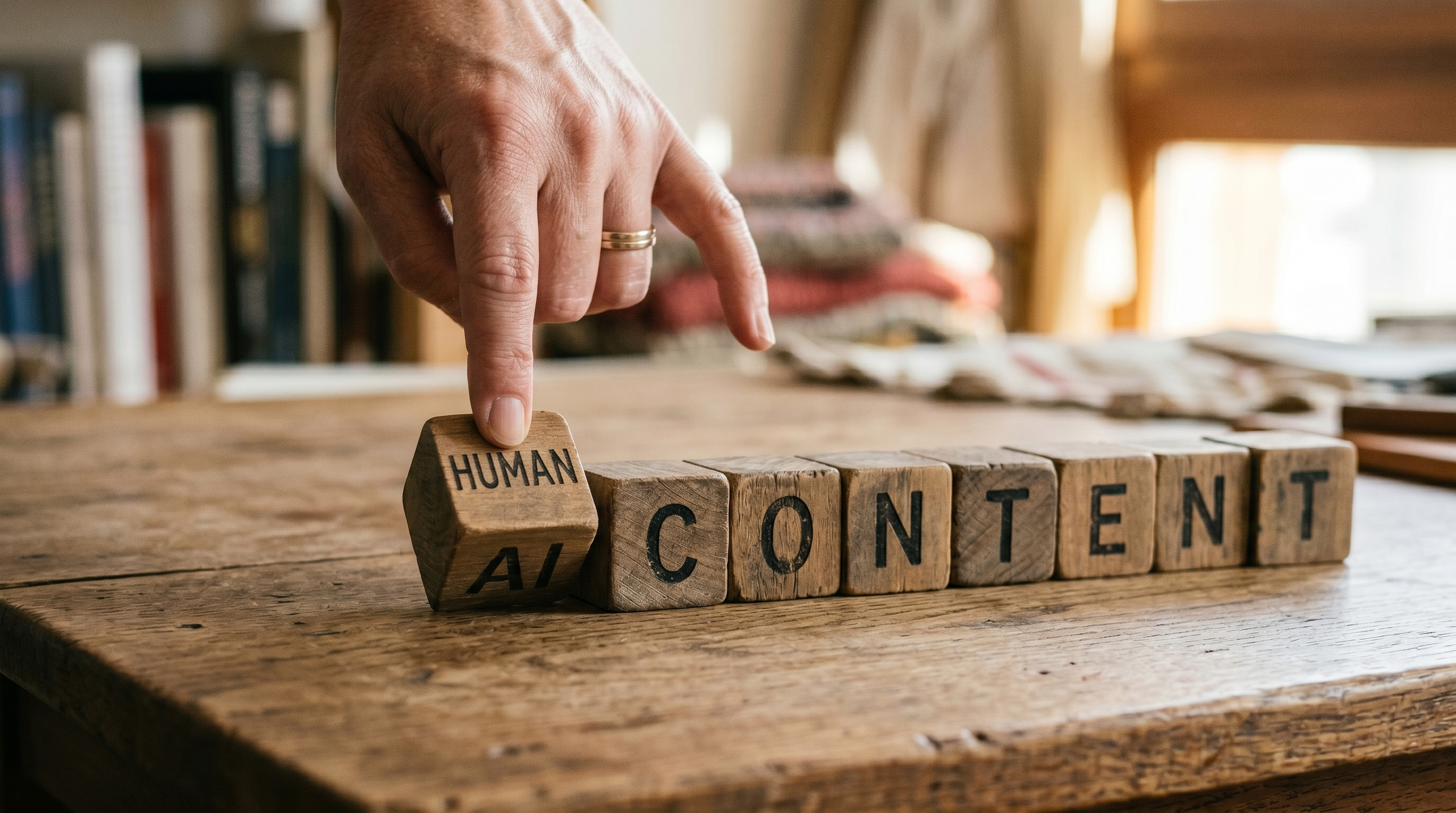
Generative AI and the Humanities: Does Generative AI Pose an Existential Threat to the Discipline?
Shahidur Rashid Talukdar, Ph.D.
The question looms large over creative communities, academic conferences, and graduate student gatherings across the nation and the world: Does generative AI pose a threat to the humanities? This question provokes anxiety, defensiveness, and, often, despair among many. As artificial intelligence systems become increasingly sophisticated in their ability to write essays, compose poetry, create visual art, and even engage in philosophical discourse, those who have dedicated their lives to the humanities find themselves confronting an unsettling possibility—that the very skills and insights they have been cultivating for years might become obsolete.
This concern is not unfounded, nor is it merely an academic exercise. The rise of generative AI represents a fundamental shift in how we create, consume, value, and appreciate humanistic work. Yet, as I will argue, while generative AI presents profound challenges to the humanities, it does not pose an existential threat. Rather, understanding what makes human creativity, scholarship, and expression irreplaceable can help us navigate this technological transformation and emerge with a renewed appreciation for what the humanities offer.
Of late, both activists and AI experts have voiced serious concerns regarding AI as an existential threat to humanity itself, not just to the humanities discipline. To this, I argue that there have been other scientific and technological developments—such as weapons of mass destruction—that have posed existential threats to life, but we haven’t stopped. We’ve found solutions and regulatory mechanisms to address such threats.
A Room Full of Anxiety
I experienced the gravity of this question firsthand in March 2024 at the Virginia Humanities Conference. The theme was timely and urgent: The Impact of Artificial Intelligence in the Humanities. I participated in the conference as a presenter. Among the several sessions I attended, one session, in particular, left an indelible impression—a discussion about the future prospects of graduate students in the humanities.
As I entered the room, the atmosphere was palpably tense. The participants, graduate students, recent graduates, and their faculty mentors, were wrestling with a troubling realization. If generative AI tools can write, draw, speak, and sing—tasks once considered the exclusive domain of creative minds—then what future awaits those training to become humanities professionals? One by one, participants voiced their concerns, each contribution adding another layer to an increasingly gloomy picture. The creative workers and humanities professionals saw their futures at stake. Even though I participated in the session online, I could feel from their appearances and voices that the air in the room was thick with hopelessness and despondency, as if we were collectively witnessing the slow-motion collapse of an entire field of human endeavor—the humanities.
This scene, I suspect, has played out in countless academic settings over the past few years. The anxiety is real, the stakes are high, and the questions are legitimate. But are we asking the right questions? And more importantly, are we looking in the right places for answers?
The Voices of Concern
The humanities community’s apprehension about AI has been articulated powerfully in recent scholarship and commentary. Two particularly insightful pieces frame the debate in complementary ways.
In the Chronicle of Higher Education, Phil Christman’s article (Can the Humanities Survive AI?, published on January 22, 2025) examines how recent developments in AI technology threaten humanities education. Christman critiques what he calls the “long-termism” worldview, which envisions AI as accelerating humanity toward some grand but undefined destiny, with traditional work and education seen as obstacles to overcome rather than valuable pursuits in themselves. He argues that conventional defenses of the humanities—the familiar refrain of “making the case” for why literature, history, and philosophy matter—will prove ineffective against those who are actively eager to replace human scholars and teachers with automated systems. Christman warns of a future dominated by automated graders, AI tutors, and underpaid “learning facilitators” replacing professors, suggesting that labor organizing and mobilization may be necessary to preserve humanities education. His analysis forces us to confront uncomfortable questions about what humanities scholarship is actually worth and who it serves.
D. Graham Burnett’s essay in The New Yorker (Will the Humanities Survive Artificial Intelligence?, published on April 26, 2025) approaches the question from a different angle, describing AI as potentially more threatening to universities than political attacks from state legislatures. Burnett recounts a revealing classroom experiment in which students engaged in conversations with AI about course material. The exercise produced what he describes as “watching a new kind of creature being born”—a moment of profound unease about the nature of intelligence and understanding. One student in his class expressed the crisis in stark terms: “I cannot figure out what I am supposed to do with my life if these things can do anything I can do faster and with way more detail.” Yet another student offered a counterpoint that would prove prescient: “The AI is huge. A tsunami. But it’s not me. It can’t touch my me-ness. It doesn’t know what it is to be human, to be me.”
Burnett argues that university campuses exist in a bizarre interlude, pretending this revolution isn’t happening, with AI bans representing what he calls “simply, madness.” His conclusion, however, offers a glimmer of hope: while AI threatens the humanities “as we’ve known them,” the essential work of “being here—of living, feeling, choosing” remains uniquely and irreducibly human.
Beyond Despair: A Different Framework
These concerns deserve serious consideration, but they need not lead to despair. Following the Virginia Humanities Conference, I took a deeper dive into this. What I share with Professors Christman and Burnett is their optimism, although I understand the reasons for their despair. With my training in applied social sciences and public policy, I took this opportunity to contemplate how we—as a society—can be prepared to handle this situation. How can we understand the exact nature of the challenges AI poses to the humanities? What can we do to ensure that the humanities—as a discipline with students, teachers, scholars, and practitioners—can not only survive these challenges but also take this as an opportunity to identify and set its priorities?
In a recently published article, co-authored with my colleagues Dr. Lisa M. Lee and Dr. Cristen B. Jandreau, we provide an explanation for understanding why generative AI, despite its impressive capabilities, cannot replace humanities education, research, or practice. This is a result of our one-on-one conversations, individual and collective brainstorming, and review of the emerging literature on the impact of generative AI on the humanities. Our argument rests on recognizing what AI fundamentally lacks: emotions, lived experience, originality, uniqueness, and ethical considerations.
The debate over whether generative AI is a boon or bane for the humanities has indeed been spirited, while the use of GenAI tools in the field continues to rise. AI has already made inroads into virtually all areas of the humanities, drawing attention from humanities scholars, computer scientists, and AI experts alike. We’re witnessing the emergence and growth of digital humanities as a distinct academic discipline, representing not the death of traditional humanities but its evolution and expansion.
Our recently published essay argues that while AI poses many challenges to the humanities, it also offers several opportunities; it, however, does not pose an existential threat. This argument has two dimensions. First, from a demand-side perspective, there is likely to be a sustained demand for the humanities even after the integration of generative AI in academia, industry, and elsewhere. Second, from a supply-side perspective, AI-generated content fundamentally cannot replace human-created content altogether.
The quality of AI-generated work will certainly be an important factor in determining market dynamics. The better the AI-generated content becomes, the steeper the potential decline in demand for some forms of human-generated content. However, it remains highly unlikely that demand for human-generated content will be completely eliminated, even if AI quality matches or exceeds human output in certain technical dimensions. Why so?
Several factors ensure the persistence of demand for human-generated content: quality and rarity considerations, sentiment and prestige associated with human creation, the importance of context and lived human experience, the irreplaceable nature of live performances, the ongoing need for original human content to train AI models, and our explicit bias and preference toward human-generated content. These factors, individually and collectively, create a context for the continued relevance of human creativity and scholarship.
GenAI’s encroachment into the humanities can be viewed primarily as aiding and facilitating human work rather than replacing it. This distinction matters enormously. A tool that enhances human capability is fundamentally different from one that renders humans obsolete. The challenge for humanities scholars, educators, and practitioners is to understand this distinction and position themselves accordingly.
The Four Pillars: Agency, Aesthetics, Authenticity, and Accountability
To understand why the humanities will not only survive but can thrive in the age of AI, we need to focus on four fundamental characteristics that distinguish human creative and intellectual work from machine-generated output. I call these the four A’s: Agency, Aesthetics, Authenticity, and Accountability.
Agency refers to the human need and motivation to express ourselves. AI has no innate drive to create, no internal compulsion to communicate, no desire to be understood, and no desire to stand out. When a poet sits down to write about loss, love, or longing, that act emerges from lived experience, emotional depth, and a fundamental need to make meaning of existence. AI generates text in response to prompts, following patterns learned from training data, but it has no stake in what it produces. It doesn’t write because it must, because something inside demands expression. However, humans do. This intrinsic motivation—this agency—is the wellspring of most meaningful humanistic work. We create not merely because we can, but because we need to process our experiences, communicate our feelings or perspectives, connect with others, gather appreciation and fame, or just want to earn money for a living! This agency cannot be replaced by algorithms, no matter how sophisticated.
Aesthetics addresses the human sense of beauty and creativity. What AI does in the name of creativity is ultimately mimicry, however impressive that mimicry might be. AI can analyze millions of paintings and generate new images that follow established aesthetic patterns. It can study poetic forms and produce verses that scan properly and employ sophisticated techniques. But the sense of beauty, the creative vision that sees something new where others see only the familiar, and the aesthetic judgment that distinguishes the profound from the merely competent—these remain inherently human capacities. Beauty, as philosophers have long argued, is not merely a matter of following rules or combining elements according to learned patterns. It involves intuition, cultural context, personal perspective, and ineffable qualities of judgment that emerge from being embedded in the human experience. An AI can produce seemingly beautiful things, but it cannot experience beauty, cannot be moved by it, and cannot understand why certain combinations of words, colors, or sounds resonate with human souls.
Authenticity concerns the originality of human ideas, experiences, needs, motivations, and aspirations. When we read a memoir, we value it not merely because it’s well-written but because it represents one person’s authentic journey through life. When we engage with a historian’s interpretation of events, we’re interested not just in the facts but in how that particular scholar’s background, training, and perspective shape their understanding. AI can synthesize information and generate plausible-sounding narratives, but it has no authentic experiences to draw upon, no genuine perspective to offer. Everything it produces is derivative, assembled from the authentic work of humans completed before AI’s advent. The value we place on authenticity—on knowing that these words, drawings, or compositions come from a real person who actually experienced, thought, felt, and chose—cannot be satisfied by AI-generated content, no matter how polished or persuasive it might appear.
Accountability addresses the fundamental question of ownership and responsibility. What we choose to share with the world should be ours, which means we are accountable for it. When a scholar makes an argument, they stake their reputation on it. When an artist creates a piece of art, they put something of themselves into the world and must be accountable for it. This accountability creates a bond of trust between creator and audience, a social contract that gives human-generated work its meaning, weight, and significance. If we outsource our thinking, our writing, our creative expression to AI, we abdicate this responsibility. But if humans take full accountability for what they say, do, or share—even when AI tools assist in the process—then AI won’t be a problem. The issue isn’t whether we use technological tools, but whether we maintain ownership and responsibility for the work we produce.
These Four A’s—Agency, Aesthetics, Authenticity, and Accountability—represent the irreducible core of what makes humanistic work valuable and meaningful. They’re not just nice-to-have qualities; they’re essential characteristics that AI fundamentally cannot replicate because they emerge from being human, from having consciousness, embodiment, mortality, and the need to make meaning of existence.
Looking Back at Christman’s and Burnett’s Views
While I agree with Burnett’s observation that, by providing an archive of extant human knowledge, AI performs a fabulous job of what we often expect from the humanities, I fervently believe that there is and will always be a need for new, fresh knowledge about who we are, what are our best and worst qualities, and how best to tell our stories. To express ourselves. This keeps the doors wide open for the humanities. By doing all the mundane tasks—such as fixing our spelling mistakes, making the initial sketch of a story, writing the first draft of something, or fine-tuning the almost-finished work—AI tools will help us free up our time to focus on what is important, what is meaningful, and what really matters.
Christman suggests that the distinctive value of literature and liberal education lies in cultivating our shared pursuit of truth, beauty, and goodness rather than producing marketable skills. I envision a future where people would be highly interested in the process of this pursuit, where people would like to see artists perform, effective speakers—who connect with the audience—deliver a speech, a painter painting—maybe a masterpiece—and the behind-the-scenes process of movie-making. Documenting and recording the process that creates these artworks will add not only to their originality and authenticity but also enhance engagement with the audience.
Focusing on Two A’s: Aesthetics and Authenticity
Although existing AI tools are very competitive and impressive in what they can do—analyze existing information at scale and produce an output that is predictable based on available information and patterns—the precise mechanism by which most AI models work involves conducting regression analysis to determine the likelihood of a particular output given the context. This technique itself evolved out of Eugenics—characterized by a group of humans’ desire to create a better version of humanity, but the result turned out to be the opposite. When the eugenicists’ experiments failed to produce better-than-average humans, they realized that we could produce only average-quality individuals from even the best pairs available. This led them to call the phenomenon a regression toward mediocrity. The same applies to knowledge and creativity. By mechanically combining numerous pieces of information or artworks, we cannot produce superior aesthetics, let alone authenticity. Regression produces what is most likely, not the best possible outcome.
The key difference between the humans’ and AI’s modes of progression is that AI systems work by identifying and reproducing patterns from their training data, whereas humans can produce original work from their creativity. AI models excel at finding the most likely scenario by analyzing thousands or millions of examples. But the humanities don’t progress through consensus or averaging; they advance through high-quality, singular, unprecedented contributions that break from established patterns.
The humanities is often driven by outliers who see what others don’t. For instance, Kafka’s alienation, Woolf’s stream of consciousness, Baldwin's moral clarity, Rumi’s mystical poetry, or Tagore’s lyrics—these weren’t predictable extensions of what came before. They were cognitive and creative leaps that defied the patterns of their time. An AI trained on pre-1915 literature couldn’t have generated “The Metamorphosis” because Kafka wasn’t solving for what was most likely—he was articulating something genuinely new about human consciousness.
A recent article, “A large-scale comparison of divergent creativity in humans and large language models,” by Dawei Wang, Difang Huang, Haipeng Shen, and Brian Uzzi, published in Nature Human Behavior, analyzing over 9,000 human-generated and more than 215,000 AI-generated novel ideas, reveals that humans, on average, are more creative than AI models and that the most creative humans consistently outperform even the strongest LLMs in terms of their creativity.
AI can produce competent work by interpolating between existing examples, but the humanities requires extrapolation—reaching beyond known territory. The exceptional talents humanity has produced and will continue to produce don’t just recombine existing elements skillfully; they expand the possibility space itself, giving us new ways to think, feel, and understand. So, aesthetics and authenticity remain inalienable features of the humanities, which must be protected and promoted.
Looking Forward: The Humanities Flourishing
The scene at that Virginia Humanities Conference, with its atmosphere of despondency and hopelessness, need not represent our collective future. Yes, generative AI presents challenges—significant ones that require serious attention, thoughtful policy responses, and strategic adaptation. The landscape of humanities education, research, and practice will undoubtedly change. Some roles may diminish or disappear, while new ones emerge. The transition will be difficult for many, and we should not minimize these real disruptions. But the fundamental work of the humanities—helping humans understand themselves, their societies, their cultures, and their place in the universe—remains as essential as ever. Perhaps more so, in an age where we must grapple with the philosophical, ethical, and practical implications of artificial intelligence.
The key to not just surviving but flourishing in the age of AI lies in strengthening the Four A’s. We must cultivate and defend human agency—the intrinsic motivation to create and express. We must develop and refine aesthetic judgment—the uniquely human capacity to recognize and create beauty. We must prioritize and protect authenticity—ensuring that human experiences, perspectives, and voices remain central to our cultural discourse. And we must maintain accountability—taking full responsibility for what we contribute to the world, even as we employ new tools.
So long as we strengthen these four pillars, the humanities will not merely survive—they will flourish. The AI tsunami that the student in Burnett’s class described is real and powerful, but it cannot touch our humanness—cannot replicate what it means to be human. In recognizing this truth and building upon it, we find not just a defense of the humanities but a foundation for its continued relevance and vitality in whatever the future unfolds.
The room full of anxious graduate students at the 2024 Virginia Humanities Conference deserves a more hopeful message than the one that filled the air that day. The message is this: Your human capacities for agency, aesthetic judgment, authentic expression, and a sense of accountability are not luxuries that might become obsolete. They are qualities that only become more valuable as AI handles more routine cognitive tasks. The future needs humanists who understand these truths and can articulate why being human matters. That future, therefore, needs you.
We need humanistic thinking to navigate the challenges that generative AI’s arrival has caused. At this juncture, we must ponder and grapple with questions such as: What does it mean to be human in an age of intelligent machines? What is intelligence? How should we value different types of work and creativity? What responsibilities do we have to preserve and transmit culture across generations? How do we maintain meaningful human connection in increasingly mediated environments?
For those interested in exploring these questions more deeply, I invite you to read the analysis my colleagues and I developed: “Does generative artificial intelligence pose a threat to the humanities?” published in the Journal of AI, Humanities and New Ethics (by myself—Shahidur R. Talukdar, Lisa M. Lee, and Cristen B. Jandreau). This work examines both the challenges and opportunities that generative AI presents, grounding the discussion in rigorous analysis while maintaining an ultimately optimistic perspective. In addition to the Four A’s, this work outlines various policy measures that can help protect and, maybe, help the humanities flourish as a discipline.