By Benham Rex Hansen
There are moments in life and in our professional careers when everything seems to be working against us. The circumstances are difficult, the challenges seem insurmountable, confidence is lost, and sometimes the very people who should be working alongside us have already decided that success is impossible.
It is in these moments that leadership is truly defined.
Not when everything is going according to plan. Not when the circumstances are favorable, the schedule is achievable, and everyone believes in the outcome. Leadership is defined when you inherit someone else's problems, when expectations have been lost, when confidence has disappeared, and when the people around you have already accepted failure as the likely outcome.
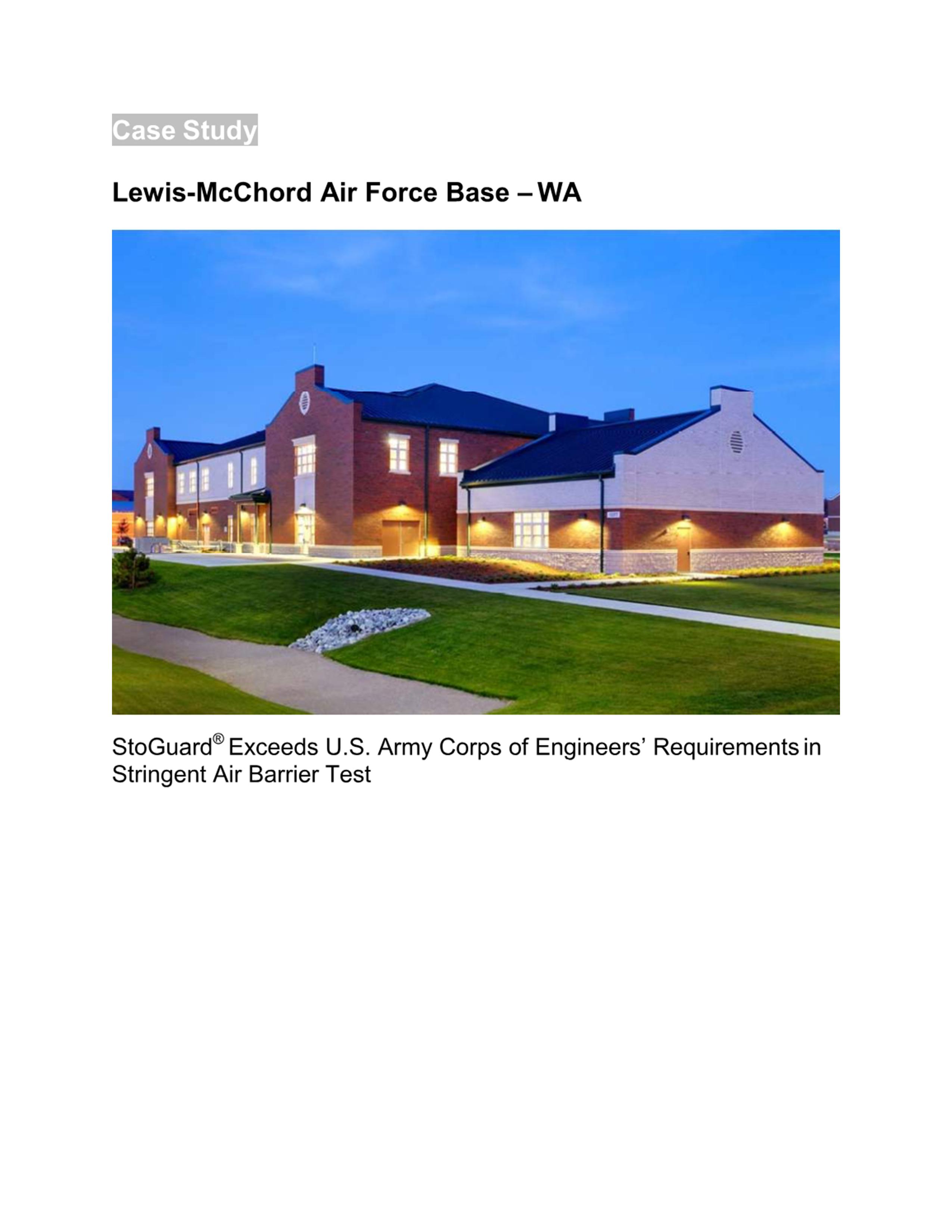
Nearly 20 years ago, I experienced one of the most defining professional challenges of my construction career at Joint Base Lewis-McChord in Washington State.
To this day, it remains one of the most rewarding projects I have ever led.
THE CIRCUMSTANCES: INHERITING A PROJECT THAT OTHERS HAD GIVEN UP ON
When I assumed responsibility for this project as the Senior Superintendent, I replaced the existing field leadership and inherited a project that was already nearly nine months behind schedule.
The foundations had not even begun.
The United States Army Corps of Engineers (USACE) was preparing to issue a Cure Letter to the General Contractor.
For anyone who has worked in federal construction, you understand the significance of those two words.
A Cure Letter is not ordinary correspondence. It is a formal notice that the Government believes the contractor is failing to perform in accordance with its contractual obligations and must correct the deficiencies within the specified period. It places the contractor on notice and demands immediate corrective action.
It is a serious matter, and its implications can follow a contractor's professional and contracting history for years.
I understood the circumstances. I understood the seriousness of the situation. More importantly, I understood that simply continuing to do things the same way would produce exactly the same results.
Something had to change.
I was not interested in managing failure. I was interested in creating success.
THE FIRST DECISION: STOP, EVALUATE, AND ESTABLISH A NEW DIRECTION
After replacing the project leadership, I made a decision that some might have considered unconventional.
I paused project operations for three working days.
Those three days were not wasted time. They were an investment in establishing a completely different direction for the project.
I wanted to understand the challenges, establish accountability, align the new leadership team, and identify the resources necessary to successfully deliver the project.
I then scheduled a formal partnering meeting with the Government.
In attendance were the USACE Contracting Officer, the USACE Project Manager, the Quality Assurance Representative (QAR), our Vice President of Construction, and the newly established project leadership team.
This meeting was an opportunity to establish a new relationship, address the existing deficiencies, and communicate our expectations moving forward.
I wanted the Government to understand one thing: They were no longer dealing with the same project leadership and the same approach that had brought the project to the circumstances we inherited.
We were going to change the outcome.
THE CHALLENGE: WHEN SOMEONE TELLS YOU IT CANNOT BE DONE
During that partnering meeting, the USACE Project Manager looked across the table and asked me whether I understood that this project was subject to the new Government Air Barrier testing requirements.
I responded that I was fully aware of the requirements.
She then asked whether I understood that no General Contractor at Joint Base Lewis-McChord had successfully passed this test at the required level.
I again acknowledged that I understood.
She proceeded to outline the numerous deficiencies, challenges, and performance issues associated with the contractor I represented.
I listened.
Then I responded with a simple statement:
"Those deficiencies have now been corrected."
I made three commitments.
First, we would deliver the project within the contractual timeframe.
Second, we would deliver a building that met the highest standards of construction quality.
Third, we would not simply meet the new Air Barrier requirements. We would exceed them, and we would demonstrate our performance before the final test.
The response from the USACE Project Manager was laughter from everyone who attended from USACE.
She made it clear that she did not believe we would pass the Air Barrier test on the first attempt, let alone the third or fourth.
I responded with something I have carried throughout my professional career:
"You have no idea who you have made that challenge to."
I explained that when I make a commitment, I deliver.
Promises made. Promises kept.
That conversation established something important. We were no longer going to allow other people's expectations, previous failures, or assumptions about what was possible to determine our outcome.
We were going to establish our own standard.
THE EXECUTION: EXCELLENCE IS NEVER AN ACCIDENT
There is an important distinction between making promises and having the ability, discipline, and determination to fulfill them.
Confidence without execution is nothing more than conversation.
I knew that delivering on our commitments would require more than an aggressive schedule and strong words in a partnering meeting. It would require an entirely different level of planning, coordination, accountability, technical understanding, and teamwork.
The project involved constructing the 35,000-square-foot SOF Aviation Battalion Education Center. It was subject to stringent USACE building-envelope requirements, including an air leakage limit of 0.25 CFM per square foot at a pressure differential of 0.3 (75 Pa).
The building also required infrared thermography to identify air leakage pathways.
The technical challenges were substantial.
Approximately 50,000 square feet of StoGuard air barrier coverage was required, involving nearly 650 gallons of material. More than 5,000 mechanical, electrical, plumbing, and fire protection penetrations had to be properly addressed.
The work included complex exterior transitions, joints, rough openings, penetrations, and the building's interior envelope conditions.
To make matters more challenging, much of this work was being performed during the winter months in Washington State, when rain and weather conditions introduce additional complications.
We brought together the manufacturer, distributor, applicator, contractor, architect, and independent testing engineers.
Sto Corp., Evergreen Building Products, Sessler Inc., Burgess & Nipple Architects, Doyon Project Services, and Neudorfer Engineers all contributed to the effort.
This was a team that had not previously worked together in this capacity. Yet we established a common objective and collectively invested the time, resources, and attention necessary to understand the building envelope and resolve potential problems before they became failures.
We paid attention to the details.
We coordinated the work.
We addressed penetrations and joints.
We maintained cleanliness and quality throughout the application process.
We did not wait for an inspector or testing engineer to identify deficiencies that we could identify and correct ourselves.
We understood that the final result would be determined by the decisions we made every day, not by what we said in a meeting.
That is what separates a commitment to excellence from simply talking about excellence.
THE RESULT: PROVING WHAT OTHERS BELIEVED WAS IMPOSSIBLE
When the testing began, the results spoke for themselves.
The initial air barrier test, conducted while construction was still underway, achieved an exceptional leakage rate between 0.18 and 0.19 CFM per square foot.
The project had already passed the required threshold.
But we were not finished.
Approximately one month later, the final test produced an extraordinary result:
0.11 CFM PER SQUARE FOOT.
The contractual requirement was 0.25.
We had achieved a result substantially better than the Government's requirement, establishing a performance benchmark that had not previously been achieved at Joint Base Lewis-McChord since the testing requirements were introduced.
The testing engineer recognized the quality of the installation, the cleanliness of the building, and the consistency of the application.
The project ultimately delivered a building that received national recognition for construction quality and established a new benchmark for air barrier performance on the installation. We set the standard.
The very challenge that had been presented as an almost impossible undertaking became one of the project's greatest accomplishments.
And it did not happen by accident.
It happened because we refused to accept mediocrity, refused to accept the limitations others placed on us, and committed ourselves to delivering something exceptional.
THE GREATER LESSON: DO NOT LET OTHER PEOPLE DEFINE YOUR LIMITATIONS
I have carried the lessons of that project throughout my career.
There will always be people who tell you something cannot be done.
There will always be someone who believes the circumstances are too difficult, the schedule is too aggressive, the problems are too complicated, or the challenges are simply too great to overcome.
Sometimes those people will be your colleagues. Sometimes they will be your superiors. Sometimes they will be the very individuals responsible for supporting your success.
And sometimes, the greatest obstacle you face will not be the circumstances themselves, but the attitudes and expectations of the people surrounding you.
I have learned that you cannot spend your life trying to convince everyone to believe in you.
You must establish a direction, develop a plan, build the right team, create accountability, and execute.
You must be willing to make difficult decisions when necessary.
You must accept responsibility when things go wrong, even when you inherited the circumstances.
You must recognize that leadership is not about assigning blame. It is about taking ownership of the outcome.
And perhaps most importantly, you must understand that confidence is not arrogance when it is supported by preparation, experience, discipline, and the willingness to do the work.
I do not believe that every challenge can be overcome simply by believing it can. But I firmly believe that too many opportunities are abandoned before people have exhausted the possibilities.
The difference between those who achieve extraordinary results and those who settle for ordinary outcomes is often found in their willingness to challenge conventional thinking, confront difficult circumstances, and refuse to surrender their standards.
EXCELLENCE IS A DECISION
Throughout my career, I have never been particularly interested in hearing why something cannot be accomplished.
When someone tells me something is impossible, too difficult, too complicated, or beyond our capabilities, my first response is to evaluate why.
What are the obstacles?
What resources are missing?
What needs to change?
Who needs to be involved?
What have we not considered?
What can we do differently?
Those are the questions that lead to solutions.
I also recognize that excellence is not a single achievement. It is a standard that must be established, communicated, reinforced, and demonstrated every day.
It applies to construction, business, leadership, relationships, and life itself.
It applies when you are leading a multimillion-dollar construction project, developing the next generation of leaders, rebuilding a struggling organization, or confronting personal circumstances that seem overwhelming.
The circumstances may be different, but the principles remain the same.
Do not allow adversity to determine your destination.
Do not allow someone else's lack of confidence to become your limitation.
Do not confuse a difficult road with an impossible one.
And never allow the opinions of those who have already accepted defeat to dictate what you are capable of accomplishing.
PROMISES MADE. PROMISES KEPT.
Looking back nearly two decades later, I remain proud of that project, not simply because of the national recognition or the exceptional technical results, but because of what it represented.
It demonstrated that a project could be nearly nine months behind schedule, facing the possibility of a Cure Letter, and still become an example of exceptional construction performance.
It demonstrated that a team of people who had never worked together could unite around a common objective and achieve something extraordinary.
And it reinforced a principle that has guided me throughout my professional life:
You do not have to accept the circumstances you inherit. You have to decide what you are going to do about them.
There will be times when you stand alone in your convictions. There will be times when people question your decisions, challenge your capabilities, and openly doubt your ability to deliver.
Let them.
Your responsibility is not to win an argument. Your responsibility is to deliver the result.
I will never accept the mindset that something cannot be accomplished simply because it has never been accomplished before.
The greatest achievements often begin precisely where conventional expectations end.
When everything and everyone seems to be against you, remember that adversity does not have to be your defining moment.
It can become the opportunity that defines your leadership, establishes your character, and demonstrates what is possible when preparation meets determination.
Excel and overcome. Set the standard. Deliver on your commitments.
Promises made. Promises kept.