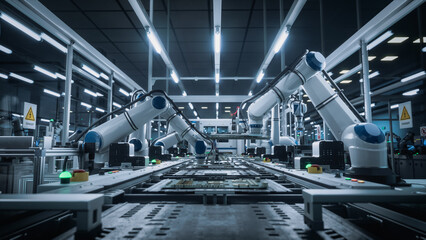
Disruptive technologies are revolutionising the way we work. The modern workforce is demanding more autonomy and flexibility, reshaping the very foundations of the traditional office, hierarchy, and even the definition of employment itself. As artificial intelligence (AI), automation, and digital platforms transform industries, the future of work is being rewritten in real time.
The Age of Intelligent Automation
From generative AI tools that draft complex reports to robotic process automation (RPA) systems that manage workflows, automation has evolved from a support function to a strategic partner. These technologies are no longer confined to manufacturing lines; they’re embedded in customer service, finance, logistics, and healthcare.
AI is enabling decision-making at scale—analyzing patterns, predicting outcomes, and optimising performance in ways that were once humanly impossible.
However, automation isn’t simply replacing jobs; it’s redefining them. Routine, repetitive tasks are being handled by machines, freeing humans to focus on creative, interpersonal, and high-judgment roles. In this new paradigm, collaboration between humans and intelligent systems becomes the core of productivity.
A Workforce Redefined
The rise of remote work, digital collaboration tools, and the gig economy has unshackled professionals from physical offices and fixed schedules. Platforms like Upwork, Fiverr, and Toptal exemplify this transformation, allowing millions to contribute globally while maintaining control over their time and projects.
For employers, this shift brings access to borderless talent pools and agile staffing models. For employees, it offers flexibility and empowerment—but also introduces new challenges related to job security, benefits, and identity in a decentralised economy. The concept of a “career” is being replaced by a portfolio of experiences, each shaped by evolving technology and personal agency.
AI as the New Colleague
Generative AI systems like GPT and Copilot are not just tools; they’re collaborators. They assist with research, summarisation, content creation, design, and even strategy formulation. As these systems become more capable, they augment human expertise, accelerating workflows while demanding a new kind of digital literacy.
Yet, the integration of AI into daily work introduces profound ethical and social questions. How do we ensure accountability in AI-driven decisions? How do we balance productivity with privacy? How do organisations foster trust in a hybrid human-machine environment?
The answers lie not in resisting change but in designing it responsibly.
Skills for the New Frontier
The future workforce must master what machines cannot easily replicate: emotional intelligence, critical thinking, ethical reasoning, and adaptability. Technical fluency—understanding how AI, cloud computing, and data analytics function—will be essential, but so will the human ability to interpret, empathise, and lead.
Education systems and corporate training programs must evolve accordingly. Lifelong learning is no longer optional; it’s the price of relevance. The capacity to continuously learn, unlearn, and relearn will define individual and organisational success.
Toward a More Autonomous Future
The modern workplace is no longer a place; it’s a network. As AI and automation take over routine operations, human work will increasingly revolve around creativity, innovation, and purpose. Flexibility will be a marker of progress, and autonomy will become a defining feature of success.
The age of disruptive technologies is not about machines taking over. It’s about redefining what it means to be human in an era of intelligent systems. If guided thoughtfully, this transformation will not lead to mass displacement but to mass empowerment.
References
- Frey, Carl Benedikt, and Michael A. Osborne. The Future of Employment: How Susceptible Are Jobs to Computerisation? Oxford Martin School, University of Oxford, 2013.
- Schwab, Klaus. The Fourth Industrial Revolution. World Economic Forum, 2016.
- Brynjolfsson, Erik, and Andrew McAfee. The Second Machine Age. W. W. Norton & Company, 2014.
- World Economic Forum. The Future of Jobs Report 2025. Geneva, 2025.
- McKinsey & Company. Jobs Lost, Jobs Gained: Workforce Transitions in a Time of Automation. 2024.