The Automotive Industry Gave Me a Career—and a Chance to Give Back
The automotive industry gave me a career when I did not have a traditional path laid out in front of me.
I started with a GED and entered the industry as a lube technician. From there, I worked my way up through different positions, including technician, foreman, service manager, and store manager. During my more than 18 years in the industry, I earned multiple ASE certifications, became a General Motors Master Technician, and received awards and recognition from General Motors and Bridgestone Americas.
None of that happened overnight.
It took years of hard work, mistakes, long days, continued training, and people who were willing to teach me. I had mentors who saw something in me before I could fully see it in myself. Their guidance helped me become a better technician, but it also helped me understand what I was capable of accomplishing.
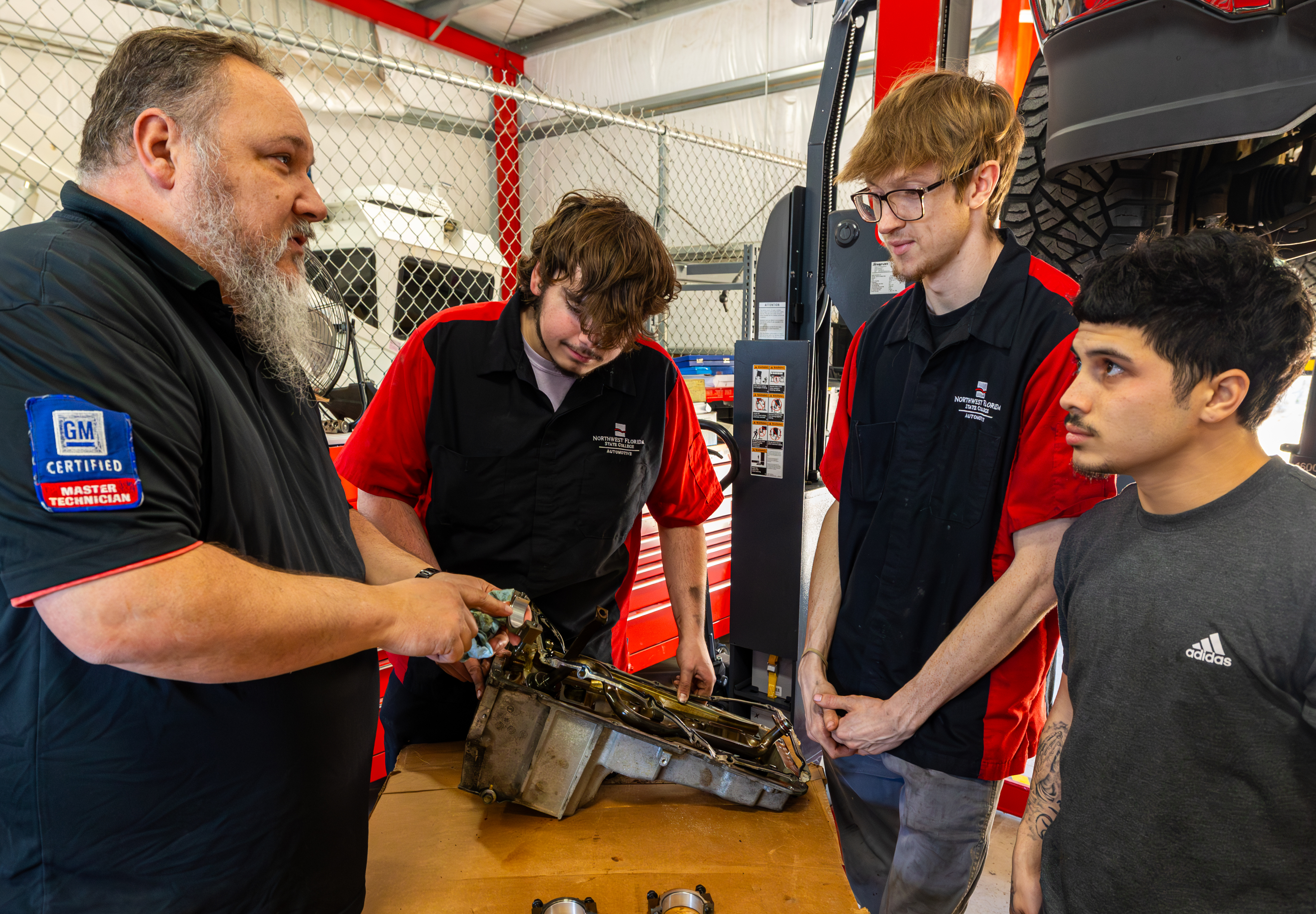
That experience is a major reason I eventually left the industry to become an Automotive Technology Instructor at Northwest Florida State College.
Why I Entered Education
I did not leave the automotive industry because I stopped believing in it. I became an instructor because I believe in it enough to be concerned about its future.
For years, we have heard about the shortage of qualified automotive technicians. Experienced technicians are retiring, vehicles are becoming more complicated, and we do not have enough trained people entering the field to replace those leaving it.
However, I do not believe this is only a technician shortage. It is also an opportunity shortage, a training shortage, and, in some cases, a communication shortage.
Many young people do not understand what a modern automotive career actually looks like. They may still picture someone doing basic mechanical work in a dirty shop for low pay. That outdated image does not reflect the skills required to diagnose and repair today's vehicles.
Modern technicians work with computerized systems, advanced electronics, vehicle communication networks, scan tools, digital testing equipment, and increasingly complex technology. A good technician must understand mechanical systems, electrical systems, computers, and logical diagnostic processes.
This can be a viable and lucrative career, but we have to do a better job of showing students the opportunities that are available.
Students Need More Than a Textbook
Automotive theory is important, but students cannot learn this profession from a textbook alone.
They need to put their hands on actual vehicles. They need to use professional tools, interpret scan data, test circuits, inspect components, and work through problems that do not always have an obvious answer.
Working on live vehicles is where many of the lessons begin to make sense.
In the classroom, a problem may be presented with all the information needed to find the correct answer. A vehicle in the shop does not work that way. The technician has to gather the information, separate the symptoms from the actual cause, and prove what failed before recommending a repair.
That is one of the most important lessons I try to teach my students: replacing a part is not the same as diagnosing a problem.
A technician should be able to explain what failed, why they believe it failed, what testing supports that conclusion, and how the repair will correct the customer's concern. Without that process, we are not diagnosing. We are guessing with someone else's money.
Students also need to learn that being a good technician involves more than technical ability. Employers need people who show up, communicate, stay organized, accept feedback, work safely, and take pride in what they do.
A person can be talented with tools and still struggle in the industry if they are unreliable or unwilling to continue learning.
Schools Cannot Do This Alone
Automotive programs cannot train the future workforce without input and support from the industry that will eventually employ those students.
As instructors, we understand education, curriculum, and student development. Shop owners, service managers, working technicians, fleet managers, and other industry professionals understand what is happening in the field right now.
We need both perspectives.
This is why industry advisory committees and local business partnerships are so important. Employers can help programs understand which skills are missing, what equipment students should be learning to use, and what they expect from an entry-level technician.
Their involvement should go beyond attending a meeting once or twice a year.
Businesses can provide shop tours, speak with students, demonstrate equipment, offer job-shadowing opportunities, mentor students, and help create internships, apprenticeships, and employment pathways.
These partnerships also benefit employers. Instead of waiting until students complete their training and then hoping to find qualified applicants, businesses can begin building relationships with future technicians while they are still developing their skills.
Employers regularly tell us they need technicians. If we want that situation to improve, the industry must be willing to take an active role in developing them.
Mentorship Matters
I would not be where I am today without people who were willing to invest their time in me.
A good mentor does not make the work easy or remove every challenge. A good mentor teaches, corrects, pushes, and sometimes believes in a person before that person believes in themselves.
That can make a major difference for students who do not come from a traditional background.
Not every capable student enters a program with excellent grades, financial stability, professional connections, or a clear plan for the future. Some of them simply need an opportunity and someone willing to show them what is possible.
I understand that because my own path was not traditional. I started with a GED and built my career through hands-on experience, certifications, hard work, and the guidance of others.
My beginning did not determine where I finished.
I want my students to understand the same thing. Where they start does not have to limit where they can go. However, they must also understand that an opportunity only becomes something more when they are willing to work for it.
Supporting students does not mean lowering expectations. It means giving them the instruction, tools, direction, and honest feedback they need to meet those expectations.
Technical Education Is Not a Lesser Path
We also need to stop treating career and technical education as if it is a backup plan for students who cannot succeed in a traditional college setting.
The automotive field requires intelligence, patience, discipline, and a willingness to continue learning. A technician may have to understand mechanical operation, interpret wiring diagrams, analyze computerized data, communicate with customers, and solve a problem that several other people have already failed to diagnose.
That is skilled professional work.
Technical education can lead to a stable career, advancement, business ownership, management, manufacturer training, education, and many other opportunities. Becoming a technician does not place a ceiling on someone's future. It can be the foundation that allows them to build it.
My own career began in the shop and eventually brought me into a college classroom, where I now have the opportunity to prepare others for the industry that helped shape my life.
That is a path I am proud of.
We All Have a Part in the Solution
The technician shortage will not be solved by one instructor, one college, one employer, or one program.
Schools must stay connected to the industry and make sure their training remains relevant. Employers must be willing to invest time in students and entry-level technicians. Industry leaders must do a better job of showing young people what this career can offer.
Students also have a responsibility. They must show up, complete the work, accept correction, and take ownership of their education. Finishing a program does not mean they are finished learning. In this industry, learning never stops.
If education and industry work together, we can give students more than classroom knowledge. We can give them hands-on experience, professional relationships, realistic expectations, and a clear path into a career.
At the same time, employers gain access to better-prepared applicants, colleges receive valuable industry guidance, and local communities benefit from a stronger skilled workforce.
The automotive industry changed my life because people gave me an opportunity, challenged me, and helped me grow. Becoming an instructor gave me a way to pass that opportunity on to someone else.
We are not simply trying to fill open positions. We are preparing the people who will diagnose tomorrow's vehicles, keep families safe on the road, support local businesses, and eventually teach the technicians who come after them.
The future of the automotive industry is already entering our classrooms. It is up to educators and industry professionals to work together and make sure they are ready for what comes next.