

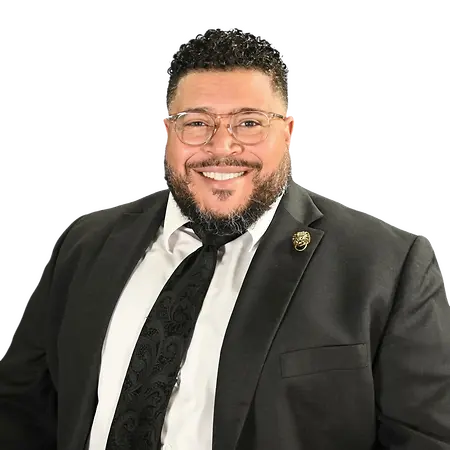
FOUNDER TO THE PROFILE
Ray Lavan
Director of Fine Arts, Goose Creek CISD
“I attribute my success first to my faith, and then to the foundation my parents gave me, and my beautiful wife who has been with me every step of the way. Beyond that, I think it comes down to work ethic, resilience, and a relentless commitment to continually becoming the best version of myself. I’ve never believed that success means you’ve arrived. There’s always another level of growth, another lesson to learn, and another opportunity to get better.”
About
Dr. Ray Lavan is an internationally sought-after educator, leadership strategist, best-selling author, and TEDx speaker known for helping educators unlock their highest levels of impact. As the creator of the Five to Rise leadership framework, Dr. Lavan challenges leaders to develop the abilities that drive meaningful growth, influence, and organizational success.
With more than two decades of leadership experience in public education, Dr. Lavan has served as Assistant Principal, Associate Principal of Curriculum and Instruction, Principal, and Director of Fine Arts. His work focuses on leadership development, organizational culture, and the transformative power of the arts in education.
Dr. Lavan holds a Bachelor of Arts in Instrumental Music Education from McNeese State University, a Master of Education in Educational Leadership from Lamar University, and a Doctorate in Organizational Leadership from Abilene Christian University. He has also completed executive programs in School Management and Leadership from Harvard University and Executive Leadership from Rice University.
At his core, Dr. Lavan believes leadership is not about titles but about the daily disciplines that shape influence and impact. When he is not working with educators or speaking to audiences, he enjoys spending time with family, traveling, and is a life-long musician.
Key Areas Of Focus
- 01. Leadership
- 02. Education
IN HIS OWN WORDS
The Q and A
-
01
What do you attribute your success to?
I attribute my success first to my faith, and then to the foundation my parents gave me, and my beautiful wife who has been with me every step of the way.
Beyond that, I think it comes down to work ethic, resilience, and a relentless commitment to continually becoming the best version of myself. I’ve never believed that success means you’ve arrived. There’s always another level of growth, another lesson to learn, and another opportunity to get better.
-
02
What’s the best career advice you’ve ever received?
Learn to be resilient and understand that life has a way of auto-correcting. When things are going incredibly well, stay grounded. When things are difficult, remember that those seasons don’t last forever either. I’ve learned to remain balanced and try to be a source of calm in the storm.
But there’s another piece that has stayed with me: make sure your character can sustain the things you’re asking for. It’s one thing to get the opportunity, the title, or the platform. It’s another thing to become the person capable of carrying it well.
-
03
What advice would you give to young men entering your industry?
Become as emotionally intelligent as possible. I tell people all the time that we may work in education, but ultimately, we’re in the people business. Your ability to connect with people, listen to them, understand where they’re coming from, and communicate in a way that resonates will have an enormous impact on your effectiveness.
You can be incredibly knowledgeable and technically skilled, but leadership requires more than expertise. Learn people. Learn yourself. Understand how you show up in a room and how your presence affects others. The better you become at that, the more effective you’ll become as a leader.
-
04
What are the biggest challenges or opportunities in your field right now?
One of the biggest challenges in education right now is also one of our greatest opportunities: developing and retaining great people. We spend a lot of time talking about programs, initiatives, systems, and outcomes, but ultimately, people make all of those things work.
I believe we have an opportunity to become much more intentional about developing the abilities that allow people to thrive within organizations. That means creating cultures where people feel valued, where they can grow, where accountability and support coexist, and where leadership isn’t limited to the people with titles. If we can get better at developing people, I believe many of the other challenges we face become much more manageable.
-
05
What values are most important to you in your work and personal life?
Integrity is probably at the top of the list. I want who I am privately to be consistent with who I present publicly. I also value loyalty, excellence, humility, and growth.
I believe you should take your work seriously without taking yourself too seriously. Do what you say you’re going to do. Treat people well. Stay teachable. Be willing to admit when you’re wrong. And whatever room you’re fortunate enough to enter, try to leave the people and the organization better than you found them.
At the end of the day, I want my success to be measured not only by what I accomplished, but by the impact I had on people along the way.
LEARN MORE
Interested in
Learning
More About Notable Men?
Notable Men brings together influential voices across industries to share insights, experiences, and perspectives that matter.
Learn More