What Enterprise Technology Taught Me About Putting People First in AI
A practical guide to adopting AI in business by prioritizing people and their actual work. Learn how to evaluate AI tools, involve…
Read the article
FOUNDER TO THE PROFILE
National Account Manager, Mid-South Telecom
“"My mission is to make technology approachable, spark curiosity, and help people turn understanding into confident action. That same approach carries into my consulting: start with the goal, make the complexity understandable, and connect the pieces needed to move forward. People>AI As always, I hope this helps."”
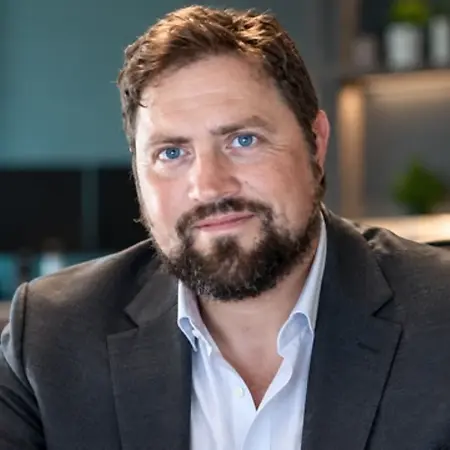
Patrick Glancy is an American technology professional, entrepreneur, and educational content creator whose career spans telecommunications, enterprise technology solutions, cybersecurity, infrastructure deployment, and technology education. Based in North Mississippi, he has spent more than 13 years helping organizations navigate complex technical challenges while developing independent ventures focused on making technology more accessible, understandable, and useful.
Since June 2013, Patrick has served as National Account Manager at Mid-South Telecommunications, headquartered in Southaven, Mississippi. His work extends beyond traditional account management, encompassing technical consultation, solution development, project coordination, customer relationships, and the deployment of enterprise technology infrastructure across the United States. His experience includes healthcare systems, educational institutions, and other organizations requiring dependable communications, networking, security, and technology services.
Throughout his telecommunications career, Patrick has been involved in substantial infrastructure initiatives, including the deployment of a 440-camera surveillance system across 32 locations and a server infrastructure project spanning 50 sites in six states. His professional accomplishments have included improvements in project delivery efficiency, operational costs, customer retention, and sales performance. His approach emphasizes understanding the practical needs of an organization, identifying appropriate technologies, and guiding projects from initial consultation through implementation.
Building on this experience, Patrick established TheNomadicIT, a technology education and consulting initiative developed under Luminary Ventures LLC. Through TheNomadicIT, he is creating a platform designed to help individuals, families, educators, and businesses understand and make effective use of modern technology. The project combines professional IT consultation, cybersecurity awareness, artificial intelligence education, interactive learning environments, and hands-on digital laboratories.
Patrick is also the creator and host of The Infinite Machine, an educational video series exploring the historical discoveries, scientific principles, influential individuals, and technological developments that have shaped computing, robotics, and artificial intelligence. Rather than focusing exclusively on emerging products, the series examines how modern technology developed, how its underlying systems function, and what its continued evolution may mean for society.
His companion program, AI Cyber Brief, examines developments in artificial intelligence, cybersecurity threats, digital privacy, and the changing relationship between technology and public safety. Across both programs, Patrick seeks to encourage informed discussion, responsible adoption, and greater public understanding of technologies that increasingly influence everyday life.
Through his website, thenomadicit.com, Patrick is expanding these educational efforts with interactive laboratories, technology resources, games, and learning experiences intended to serve students, parents, educators, professionals, and small businesses.
Patrick's earlier professional experience includes corporate security operations at AutoZone, where he worked with facility protection, surveillance, emergency response, and security procedures, as well as logistics and aircraft freight operations at FedEx Express. He has also been involved in property management and business operations through River Pointe Investments, LLC. These experiences contributed to his background in operational coordination, customer service, problem-solving, and organizational management.
He earned a Bachelor of Liberal Studies degree from the University of Memphis, pursuing interdisciplinary studies involving Asian Studies, international trade, Chinese language, and economics. He participated in the university's early Chinese-language educational programming through its Confucius Institute and also studied Spanish. His academic interests reflect a longstanding curiosity about different cultures, global commerce, communication, and the ways people and technology interact.
Today, Patrick's work increasingly brings together enterprise technology experience, entrepreneurship, public education, and the ethical challenges posed by artificial intelligence. Through his professional career and independent projects, he seeks to bridge the gap between technological innovation and practical human understanding, emphasizing that technology should ultimately serve and empower the people who use it.
His guiding philosophy, reflected in TheNomadicIT's "People > AI" message, places human judgment, education, and well-being at the center of technological progress.

IN HIS OWN WORDS
I attribute my success to curiosity, persistence, adaptability, and a genuine desire to understand how things work and how they can be made better. I've never been particularly interested in limiting myself to a single discipline or accepting that something has to be done a certain way simply because that's how it's always been done.
Throughout my career, I've learned that listening, asking the right questions, and being willing to tackle unfamiliar challenges are often more valuable than having every answer. Whether I'm helping an organization solve a complicated technology problem, coordinating a large-scale deployment, or developing something entirely new, I try to approach each challenge with the same mindset: understand the problem, find a practical solution, and follow through.
I've also been fortunate to learn from the people around me. Relationships, trust, and accountability have played an enormous role in my professional development. Technology changes constantly, but the importance of treating people fairly, keeping your word, and taking responsibility for your work doesn't.
My family has also been an important source of motivation. They've helped shape my perspective on what success actually means. I don't measure it exclusively through professional accomplishments or financial milestones, but through the opportunities I create, the knowledge I share, and the positive difference I can make for others.
That philosophy has carried into my work developing TheNomadicIT and Luminary Ventures. I believe technology, particularly artificial intelligence, holds extraordinary potential, but its greatest value comes from empowering people rather than replacing their judgment or diminishing their importance.
Ultimately, I attribute whatever success I've achieved to a willingness to keep learning, the determination to continue when things become difficult, and the belief that there's always something worthwhile left to discover, improve, or build.
Some of the best career advice I've received is to never stop learning, never be afraid to ask questions, and never let a job title define what you're capable of accomplishing.
I've carried that philosophy throughout my career. Some of my most valuable experiences have come from stepping outside my comfort zone, accepting responsibilities that weren't necessarily part of my job description, and figuring things out as I went. You don't have to know everything when you begin something, but you do need the curiosity, determination, and humility to learn.
I've also learned the importance of treating people well and protecting your integrity. Industries change, technology evolves, and opportunities come and go, but your reputation follows you. Being dependable, keeping your word, and genuinely caring about the people you work with can open doors that qualifications alone never will.
Perhaps most importantly, I've learned not to confuse being busy with making progress. It's easy to spend your career solving someone else's problems without ever making time to pursue the things you believe in. That's part of what motivated me to develop TheNomadicIT and Luminary Ventures, creating opportunities to combine my professional experience with my passion for education, technology, and helping others.
My advice to anyone building a career would be to remain curious, make yourself useful, take calculated risks, and remember that success isn't necessarily about climbing someone else's ladder. Sometimes it's about having the courage to build something of your own.
My advice to young men entering technology, telecommunications, or any related field would be to stay curious, develop a strong work ethic, and never become so comfortable with what you know that you stop challenging yourself.
Technology evolves incredibly quickly. The tools, systems, and skills that are valuable today may look completely different a decade from now. Don't focus exclusively on mastering a particular product or platform. Learn the underlying principles, understand how systems work together, and develop the ability to solve problems you've never encountered before. That adaptability will serve you throughout your career.
I'd also encourage young men to develop their communication skills just as seriously as their technical abilities. Some of the most talented technical professionals struggle because they can't effectively explain their ideas, listen to customers, or collaborate with people who have different backgrounds and experiences. Being able to translate complicated concepts into something another person can understand is an incredibly valuable skill.
Don't be afraid to start at the bottom, ask questions, or take on responsibilities outside your job description. Some of my most important lessons came from doing work that wasn't necessarily glamorous or particularly exciting. Every experience can teach you something if you're willing to pay attention.
Just as importantly, protect your integrity. Be someone others can depend on. Admit when you don't know something, own your mistakes, give credit where it's deserved, and treat everyone with respect, regardless of their position. Your professional reputation is something you build over years and can damage in moments.
With artificial intelligence becoming increasingly capable, I'd also caution against allowing technology to do all your thinking for you. Learn to use these tools effectively, but don't surrender your curiosity, creativity, or critical thinking. The people who will thrive aren't necessarily those who know how to use the latest AI tools, but those who understand enough to question the answers, recognize the limitations, and apply sound judgment.
Finally, don't let anyone else define what success has to look like for you. Build a career that supports the life you want to live, make time for the people who matter, and don't be afraid to pursue an idea simply because nobody else sees its potential yet.
The world will always need people who can solve problems, adapt to change, and work well with others. Become that kind of person, and you'll have opportunities regardless of where technology takes us.
I believe the greatest challenge and opportunity in technology right now are closely connected: the extraordinary speed of innovation and our ability to keep up with it.
Throughout my career in telecommunications and enterprise technology, I've watched systems become increasingly interconnected, complex, and essential to everyday life. Businesses depend on infrastructure that must remain reliable, secure, and adaptable, often while operating under significant financial and operational constraints. At the same time, cybersecurity threats continue to evolve, and organizations are struggling to find the expertise and resources necessary to protect themselves.
Artificial intelligence is accelerating these changes dramatically. We're moving beyond AI systems that simply answer questions into technologies capable of planning, making decisions, writing software, and performing increasingly complicated tasks. That creates enormous opportunities for productivity, education, scientific discovery, and business innovation. It also introduces serious questions about privacy, accountability, security, employment, and how much decision-making authority we should delegate to machines.
One of my biggest concerns is the growing gap between what technology can do and what the average person understands about it. People and businesses are being encouraged to adopt systems they may not fully understand, sometimes without appreciating the risks, limitations, or long-term implications. Even experienced professionals are having to continually reevaluate what they know.
But I also see an incredible opportunity in closing that knowledge gap. We're reaching a point where individuals, small businesses, and students can access capabilities that once required enormous organizations and financial resources. With the right education, guidance, and safeguards, these technologies can enable people to accomplish things that would have been nearly impossible just a few years ago.
That's a major reason I've been developing TheNomadicIT and producing The Infinite Machine and AI Cyber Brief. I want to help people understand not only how to use emerging technologies, but how they work, where they came from, what their limitations are, and how they might affect our future.
I also believe the industry needs to maintain a stronger focus on the human element. Automation and artificial intelligence can be tremendously valuable, but trust, responsibility, critical thinking, and meaningful human relationships remain essential. We shouldn't measure progress exclusively by how much work we can automate or how quickly we can deploy new systems. We should also consider whether those advances genuinely improve people's lives.
The opportunity ahead is extraordinary, but realizing its benefits will require more than technological innovation. It will require education, thoughtful leadership, ethical responsibility, and a willingness to question the direction we're heading.
Ultimately, I believe our greatest challenge is ensuring that people remain informed and empowered as technology evolves. Our greatest opportunity is using that same technology to expand what people are capable of achieving.
The values that matter most to me are integrity, family, curiosity, compassion, personal responsibility, and treating people with dignity and respect. I believe those principles should guide how we conduct ourselves, both professionally and personally.
Integrity is especially important to me. I believe in being honest, keeping my word, taking responsibility for my decisions, and doing what's right even when it isn't necessarily the easiest or most profitable option. In business, relationships are built on trust, and I've always believed that the people behind a project matter just as much as the project itself. Whether I'm working with a customer, a colleague, or someone I've just met, I try to treat them with the same fairness and respect I'd hope to receive.
Family is at the center of my personal life and a major influence on how I define success. Professional accomplishments and financial security are important, but they mean considerably less if they come at the expense of the people you love. I want to build a life that creates opportunities for my family, allows us to spend meaningful time together, and gives us the freedom to pursue the things that matter to us.
Curiosity and lifelong learning are also fundamental to who I am. I've always been interested in understanding how things work, why people make the decisions they do, and how seemingly unrelated subjects connect. I believe there's something valuable to learn from nearly everyone, and I never want to reach a point where I assume I have everything figured out. The more I learn, the more I recognize how much there is left to discover.
Compassion and empathy are equally important. Everyone faces challenges that may not be immediately visible to those around them. I think it's important to approach people with patience, recognize that our circumstances and experiences differ, and avoid making assumptions about what someone else may be going through. Being successful should never require losing sight of our humanity.
I also place a great deal of value on independence, critical thinking, and the willingness to challenge established ideas. I don't believe we should accept something simply because it's popular, traditional, or presented as inevitable. Progress often begins when someone is willing to ask whether there's a better way.
These beliefs carry directly into my work with TheNomadicIT and my interest in artificial intelligence. My guiding philosophy is "People > AI." I believe technology should empower people, expand opportunity, and improve quality of life rather than diminish human judgment, creativity, or dignity.
Ultimately, I want to be remembered less for the positions I've held or the things I've accumulated and more for how I treated people, what I helped others learn, the opportunities I created, and the kind of husband, father, friend, and person I chose to be. To me, that's a much more meaningful measure of a life well lived.
PERSPECTIVES
Original insights, ideas, and viewpoints shaped by real-world experience.
View All ArticlesLEARN MORE
Notable Men brings together influential voices across industries to share insights, experiences, and perspectives that matter.
Learn More