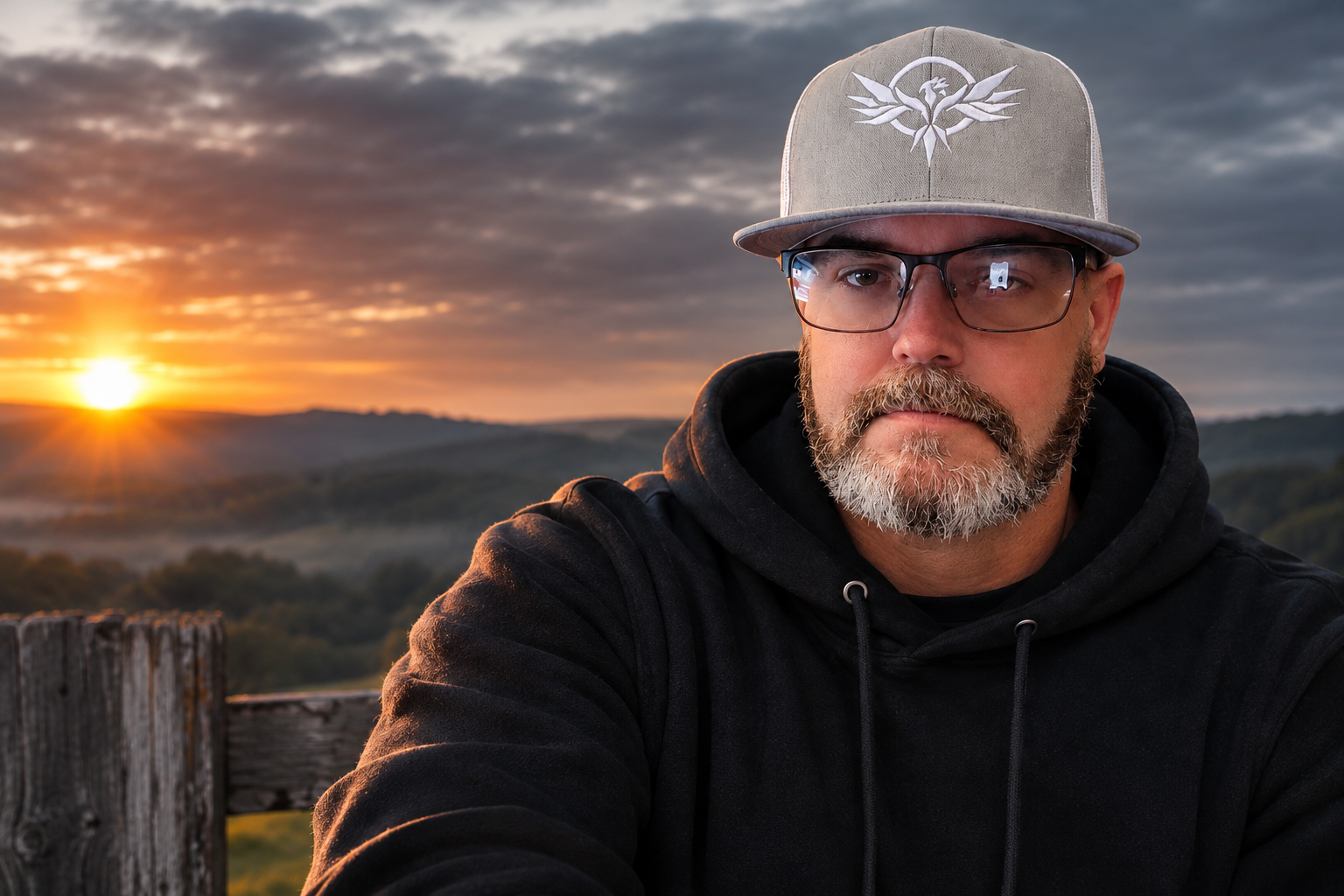
Tomorrow Is Still Yours to Write
A powerful reflection on overcoming adversity, rebuilding after setbacks, and discovering that your past mistakes don't define you…
Read the article
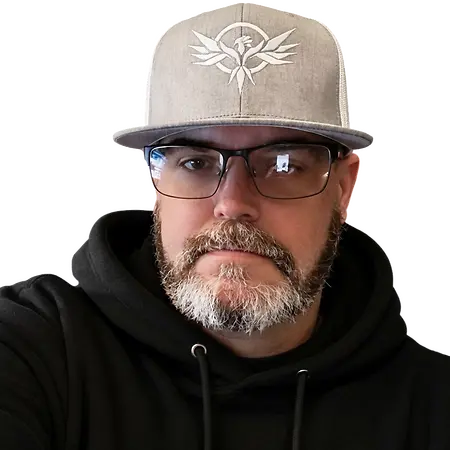
FOUNDER TO THE PROFILE
Founder/CEO, Omega Resources LLC | PhoenX
“The impossible does not become possible because someone says it loudly enough. It becomes possible when someone cares enough to keep building until the evidence can speak. -JM”
Jeff Mendenhall spent more than 15 years working in industrial operations, pipeline integrity, quality assurance, and regulatory compliance before taking an unconventional path into entrepreneurship and technology development. Now the founder of Omega Resources LLC and PhoenX, a purpose-driven apparel and lifestyle brand, he is drawing on both his professional experience and personal journey to build businesses focused on resilience, opportunity, and community impact. Based in Southern Illinois, his work reflects a belief that identifying problems is only the beginning. The real challenge is building something practical enough to help address them.
Before establishing Omega Resources in 2024, Mendenhall spent more than 15 years working in industrial operations, pipeline integrity, quality assurance, and regulatory compliance. His experience in demanding technical environments shaped his approach to identifying problems, questioning established processes, and developing practical solutions. Outside his professional career, he has spent approximately eight years navigating personal challenges involving brain injury, family loss, addiction, homelessness, incarceration, and rebuilding his life. Those experiences gave him a different perspective on the systems people depend on and reinforced something he had learned throughout his industrial career: even well-intentioned systems can struggle when communication, accountability, and coordination break down.
Mendenhall is also the architect of CORA (Coordinated Outcome & Recovery Architecture), an emerging technology platform designed to improve communication and coordination among recovery, reentry, housing, behavioral health, and community support organizations. Rather than replacing existing services, CORA is being developed to help coordinators and participating agencies identify gaps, improve referrals, and support continuity of care and services. The platform remains in development, with an emphasis on human oversight, privacy, participant choice, and real-world pilot validation.
Through PhoenX, Mendenhall is developing an apparel brand that reflects his personal experiences with recovery and rebuilding. The brand carries a broader mission: to create a commercially sustainable business that can eventually contribute to community stability initiatives, including the Human Standability Fund and potential CORA pilot efforts.
Mendenhall is currently pursuing studies in artificial intelligence and data analytics at DeVry University. He has been inducted into the National Society of Leadership and Success and participates in entrepreneurship and customer-discovery initiatives, including I-Corps programming in Iowa and the Midwest. His professional background also includes industrial safety recognition, technical certifications, and experience coordinating projects in highly regulated environments.
Having celebrated three years in recovery in October 2026, Mendenhall draws on both his professional experience and personal journey in his work. He is also an author who uses writing and music to explore resilience, personal accountability, change, and the importance of building structures that help people move forward.
For Mendenhall, success is not defined solely by financial achievement or recognition. It is measured by what can be built, what can be sustained, and whether those efforts create meaningful opportunities for others.
“Purpose over Profit.” — JM
Featured in Justine PETERSEN's Success Stories
Their article offers an outside perspective on how access to opportunity and support helped me rebuild my life and create a foundation for helping others.
Read the story: https://justinepetersen.org/2026/07/17/jeff-mendenhalls-story-is-proof-that-one-opportunity-can-change-everything/

IN HIS OWN WORDS
I measure success by whether I'm a better person today than I was yesterday. Not by how much money I've made, what I've accomplished, or how many people know my name.
I've made mistakes, faced setbacks, and had to rebuild parts of my life I never imagined losing. Those experiences taught me that progress doesn't have to be perfect, but it does have to be intentional.
If I can learn something, make one better decision, and use what I've experienced to inspire someone else to keep going, then I consider that a successful day.
I don't need to be the smartest or most successful person in the room. I just hope that when I leave it, I've given someone a reason to believe they can move forward too.
“You're only as smart as the tools you know how to use. And if the tool doesn't exist, build one that will.” — James E. Robinson (my dad)
Some of the best career advice I've received was never actually spoken. It came from watching people, seeing how they handled success, failure, responsibility, and the way they treated others.
My father taught me that you're only as smart as the tools you know how to use, and if the right tool doesn't exist, you find a way to build one. I've carried that with me throughout my career.
I've also learned that you don't have to agree with someone's decisions to learn from them. Sometimes you learn what to do, and sometimes you learn exactly what not to do. Both lessons have value.
And perhaps the biggest lesson I've learned is not to let someone else's "no" determine your worth or your potential. Sometimes no means not now.
Sometimes it means you need a different approach. And sometimes it means you need to build your own door.
My advice would be to listen to others, but don't forget to listen to yourself. Know your worth but never let confidence turn into arrogance. You can learn something from just about anyone if you're willing to listen.
Life is going to knock you down, and there will be times when you let yourself down, too. I've been there. But even if you have to crawl, don't turn back. Your future is still yours to write, no matter what the previous chapters look like.
Don't be afraid to ask questions, reach out to people you think are beyond your reach, or take a chance when you don't know what the outcome will be. Some of the most meaningful opportunities can begin with a conversation you almost didn't have.
And don't feel like you have to fit into an industry someone else has already defined for you. Sometimes your experiences, your skills, and the problems you care about will lead you to build something that doesn't fit neatly into any one category.
Above all, remember that where you start doesn't have to determine where you finish. Just keep moving forward, even when the steps are small.
And the last piece of advice I'd give is this:
"Never lower your standards or compromise your morals just to earn a seat at someone else's table. Sometimes knowing your worth means having the courage to build your own." -JM
One of the biggest challenges I see is that many good ideas and community programs depend on funding that isn't always consistent. Grants can make an enormous difference, but what happens when the funding runs out? The people depending on those services don't suddenly stop needing them.
Another challenge isn't always the lack of available resources. Sometimes it's the communication and coordination between the organizations providing them. People can follow every instruction, make every appointment, and still struggle because the systems they're navigating aren't always connected.
I don't believe there's anything wrong with pursuing grants or partnerships. They're important tools. But I also believe we need to think beyond the next funding cycle and ask how we can build something that continues delivering value after the initial support ends.
The opportunity, to me, is finding ways for entrepreneurship, technology, and community organizations to work together without losing sight of the people they're supposed to serve. It's an approach I'm still developing and testing, but it's one I believe is worth pursuing.
Family comes first. Everything I'm building means very little if I lose sight of the people I'm building it for.
Faith, honesty, accountability, and integrity are values I've learned to appreciate more deeply through my own experiences. Recovery taught me that I can't change yesterday, but I am responsible for what I do today. I've made mistakes, and I've learned that taking responsibility for them matters more than making excuses.
Writing and music have given me ways to process those experiences and sometimes put into words what other people are struggling to say. If sharing something I've been through helps even one person feel understood or find the courage to keep moving forward, that means something to me.
In business, I believe in treating people with dignity, keeping my word, and never forgetting why I started. I want to build things that serve a purpose, but I also want to be the kind of person my family can respect, regardless of whether those businesses succeed.
At the end of the day, my values aren't measured by what I say I believe. They're measured by how I live, how I treat people, and what I choose to do when nobody is watching.
PERSPECTIVES
Original insights, ideas, and viewpoints shaped by real-world experience.
View All ArticlesLEARN MORE
Notable Men brings together influential voices across industries to share insights, experiences, and perspectives that matter.
Learn More