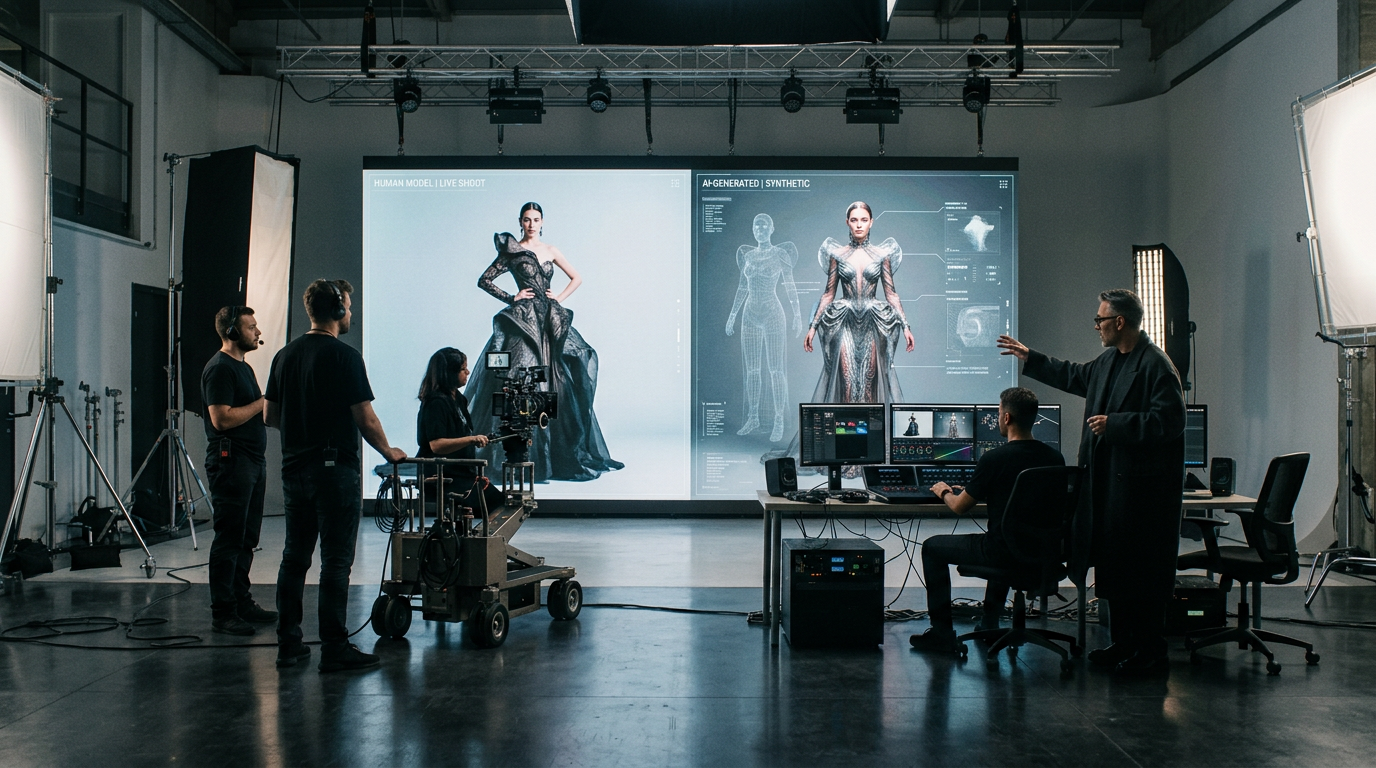
Responsible AI Use in Fashion: 8 Questions Brands Should Ask Before Using AI-Generated Models
AI-powered models are moving from experimental visuals into fashion marketing, e-commerce, social content, and campaign development. The appeal for brands is easy to understand. Digital talent can deliver speed, flexibility, visual consistency, and access to creative environments that may be difficult to produce physically.
Yet a realistic image is not always a commercially safe image.
Fashion brands need to ask themselves questions about rights, truthfulness, disclosure, consistency, and accountability before publishing AI-generated model content. The technology may be new, but the standards for responsible brand communication should be high.
1. How Was the Model Developed?
The first question is: Is the model a real person, is it synthetic, or was it created by modifying an existing human image?
When a model is built from code or a text description, it raises different questions than a digital likeness created from a real model, influencer, celebrity, or employee. If a brand has used the face or body of a recognizable person, it needs to be aware of whether the necessary permission is in place and what that permission covers.
A team should be able to articulate:
- Whether the model is fully synthetic or based on a real person
- Whether reference images were used
- Ownership or control of the model's identity
- Whether the model is suitable for commercial use
- Whether the rights cover the intended countries, channels, and time periods
If the production partner can't answer these questions clearly, the brand should hold off on publishing.
2. Do We Have the Rights We Need?
The discussion about rights needs to take place before the work is created, not after the campaign is over.
The contract should detail who can use the model, the images it produces, the video, the underlying character, and any brand-specific training or reference materials. It should also address whether the assets are proprietary or could be replicated for another client.
Important terms could include:
- Business use
- Geographic territory
- Campaign duration
- Media channels
- Exclusivity
- Model or likeness rights
- Possession of original files
- The right to change or adapt the assets
- Use in paid advertising
- Usage by retailers and marketplaces
The ownership and copyright treatment of AI-assisted work can differ by jurisdiction and by the degree of human creative contribution. Brands should seek appropriate legal advice for major campaigns rather than assuming they have an unrestricted right to use an AI-generated file.
3. Does the Garment Look Like the Original Product?
A model can be convincing while the product is misrepresented.
AI imagery can alter a neckline, change a print, remove a seam, distort a logo, alter the number of buttons, or create fabric behavior that is physically impossible. These errors may not be immediately obvious, but they can lead to customer disappointment, returns, or even reputational damage when the image is used to sell a real product.
Compare the asset with the actual garment before approval and check:
- Color and pattern
- Fit and silhouette
- Construction and seams
- Text and logos
- Fasteners, zippers, and hardware
- Texture and yarn weight
- Jewelry and accessories
- Garment movement and folds
The more important the product detail, the less acceptable it is to rely on a casual visual inspection.
4. Can the Model Remain Consistent?
One good-looking image is not enough for a campaign. The model should be recognizable across different poses, outfits, locations, crops, and videos.
Brands should test consistency before signing up for a large asset package. Look for changes in facial structure, body proportions, skin tone, hair, age, hands, and distinctive features. Also, check whether the model's identity changes between frames in a video.
Consistency matters because a campaign is a visual system, not a set of unrelated images. When each asset seems to feature a different person, the brand loses the continuity that makes a campaign feel intentional.
5. Who Conducts the Quality Control?
AI tools can generate content, but they don't take responsibility for the results. One person or team should be responsible for reviewing the final assets.
Ask who is in charge of:
- Creative direction
- Brand consistency
- Product accuracy
- Model consistency
- Quality of movement
- Compositing and editing
- Legal and rights documentation
- Final sign-off before publication
This is one of the key differences between a self-service platform and a managed production service. A platform could provide a team with access to generation tools. A production partner should provide judgment, refinement, and accountability.
6. Does This Meet Our Disclosure Requirements?
Disclosure expectations vary depending on the country, advertising channel, platform, and use case. Some markets and platforms may have additional requirements for synthetic or altered media. Rules can also change as regulations develop.
Brands should decide whether to disclose the use of AI before publishing the content. They should also consider whether transparency is appropriate, even when a visible label is not legally required.
The point isn't to make the audience question every digital image. The aim is to avoid creating a false impression of the people, products, or production processes shown in the campaign.
7. Is AI Use Right for the Brand?
Not every brand should be leveraging AI in the same way.
Digital models can support fashion-forward concepts, experimental social campaigns, virtual characters, or visual worlds that would be difficult to create physically. However, they may not be as effective for customers who need to assess actual fit, texture, construction, or real-world drape.
The decision should start with the brand objective, not the novelty of the technology. Ask:
- What problem does this solve?
- What does the audience need to believe?
- How much of the product needs to be shown accurately?
- Would this be better served by traditional or hybrid production?
- Does the format strengthen or weaken the brand's identity?
"Just because you can use AI doesn't mean it's a strategy."
8. Can You Explain the Production Process?
Your partner must be able to explain the process in plain language. The brand doesn't need to know the name of every software tool involved, but it should understand how the work flows from the brief to the final asset.
A responsible process might include:
- Brand and product analysis
- Creative brief and visual direction
- Model and styling development
- Controlled generation or digital production
- Anatomy, garment, and continuity review
- Editing, compositing, and motion refinement
- Confirmation of rights and permissions
- Brand approval and delivery
If the process is presented as a one-click solution, the brand should ask itself what quality-control steps might be missing.
A Working Standard for Acceptance
Before a fashion brand begins using AI-generated models, it should be able to answer four basic questions:
- Is the content legal and ethical to use?
- Is it an honest representation of the product?
- Does it meet the brand's creative standards?
- Who is responsible for the end result?
If any of these questions remain unanswered, the campaign is not ready to go live.
AI-generated models can be a useful tool in fashion production. They can help brands generate more ideas, create more campaign variations, and work within tighter production schedules. But speed should not come at the expense of judgment, and realism should not be mistaken for authenticity or permission.
The strongest fashion brands won't be the ones that adopt AI the fastest. They'll be the ones that understand where it creates true value—and establish the standards to use it responsibly.
At Noir Starr Models, we consider digital talent an extension of the human-led production process. The goal is not simply to create a believable person. The aim is to build a controlled, purposeful, and on-brand asset that can withstand both creative review and practical scrutiny.
Anthony Starr is the founder of Noir Starr Models, a human-driven digital fashion production agency. This article is for general information only and is not legal advice.