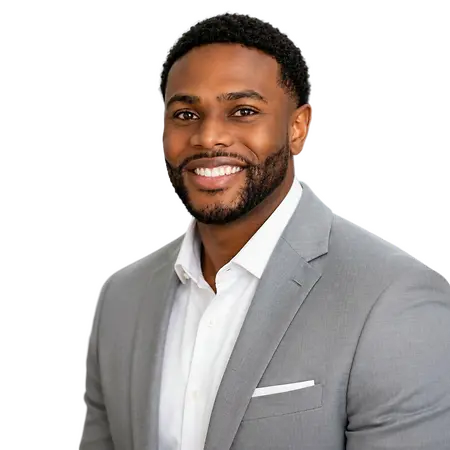
There is a distinction between men who pursue success for themselves and men who recognize that their greatest accomplishments are measured by the lives they influence. For Alex Del Rosario, leadership is not simply about professional advancement, organizational growth, or the positions one occupies. It is about responsibility, service, and creating opportunities that allow others to envision a future beyond their present circumstances.
As a leader with Recapturing the Vision International, Inc. (RTV), a Miami-Dade nonprofit dedicated to empowering youth, strengthening families, and transforming communities, Del Rosario represents a generation of leaders who understand that meaningful leadership must extend beyond the boardroom and into the communities that need it most.
His approach reflects a fundamental principle: leadership is not defined by how many people follow you, but by how many people become better because you led.
Leadership Rooted in Purpose
Born and raised in Miami, Florida, Del Rosario's connection to the community is more than geographical. It is personal. Having grown up in the same city where he now dedicates his professional efforts, he understands that the challenges facing communities are not simply statistics or talking points. They represent the realities experienced by families, young people, and neighborhoods across Miami-Dade County.
While many professionals view success as an opportunity to leave their hometown in pursuit of greater possibilities, Del Rosario has embraced a different philosophy: build where you are planted, invest where you have roots, and help create the opportunities that allow the next generation to succeed.
A graduate of Florida International University, his professional journey has been shaped by a commitment to public service, community development, and the belief that individuals can change the trajectory of their communities when they are given the right resources, guidance, and opportunities.
For him, leadership begins with understanding that influence comes with an obligation to serve.
Transforming Potential Into Possibility
Through his work with Recapturing the Vision International, Del Rosario has been part of an organizational mission that spans more than three decades.
Founded in 1994 by his mother, Dr. Jacqueline Del Rosario, RTV has developed programs designed to address the interconnected needs of young people and their families. Its work recognizes that academic success, personal development, family stability, and community support cannot be treated as isolated priorities.
Del Rosario has played an instrumental role in expanding the organization's youth empowerment efforts, helping grow program participation from approximately 60 young people to more than 900 participants annually.
That growth represents more than an organizational achievement. It reflects the expansion of opportunities for young people who might otherwise lack access to consistent mentorship, leadership development, academic support, and positive environments.
Through initiatives such as I Am Success, RTV works to equip young people with the tools to become responsible decision-makers, develop confidence, strengthen their character, and recognize their potential.
Del Rosario understands that investing in young people is one of the most important investments a community can make. The young person sitting in an afterschool program today may become tomorrow's business owner, public servant, educator, community advocate, or organizational leader.
The question is whether society is willing to invest in that possibility before the opportunity passes.
The Principles Behind His Leadership
What distinguishes purpose-driven leadership is the ability to translate values into action. For Del Rosario, several principles guide his approach.
1. Lead With Responsibility, Not Entitlement.
Leadership should never be viewed as a privilege that separates someone from others. It is a responsibility that requires accountability, humility, and a willingness to do the difficult work. A title may establish authority, but character establishes credibility.
2. Build People, Not Just Organizations.
An organization can grow in revenue, expand its programs, and increase its visibility. But its most important measure of success is the development of the people it serves and the people who work within it. Effective leaders create environments where others can discover their strengths and develop their own leadership capacity.
3. Think Beyond Your Generation.
The most consequential decisions are not always those that produce immediate results. They are the decisions that create opportunities for people who may never have the chance to meet you. Investing in education, mentorship, family stability, and community infrastructure is an investment in a future that extends beyond one's lifetime.
4. Understand That Relationships Are Leadership Capital.
Meaningful change rarely happens in isolation. It requires partnerships among government, education, philanthropy, business, nonprofit organizations, and community stakeholders. Building relationships across these sectors allows leaders to bring resources, perspectives, and opportunities together around a shared purpose.
5. Measure Success by Impact.
Recognition, compensation, and professional milestones have their place. However, the lasting measure of leadership is what changes because you were present. How many opportunities were created? How many individuals were empowered? How many barriers were removed?
These are the questions that give leadership its meaning.
Redefining What It Means to Be a Successful Man
There is an important conversation taking place about the role of men in modern society. Professional achievement and financial success remain meaningful aspirations, but they should not be the only standards by which men evaluate themselves.
Today's leaders must also be willing to mentor, advocate, build institutions, strengthen families, and participate in solving the challenges facing their communities.
Del Rosario's work reflects this broader understanding of manhood and leadership. It is an approach that recognizes strength in service, influence in collaboration, and success in the ability to create opportunities for others.
It also challenges men to consider an important question: What are you building that will continue to matter when you are no longer in the room?
For Del Rosario, that answer begins with young people.
Every child deserves an opportunity to recognize their potential, regardless of their ZIP code, family income, or circumstances. But opportunity does not happen automatically. It requires adults who are willing to invest their time, resources, experience, and influence into creating environments where young people can succeed.
That is the kind of leadership that produces generational change.
Miami Is More Than Home. It Is a Responsibility.
Miami is a city defined by ambition, entrepreneurship, cultural diversity, and extraordinary potential. Yet it also faces persistent challenges involving educational access, economic mobility, housing affordability, and the availability of resources for vulnerable families.
Del Rosario believes that the future of Miami will depend not only on the investments made in its infrastructure and economy but also on the investments made in its people.
Community transformation requires leaders who understand both sides of that equation.
It requires business leaders willing to support local initiatives, public officials willing to champion long-term solutions, nonprofit organizations willing to innovate, and individuals willing to take ownership of the communities in which they live.
His commitment to Miami reflects the belief that one does not have to leave a community to achieve greatness. Sometimes the greatest opportunity is to help create greatness where it is needed most.
A Legacy Still in Motion
Legacy is often discussed as something people leave behind. But perhaps the most meaningful way to understand legacy is as something we build every day through our decisions, relationships, and willingness to make a difference.
For Alex Del Rosario, leadership is an ongoing responsibility. It is found in the young person who begins to believe in their potential, the family that receives the support it needs, the partnership that brings new resources into a community, and the organization that becomes stronger because people are willing to lead with purpose.
His story is a reminder that leadership does not require waiting for the perfect opportunity, the highest position, or the most influential platform.
It begins when someone recognizes a need and decides to take responsibility for helping address it.
And perhaps that is the most important lesson for men who aspire to lead: Do not simply build a life that demonstrates what you have accomplished. Build a legacy that demonstrates what you made possible for others.
For Del Rosario, the work continues. The vision is bigger than any one individual, the responsibility extends beyond any one generation, and the legacy is still in motion.