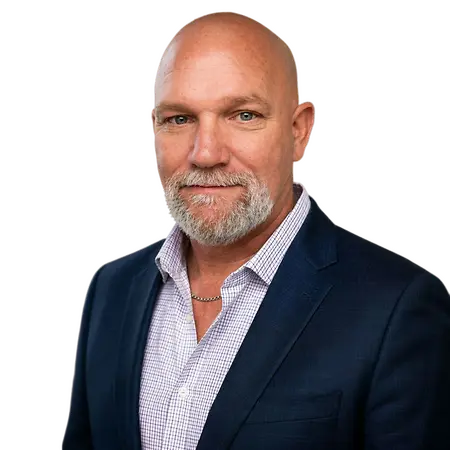
Building More Than Projects: A Life of Second Chances, Leadership, and Service
If you had told me in 2012 that my life would look the way it does today, I probably wouldn't have believed you.
Back then, I was struggling with alcoholism, and although I had always considered myself a hardworking man, I hadn't figured out how to build a stable life. I didn't have a bank account, a vehicle in my name, or a home I could call my own. My credit was terrible, and the future I wanted seemed a long way from the reality I was living.
But in 2012, everything began to change.
That was the year I got sober, and it became the beginning of a journey that would completely transform my perspective on life, family, leadership, and success.
I didn't get where I am today on my own. Through God's grace, the support of my wife, and a commitment to taking life one day at a time, I began rebuilding something far more important than my finances or career. I began rebuilding myself.
Sobriety didn't just change my habits. It changed my priorities.
I began to understand that life wasn't simply about what I wanted or needed. It was about the people around me, the responsibilities I had, and the impact my choices made on others.
One of my greatest motivations became making sure my family had someone they could depend on. I wanted to be a husband my wife could count on, a father who was present in his children's lives, and a man whose actions reflected his values.
Today, having been sober since 2012, I still approach life with the same philosophy that helped me get through those early days: one day at a time.
I've learned that I can't control everything that happens around me, and I certainly can't control other people's actions. What I can control is how I respond, the decisions I make, and whether I choose to do the right thing.
Those lessons have carried over into every aspect of my professional life.
Leadership Is Earned, Not Given
Throughout my career, I've had the opportunity to work in demanding environments where leadership, accountability, and teamwork aren't optional.
I spent six years in law enforcement, an experience that strengthened my understanding of service, responsibility, and making decisions under pressure.
Today, I serve as the Operations Manager for Diamondback Works, an industrial construction company supporting complex projects across the industry.
Industrial construction is challenging. The schedules are demanding, the expectations are high, and the decisions we make can have lasting consequences. But I've learned that successful leadership isn't simply about meeting deadlines, managing budgets, or completing projects.
It's about people.
The men and women who show up every day, work long hours, and put their skills to work are the foundation of this industry. As leaders, we have a responsibility to provide them with the resources, support, and opportunities they need to succeed.
I've always believed that you should never ask someone to do something you wouldn't be willing to do yourself. Respect doesn't come from a job title or a position on an organizational chart. It comes from your actions, your integrity, and how you treat people.
Some of the best lessons I've learned have come from people working in the field, and I believe good leaders never stop listening or learning.
Recognizing the Struggles We Don't Always See
One issue that has become particularly important to me is suicide prevention and mental health awareness in the construction industry.
Construction professionals are accustomed to working through difficult conditions. We're taught to be tough, solve problems, and push forward when things get challenging.
Unfortunately, that same mentality can sometimes make it difficult for people to admit when they're struggling personally.
I believe our industry has an opportunity, and an obligation, to change that.
We spend tremendous amounts of time and resources teaching our employees how to recognize physical hazards, prevent injuries, and work safely. Those efforts are absolutely necessary, but we cannot overlook the importance of mental health.
Someone can be wearing every piece of required personal protective equipment and still be fighting a battle that nobody around them knows about.
As leaders, we need to create environments where asking for help isn't viewed as weakness. We need to build relationships with our employees, recognize when someone may be struggling, and encourage conversations that could ultimately save a life.
My own journey through alcoholism and recovery has given me an appreciation for how difficult it can be to ask for help and how much of a difference support can make.
I know what it's like to face challenges that seem overwhelming. I also know that life can change.
You don't have to die drinking. You can live sober.
That's a message I believe in deeply, and one I hope reaches anyone who feels trapped by their circumstances.
A Commitment to Serving Others
Outside of my professional career, one of the most rewarding parts of my life has been serving as a volunteer with Texas Search and Rescue (TEXSAR).
As a member of TEXSAR, I've had opportunities to participate in search and rescue operations, develop specialized skills in swiftwater rescue and boat operations, and mentor individuals entering the organization.
Search and rescue requires teamwork, preparation, discipline, and a willingness to serve people during some of the most difficult moments of their lives.
It's humbling work.
When a family is facing uncertainty or tragedy, the people responding aren't there for recognition or personal gain. They're there because someone needs help.
That sense of purpose is something I carry with me.
Volunteering has also reinforced a lesson I've learned throughout my life: no matter how much experience you have, there is always something more to learn and someone who can teach you.
Whether I'm working alongside fellow volunteers, mentoring new members, or leading construction teams, I believe the responsibility is the same: show up, contribute, and leave things better than you found them.
Redefining Success
As I've gotten older, my definition of success has changed dramatically.
There was a time when I measured success by the things I didn't have. Financial stability, a home, a vehicle, and professional accomplishments were all things I wanted.
Today, I'm grateful for the stability and opportunities I've worked to build, but those things aren't what define success for me anymore.
Success is having a family that can depend on me. It's being present in my children's lives. It's being able to help someone who's struggling, encourage a young person entering the workforce, or make a positive difference in my community.
It's understanding that sometimes the most meaningful thing you can do is simply show up for someone else.
I don't pretend to have all the answers, and I certainly haven't done everything right. But I've learned that mistakes don't have to determine your future. What matters is whether you're willing to take responsibility, make changes, and keep moving forward.
I believe God has a plan for our lives, even when that plan doesn't make sense to us at the time. Looking back on my own journey, I can see how some of my most difficult experiences helped shape the person and leader I've become.
The Legacy I Hope to Leave
If I could share one piece of advice with someone beginning their career or facing personal struggles, it would be this:
Don't let where you are today convince you that's where you have to stay.
Be willing to ask for help. Surround yourself with people who want to see you succeed. Work hard, stay humble, and don't lose sight of the people who matter most.
I've been given opportunities I once couldn't imagine, and I don't take them for granted.
My goal isn't to be remembered as a successful construction executive, a former police officer, or a search and rescue volunteer.
I want to be remembered as a man who loved his family, kept his word, stood up for people who needed help, and used the opportunities he was given to make a difference.
Because at the end of the day, success isn't measured by what we build for ourselves. It's measured by what we build into the lives of others.