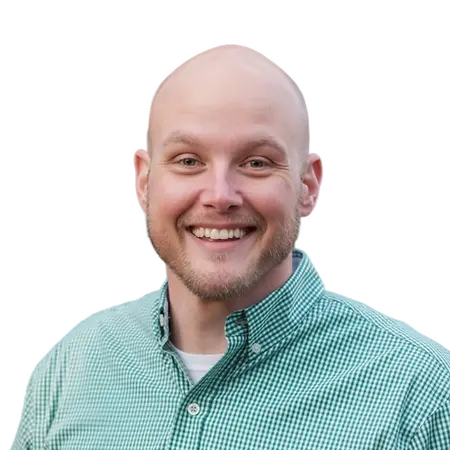
Built Through Adversity, Driven by Purpose
I grew up in a one-red-light town of 689 people, but the size of my hometown never became the size of my vision. My childhood was marked by instability. I moved through more than 19 different homes while growing up, learning early that life could change without asking permission. What I did have was a developing conviction that my life could become something different. Long before I stood beneath conference lights or spoke to thousands of people, I was learning the first lesson that would eventually define my work: your beginnings may explain you, but they do not have to imprison you.
That conviction would later become more than an idea. I have spent my life moving toward difficult things rather than away from them, and my story is ultimately less about what I have overcome than what I have decided to do with what I have overcome. I am a pastor, speaker, three-time published author, mentor, and builder of platforms designed to help other people discover purpose, identity, courage, and possibility. But those titles only make sense when viewed through the story beneath them. The deeper story is about a man who has repeatedly encountered circumstances capable of making a person bitter, cynical, or small, yet has repeatedly chosen to become useful instead.
That choice was tested in my professional life. For ten and a half years, I worked in the oil industry, and I did not simply show up to collect a paycheck. I worked relentlessly to climb the corporate ladder. I started as an ordinary seaman and worked my way toward becoming a subsea engineer, building a career through effort, discipline, competence, and determination.
The journey mattered because it represented something larger than a job title. It was proof that a boy from a small Alabama town could enter a demanding industry, learn his craft, work his way upward, and build something substantial through persistence. My father, Ed Rivenbark, who was also in the oil and gas industry, was—and remains—a tremendous inspiration throughout my journey.
Then the career was gone. Losing the career I had spent a decade building because of an industry downturn was not merely the loss of employment. It was the loss of a future I had invested years constructing. When something you have worked that hard to obtain disappears, it forces a question that achievement can sometimes postpone:
Who are you when the thing you built your identity around is no longer there?
I would eventually discover that losing a career could become an invitation to find a calling. What felt like an ending began, slowly and painfully, to reveal itself as a redirection. But the deepest transformation came through a season of loss so concentrated that it could have permanently altered the trajectory of my life.
Within one year, I experienced the loss of my career, the loss of my daughter, the loss of my mother, and the loss of my grandmother. Each loss carried its own kind of grief. Together, they became a collision with mortality that left no room for shallow answers.
My daughter, Callie Grace, was lost before she could grow up in my arms. Her story was brief, but her impact on my life was enormous. The loss of a child does something to the human heart that cannot be adequately explained with language. It rearranges time. It changes what matters. It makes tomorrow feel less guaranteed and today infinitely more sacred.
Callie Grace did not get a lifetime, but I came away from her short life with a conviction about my own: none of us knows how much time we have been given, and we have a responsibility to use whatever time remains for something that matters.
Then came the loss of my mother to a drug overdose. There is a particular cruelty in losing someone to addiction because grief can arrive carrying other emotions with it—questions, anger, memories, what-ifs, and the ache of knowing that love cannot always rescue someone from what has taken hold of them. I did not receive a neat ending. I received a wound. And then I had to decide what kind of man I would become while carrying it.
My grandmother, who helped raise me, was also lost during that same devastating season, her life reaching its final stages through dementia. These were all devastating losses. For me, they did not arrive as isolated chapters. They arrived almost on top of one another, stripping away the illusion that life is something we can safely postpone.
And that is where my philosophy was forged. I came to understand that we get one shot this side of eternity to make a difference. One life. One window of time. One opportunity to decide what we will do with the days entrusted to us.
The question that emerged from my grief was not simply, “Why did this happen?” It became something more demanding: “What are you going to do with it?”
That question has become a lifeline in my life. It is the question underneath the stage, underneath the microphone, underneath the books, underneath the coaching, and underneath the ministry. It is why my message is not built around pretending that pain does not exist. I know better. My message is about refusing to allow pain to have the final word.
The irony is that some of the experiences that could have narrowed my world ultimately expanded it. A boy from a tiny Alabama town began to see people everywhere who were fighting battles no one else could see. Students struggling with identity. Men carrying pressures they rarely articulate. Leaders wondering whether their work matters. People in prisons who have made devastating choices but are still human beings capable of redemption. Educators pouring themselves into others while quietly becoming exhausted. Speakers with a message inside them who lack the courage, structure, or strategy to take it into the world.
I began to understand that my life could become a bridge between pain and possibility. That realization became the doorway into ministry. That bridge has taken me far beyond the town where my story began. I have spoken on stages and platforms across the nation, addressing students, educators, men, leaders, organizations, churches, and communities.
I have walked into places many people would rather avoid, including prisons, carrying a message that says a person’s worst chapter does not have to become the title of the rest of their life. I have stood before young people wrestling with identity and reminded them that their worth cannot be determined by the loudest negative thought in their heads. I have challenged men to stop living beneath their potential and to understand that strength is not merely about what they can carry, but what they can give away.
My work has also taken me beyond American stages. In Haiti, my wife and I built a well that serves surrounding communities, an effort that reached thousands of people with something as basic and life-changing as access to clean water. The project is a picture of the philosophy that increasingly defines my life: Impact is not measured only by how many people hear you. Sometimes it is measured by how many people are better because you were willing to do something.
That distinction matters. In an age obsessed with platforms, followers, reach, and personal branding, my story points toward a different definition of influence.A platform is not the achievement. A platform is the responsibility. The microphone is not the mission. The microphone is the tool. That perspective has shaped my work as a speaker and coach. Through co-founding Built Different Speakers Academy, I have invested in Christian speakers and emerging voices who believe they have something meaningful to say but need help turning conviction into communication and opportunity into impact.
The academy focuses on the work behind the stage: message preparation, branding, outreach, networking, marketing, lead generation, positioning, and the practical disciplines required to build a sustainable speaking career.
The name Built Different is more than a brand. It captures a worldview. Being built different does not mean being better than everyone else. It means understanding that you were entrusted with something that should not be wasted. It means refusing to let comparison dictate your calling. It means recognizing that adversity can either become an excuse or become an ingredient. It means choosing courage when comfort would be easier. For me, courage has never meant the absence of fear. It has meant moving anyway. That may be the most consistent characteristic of my story: movement.
From nineteen-plus homes to a career built from the bottom up. From ordinary seaman to subsea engineer. From a career lost to a calling discovered. From a child lost to a deeper understanding of the value of life. From a family marked by addiction and dementia to a ministry marked by compassion. From a one-red-light town to national stages. From surviving what I could not change to serving people I could.
The journey has not made me immune to pain. It has made me unwilling to waste it. That distinction is visible in the way I talk about identity. I know what it is like for circumstances to attempt to name you. I know what it is like to lose things you thought you would keep. I know what it is like to look at a life you worked hard to build and realize that the blueprint has changed.
So when I tell someone that their past does not get the final word, I am not offering a motivational slogan from a distance. I am speaking from inside the tension. My message to others is, in many ways, an extension of the message I have had to learn myself:
You are more than what happened to you. You are more than your worst decision. You are more than the season you are currently in. You are more than the voice that tells you it is too late. And if you still have breath, you still have an opportunity to make your life count.
That conviction is also why my work reaches across categories. I can speak to a room of students about identity, then challenge men about responsibility, encourage leaders about courage, and step inside a prison to speak about redemption. The settings change. The human need does not. People want to know that their lives matter, that their stories are not finished, and that there is still something meaningful they can do with the time they have. I have made it my mission to answer that need.
My books, speaking, ministry, coaching, and community work all orbit the same central idea: people become powerful when they stop merely surviving their lives and begin intentionally living them. I want people to recognize the difference between existing and contributing, between being present and being purposeful, between having a platform and using it.
And perhaps that is why the story that began in a town of 689 people now belongs on national platforms. Not because I escaped my beginnings, but because I refused to let them determine my boundaries.
There is something deeply American about the arc of my career, but something even more universal about the arc of my life. I have worked my way upward. I have lost what I had built. I have experienced losses no achievement could protect me from. I have grieved people I loved. I have faced the fragility of time.
And somewhere in that wreckage, I discovered a question more valuable than success: What will you do with the life you have left? My answer has been action. That does not mean every day is easy. It means the mission is bigger than the difficulty of the day.
There is a temptation, when telling a story like mine, to turn adversity into a neat staircase leading directly to success. Real life is rarely that clean. The truth is more compelling.The losses still matter. The memories still hurt. The questions do not all disappear. But neither does the purpose that emerged from them.
Perhaps the greatest evidence of transformation is not that a person stops hurting. Perhaps it is that the hurt becomes a source of compassion rather than a reason to quit. My story is ultimately not a story about a man who got everything he wanted. It is a story about a man who learned—and is still learning—that the value of a life cannot be measured only by what it acquires. It must also be measured by what it gives.
That is why the stages matter less than the people on the other side of them. The books matter less than the person who closes one with renewed courage. The academy matters less than the speaker who finally believes his message deserves to be heard. The platform matters less than the life changed because someone decided to use it.
For a man who grew up moving through more than 19 homes, there is a striking symmetry in the life I am building now. I have spent years creating spaces where other people can feel seen, heard, challenged, equipped, and reminded that they belong somewhere.
I know what instability feels like. I know what loss feels like. So I have chosen to build stability, hope, and purpose into the lives I touch. That may be the truest definition of my success.
The boy from a one-red-light town could not have known where the road would lead. I could not have predicted the career I would build, the career I would lose, the losses I would soon face, or the purpose that would eventually rise from the ashes of that year.
But I know what those losses taught me. Time is not promised. The opportunity to make a difference is not waiting for a more convenient season. We get one shot this side of eternity. So what are you going to do with it? I have answered with my life. I have chosen to take the things that could have broken me and turn them into reasons to build. I have chosen to take my story and make room for someone else’s. I have chosen to keep speaking, even when my own voice has had to travel through grief. I have chosen to believe that redemption is not the erasure of what happened, but the transformation of what happens next.
My wife Aimee, our two beautiful children, and I have chosen to keep climbing, even when the ladder changes. And perhaps that is what makes my story notable. My life is a reminder that significance rarely begins with a spotlight. Sometimes it begins in a small town, in an unstable childhood, in a hard-earned job, in a hospital room, at a graveside, or in a season when the future looks nothing like you planned. Sometimes it begins with the simple realization that you have been given another day. And sometimes the most powerful response to everything you have lost is not to spend the rest of your life asking why.
It is to ask:
“What now?”
For me personally, the answer is still unfolding. But the direction is clear:
Build. Speak. Serve. Give. Make a difference.