When people hear the word discipline, they often think about waking up early, going to the gym, working hard, eating right, or refusing to quit.
For me, discipline eventually became something much more personal.
It became survival.
Living with Limb Girdle Muscular Dystrophy taught me that there is a tremendous difference between being physically strong and being disciplined. Physical strength depends, at least partly, on what your body is capable of doing. Discipline depends on what you decide to do with the abilities you still possess.
When I was diagnosed with LGMD in 2007, I was told that I had a progressive muscular disease. Over time, the muscles around my hips, legs, shoulders, and arms would become weaker. There was no promise that determination would stop the progression.
That was difficult for a man like me to accept.
I had served in the United States Air Force. I had worked demanding jobs. I had managed warehouses and operations. I had been athletic and physically active. Strength had always been part of how I understood myself.
Then my body began changing the rules.
Stairs became mountains.
Standing became exhausting.
Walking became unpredictable.
Falls became frightening.
Tasks I had performed without thinking suddenly required planning, patience, and energy.
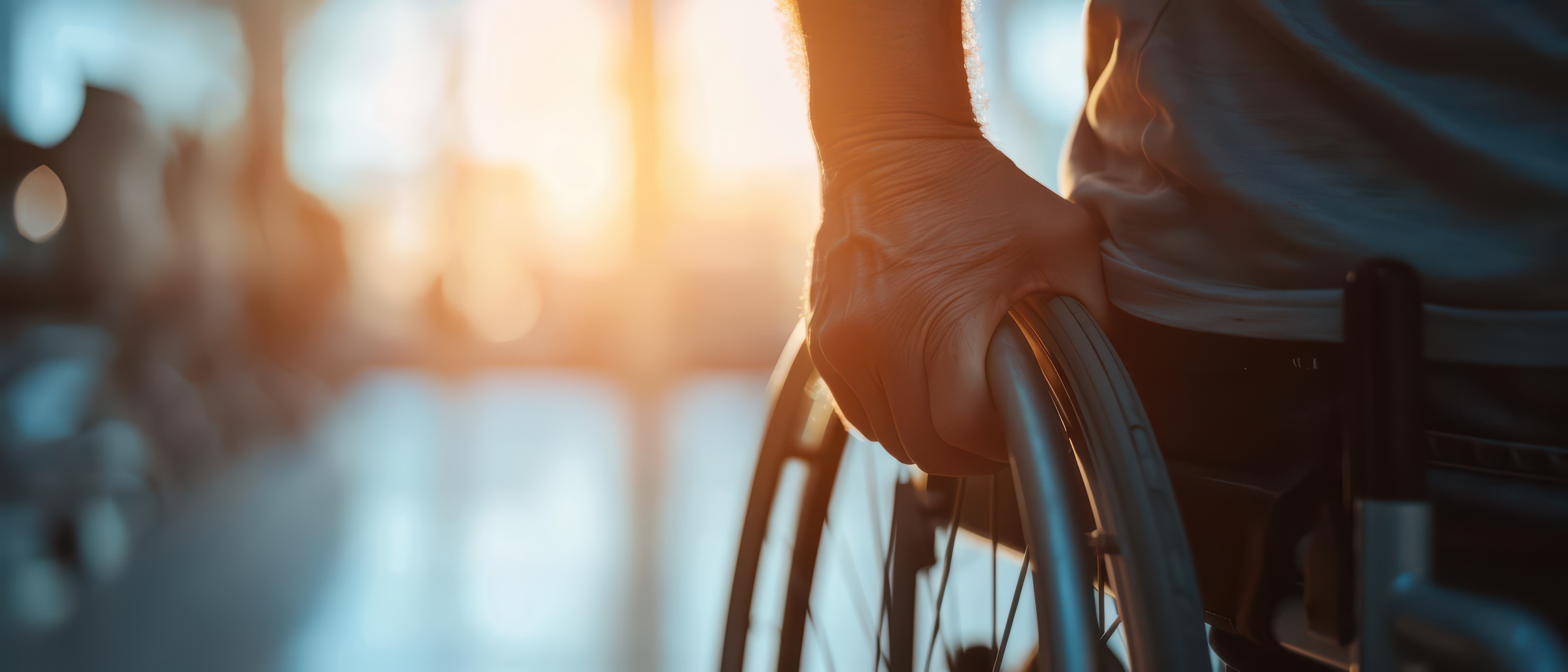
Eventually, wheelchairs and other forms of assistance became part of my life.
LGMD was slowly taking away physical abilities I once considered permanent.
But there was something it could not take unless I surrendered it:
my discipline.
Discipline Had to Change
Before disability, I thought discipline meant pushing harder.
After disability, I learned that sometimes discipline means knowing when not to push.
That distinction became incredibly important.
There were days when my mind remembered the man who could walk, climb stairs, work long hours, exercise, drive wherever he wanted, and move through the world without calculating every physical action.
My body, however, had different information.
Discipline meant learning to listen to both.
I had to stop measuring myself exclusively against the person I used to be.
That was one of the hardest lessons of my life.
There is a dangerous temptation when living with a progressive disability to prove that you can still do everything you once did. Pride whispers, You should be able to do this.
Discipline responds, What is the wisest way to do this now?
Those are two very different questions.
I began to understand that using adaptive equipment was not surrender. Conserving energy was not laziness. Asking for assistance was not weakness. Changing the way I accomplished something did not make the accomplishment less meaningful.
Sometimes discipline meant pushing myself.
Sometimes discipline meant resting.
Sometimes discipline meant asking for help.
Sometimes discipline meant accepting that something that had once taken five minutes might now take thirty.
And sometimes discipline meant looking at an obstacle and saying, There has to be another way.
The Discipline of Adaptation
Progressive disability forces adaptation.
You can resist that reality, become angry at it, or spend years wishing circumstances were different. I have experienced those emotions.
But eventually I learned that wishing for yesterday does not prepare you for tomorrow.
Discipline helped me adapt.
When walking became more difficult, I adapted.
When stairs became dangerous, I adapted.
When mobility equipment became necessary, I adapted.
When my independence changed, I adapted.
When my career possibilities changed, I adapted.
When the way I saw myself as a man was challenged, I had to adapt there too.
That last one may have been the hardest.
Physical disability does not only affect muscles. It can challenge identity.
When you have spent much of your life believing that a man should be strong, independent, protective, productive, and self-sufficient, suddenly needing assistance can create an internal conflict that other people never see.
I had to discipline my thinking as much as I had to manage my body.
I could either spend the rest of my life judging myself according to abilities I had lost, or I could begin measuring myself according to the character I was developing.
That changed everything.
Discipline When Nobody Is Watching
Some of the greatest battles with disability happen in private.
Nobody applauds you for getting yourself through a difficult morning.
Nobody sees the mental preparation required to face another day when your body feels weaker than it did before.
Nobody gives you a trophy for managing fatigue, frustration, appointments, equipment, accessibility problems, financial pressures, isolation, and the countless small inconveniences that accumulate around disability.
There are no crowds cheering when you decide not to give up.
That is where discipline becomes character.
Discipline is doing what needs to be done even when there is no applause.
It is continuing when motivation disappears.
It is maintaining your dignity when circumstances make you feel invisible.
It is refusing to allow one terrible day to become your definition of life.
I have learned that motivation and discipline are not the same thing.
Motivation asks, “Do I feel like doing this today?”
Discipline asks, “What does today require of me?”
There have been many days when I did not feel motivated.
But I could still be disciplined.
Discipline Did Not Mean Pretending
There is another lesson I had to learn.
Discipline does not mean pretending everything is fine.
For years, I believed strength meant maintaining composure. Keep going. Handle it. Do not complain. Do not let people see the fear, disappointment, anger, or sadness.
Eventually, I realized that hiding pain is not the same thing as mastering it.
Real discipline required emotional honesty.
I had to acknowledge disappointment.
I had to acknowledge depression.
I had to acknowledge fear.
I had to acknowledge that losing physical abilities hurt.
I had to acknowledge that there were times when I hated what was happening to my body.
Those admissions did not make me weaker.
They made it possible for me to deal with reality instead of constantly fighting an imaginary version of myself.
Discipline became less about appearing strong and more about remaining engaged with life.
My Body Became Weaker, but My Standards Did Not Have To
LGMD changed what my body could do.
It did not have to determine the standards by which I lived.
I could still choose integrity.
I could still choose responsibility.
I could still choose patience.
I could still choose how I treated people.
I could still choose whether bitterness controlled me.
I could still choose whether disappointment became permanent.
I could still learn.
I could still write.
I could still be a father.
I could still contribute.
I could still have purpose.
That realization became incredibly important because disability can make you focus almost entirely on what you have lost.
Discipline taught me to ask another question:
What remains?
And then:
What can I build with what remains?
Those questions helped change my life.
Discipline Is Not Punishment
Today, I no longer view discipline as punishment or relentless self-denial.
I see discipline as structure in the middle of chaos.
It is the ability to establish principles when circumstances are unpredictable.
My muscles may not always cooperate.
My energy may fluctuate.
Accessibility may fail me.
People may misunderstand disability.
Plans may change because my body has different plans.
But discipline gives me something stable to return to.
It reminds me that although I cannot control everything that happens to my body, I still have influence over how I respond to what happens.
That distinction matters.
I cannot discipline muscular dystrophy out of my body.
I cannot positive-think my muscles into behaving as though I do not have LGMD.
I cannot pretend limitations do not exist.
But I can develop the discipline to work intelligently within those limitations while continuing to pursue meaning, connection, contribution, and purpose.
That is not denial.
That is adaptation.
The Strongest Version of Me
There was a time when I might have measured strength by how much weight I could lift, how many stairs I could climb, how many hours I could work, or how much physical punishment my body could endure.
Today, my definition is different.
Strength is maintaining character when life does not cooperate.
Strength is adapting without surrendering your identity.
Strength is accepting assistance without believing you have become less valuable.
Strength is getting knocked emotionally flat and still finding a reason to participate in tomorrow.
And discipline is what makes that kind of strength possible.
Limb Girdle Muscular Dystrophy has progressively weakened my body.
But in a strange way, it forced me to examine what strength actually means.
I discovered that muscles were only one form of strength.
There is mental strength.
Emotional strength.
Moral strength.
Spiritual strength.
And there is the quiet strength of simply continuing.
Discipline became the bridge between the life I once had and the life I had to learn how to live.
It helped me stop asking only, “Why is this happening to me?”
And begin asking,
“Given the life I have now, who am I going to become?”
That is a question disability cannot answer for me.
I have to answer it myself.
Every day.
And answering it every day is discipline.
Kevin D. Robinson
Author of Disabled: Finding an Idyllic Life Amid Chaos