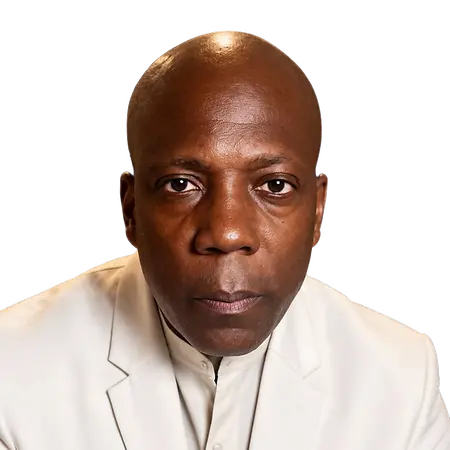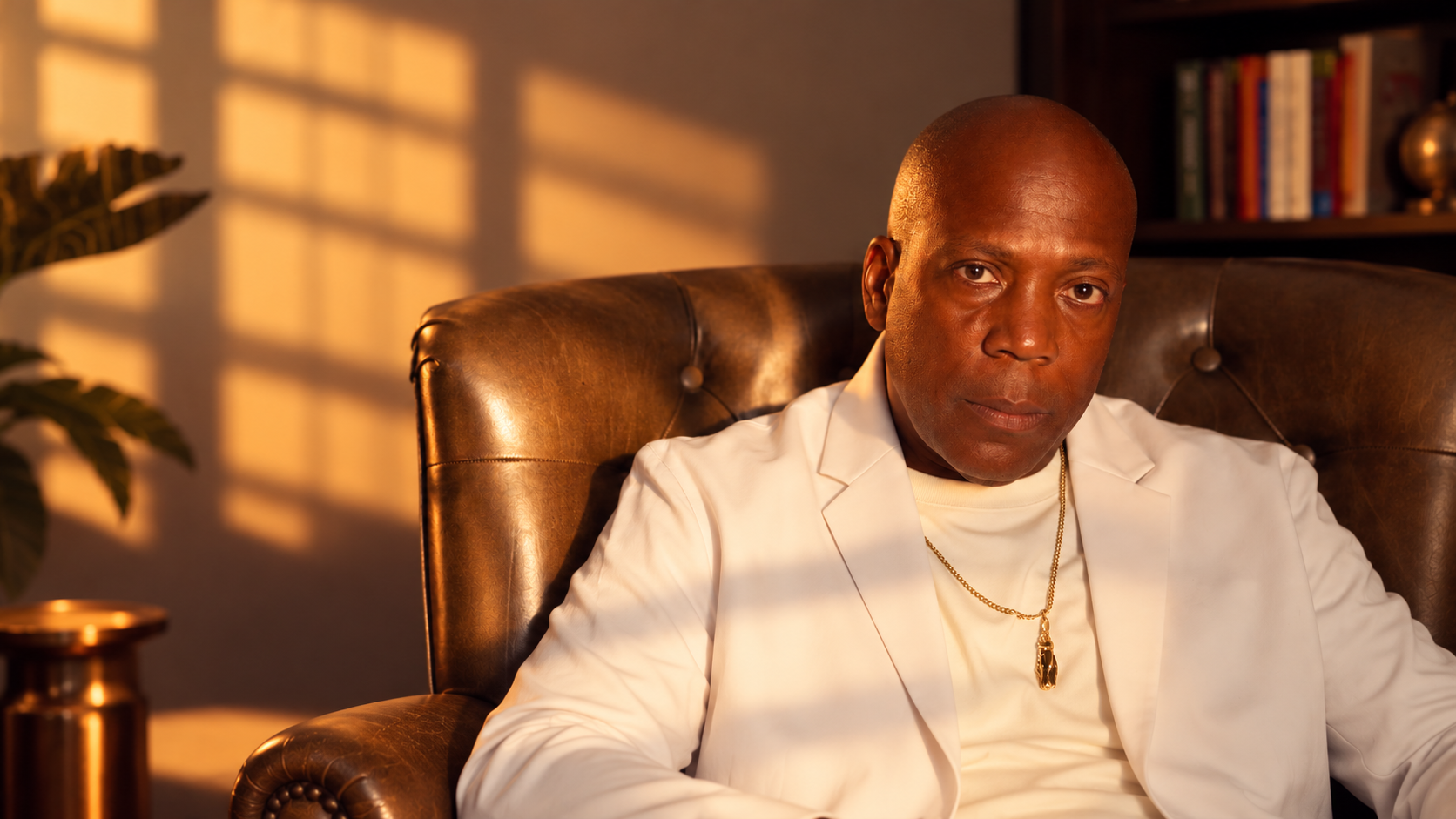
1. Sheldon, tell us a bit more about yourself. Where does your desire to be a director come from?
I’m Sheldon Woodson, founder of Woodson’s World Studios, and I describe myself as a spiritual and psychological storyteller. I’m interested in what people carry inside—their grief, faith, fears, and the choices they struggle to make.
My desire to direct came from wanting to understand the filmmaking process end to end. I wanted to write, direct, produce, film, and edit because I didn’t want my ability to tell a story to depend entirely on someone else giving me an opportunity.
As I watched documentaries and interviews with directors I admired, I kept hearing the same message: make something yourself. I took that seriously. Directing lets me follow an idea from the page to the screen and take responsibility for how that story reaches an audience.
2. What is your background?
I grew up in Gary, Indiana. After graduating from high school at 17, I moved to Fort Wayne to study architecture. I wasn’t ready for the math, so I left school and joined the Navy.
During my military career, I became interested in writing. I wanted to be a novelist like Stephen King and John Grisham. I got a little recognition, but eventually I had to decide where to put my energy. I chose my military career and retired after 24 years as a Chief Petty Officer.
I later earned a Master of Management and studied filmmaking through Lights Film School. As film, television, and the internet became bigger parts of how people experienced stories, I moved into screenwriting. The Navy taught me discipline and how to work with people. Those lessons still shape how I run a production.
3. What were your references for URNS (Proof of Concept)?
My starting point was something very simple: you don’t get to choose the body you’re born into. From there, I began thinking about people living with physical limitations and people whose emotional pain has made them lose sight of the value of their lives.
That led to a fictional question: what if a service could connect people who wanted to leave their lives with people seeking another physical existence? What would happen to their identities, relationships, and souls?
I believe life should be preserved, and I wanted to explore that belief through a troubling premise. Psychology and spirituality became my main references: what someone believes about themselves, what makes them want another chance, and what happens when that desire meets something they cannot fully understand.
4. You won Best Screenplay at the RED Movie Awards; what does that mean to you?
It means a great deal because writing is where this journey began for me. Before there is a camera, a performance, or an effect, there has to be a story worth telling.
Winning Best Screenplay at the RED Movie Awards encouraged me that the ideas in URNS were connecting beyond my imagination. As an independent filmmaker, you spend a lot of time believing in a project before anyone else has a reason to.
I’m grateful for that recognition, and I share it with the people who helped bring the screenplay to life. It also makes me want to keep improving. I want the feature to deepen what people responded to and give the characters an even stronger journey.
5. Victoria and Victor Musa operate a secret service that connects the living and the dead. How did you develop these characters, and what makes their relationship so important to the story?
I developed Victoria and Victor around the relationship between personal need and moral responsibility. They make this extraordinary service possible, but I wanted the audience to see a married couple with their own vulnerabilities and desires behind it.
Their relationship matters because a decision about a body or a soul also affects the person who loves you. If someone changes their physical existence, what happens to the marriage? What does a partner recognize, trust, or fear?
That gave me a way to bring an enormous spiritual idea into something intimate. Their bond makes the consequences personal. Through them, I can explore how love influences judgment and how people justify difficult choices when they believe those choices might give them another chance.
6. In your director’s statement, you describe URNS as a “what-if story.” What is the most important question you want audiences to ask themselves after watching it?
I want them to ask: “What makes my life valuable, even when I’m struggling to see that value myself?”
The supernatural premise opens the door, but that question is what matters to me. People can become so overwhelmed by pain, loss, or disappointment that they struggle to imagine anything changing. I want audiences to think about the possibilities that still exist within a life.
URNS also asks what makes us who we are. Is it our body, our memories, our relationships, or something spiritual? I hope viewers leave talking about those questions and looking at themselves—and the people around them—with greater care. For me, a powerful story gives you something to wrestle with after the screen goes dark.
7. You are developing URNS as a proof of concept to help secure funding. What would you most like to explore in a feature-length version that audiences might not yet see in the initial project? Dinner, and they have these mints
I want to explore the service's emotional consequences in much greater depth. The proof of concept introduces the world and its possibilities. A feature would let us spend more time with the people making these choices and understand what brought them there.
I’m especially interested in Victoria and Victor’s history, the rules governing the exchange, and what happens when someone’s expectations collide with the reality of another existence. I also want to examine consent, accountability, and the effect on families.
The supernatural world needs clear rules, but the characters need room to surprise us. With feature funding, I want to strengthen both. My goal is for audiences to understand the attraction of the service while feeling the weight of every decision made within it.
8. Your films explore different worlds and ideas, and you have also written several novels. How does your experience as a novelist influence the way you write and direct films?
Writing fiction taught me to spend time inside a character’s mind. I want to understand what they want, what they’re hiding, and what they believe about themselves before I decide what they do.
In a novel, you can explain a thought directly. In a film, you have to find a way for the audience to experience it through a performance, an image, sound, or silence. That change in approach interests me.
My writing background also helps me think beyond a single scene. I’m always considering the history behind a relationship and the consequences that continue after a moment ends. When I direct, I try to give actors that understanding while leaving room for them to bring their own discoveries to the character.
9. Do you have an anecdote to share with us in particular?
The mirror scenes in URNS gave us an interesting challenge. We had to find angles that served the story while keeping the camera and crew out of the reflection. Something that seems straightforward on the page can require a lot of attention once you’re on set.
What stayed with me, though, was how quickly the cast and crew understood what we were trying to accomplish. We were often getting what we needed in one or two takes, and we finished filming a day early.
That reminded a how much preparation and communication matter. You can have a strong vision, but the work becomes possible when the people around you understand it and bring their abilities to it.
10. What is your next project?
Alongside developing URNS into a feature, I’m working on SNEEZE, a science-fiction horror proof of concept.
It follows Navy Chief Petty Officer Kevin Matthews, whose family getaway at a remote cabin is disrupted by an extraterrestrial threat. As disturbing changes spread through the people around him, Kevin faces a decision about how far he is willing to go to save his daughter.
My military background gives me a personal connection to Kevin’s sense of responsibility. I’m interested in what happens when someone trained to respond under pressure faces a threat that reaches directly into his family.
SNEEZE lets me explore another world while continuing the questions that matter to me: what people believe, what they fear, and what they are willing to sacrifice for someone they love.