
What Happens When a Software Engineer Builds a Beauty Business
A
s co-founder and CEO of Hottie Hair, Frehner has spent decades building both a successful beauty business and the technology that powers it. A software engineer by trade, he personally developed the systems behind the company's operations, transforming what began as a website for his wife's growing business into a technology-driven company with three locations and a highly automated customer experience.
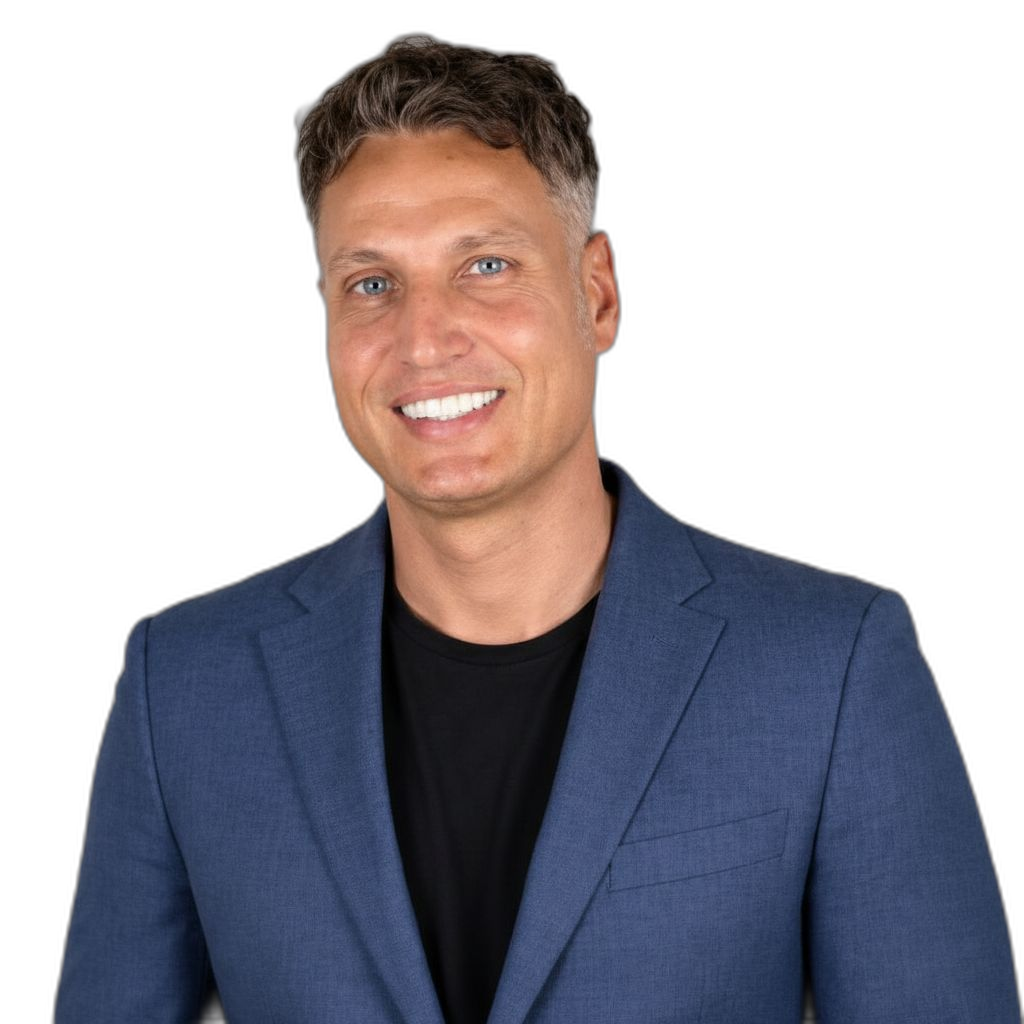
Mike Frehner
Co-founder & CEO
01
Tell us how Hottie Hair got started.
My wife Crystal is the hair and extension expert. That's her craft. Back in 2006, I built her a small portfolio website, and honestly, that was the beginning of everything.
I was already working as a software engineer, so I just kept building. First the website, then the booking systems, marketing systems, CRM tools, and eventually the technology became as much a part of the business as the salon itself. We've been building it together for nearly twenty years.
02
What makes Hottie Hair different from most businesses in your industry?
Most businesses in our industry outsource their technology. I've always taken the opposite approach.
I've built every version of our technology stack myself, from our earliest website to the AI-assisted systems we use today. That gives us the ability to move faster, automate repetitive work, improve the customer experience, and operate much more efficiently than a typical business our size.
03
What was the biggest turning point in your career?
Leaving my corporate engineering job in 2015.
For almost ten years, I was working a full-time engineering role during the day and building Hottie Hair during nights and weekends. It felt like I was working two jobs at once.
Making the decision to go all in was the moment it stopped feeling like a side project and started becoming the company we envisioned.
Making the decision to go all in was the moment it stopped feeling like a side project and started becoming the company we envisioned.
04
What was the biggest challenge you had to overcome along the way?
The long stretch before the business became my full-time focus.
People often see the finished product but don't see the years of uncertainty that come before it. There were countless nights, weekends, and sacrifices invested before I felt comfortable walking away from a stable career and betting on what we had built.
05
What's the most important lesson entrepreneurship has taught you?
Technology doesn't fix broken processes.
Especially now with AI, I've learned that automation amplifies whatever you point it at. If your process is strong, it scales beautifully. If your process is weak, it simply creates bigger problems faster.
You have to fix the process first. Then you automate it.
You have to fix the process first. Then you automate it.
06
How would you describe your leadership philosophy?
Automate the repetitive stuff, never the human stuff.
I want our team spending their time on relationships, creativity, expertise, and serving clients, not on administrative tasks that software should be handling.
I also believe leaders should stay hands-on. I'm still in the tools every day because I don't think you can effectively lead people through something you don't understand yourself.
I also believe leaders should stay hands-on. I'm still in the tools every day because I don't think you can effectively lead people through something you don't understand yourself.
07
What separates great leaders from average ones?
The willingness to keep learning, especially in public.
Technology is evolving so quickly that nobody has all the answers. The leaders who stay curious, continue learning, and are willing to admit what they don't know yet are the ones people trust and want to follow.
08
You've been a software engineer since 1998. How has AI changed the way you think about business?
It's probably the most significant shift I've seen in my career.
What excites me isn't necessarily what AI can do for massive corporations. It's what it can do for small businesses. For the first time, a relatively small team can operate with capabilities that used to require much larger organizations.
That's a fundamental change, and I think many business owners still underestimate how powerful it can be.
That's a fundamental change, and I think many business owners still underestimate how powerful it can be.
09
What trend are you paying closest attention to right now?
AI in small business.
Everyone talks about what AI means for large enterprises, but I'm much more interested in what it means for business owners operating a handful of locations with a small team.
The leverage it creates is genuinely new, and I don't think most business owners have fully caught up to it yet.
The leverage it creates is genuinely new, and I don't think most business owners have fully caught up to it yet.
10
How do you define success?
For me, success is building something that creates real value for people and can eventually operate without needing me in the building every day.
That second part is much harder than it sounds, and it's something I'm always working toward.
11
What advice would you give aspiring entrepreneurs?
Start while you still have income.
Build the business on the side, keep it small, and let it prove itself before you take major risks. That's exactly how we built Hottie Hair.
I'd also encourage people to learn the tools that are available today. Technology gives entrepreneurs leverage that simply didn't exist when I started, and the people who embrace it will have a huge advantage.
I'd also encourage people to learn the tools that are available today. Technology gives entrepreneurs leverage that simply didn't exist when I started, and the people who embrace it will have a huge advantage.
12
What's next for you and the company?
Right now, I'm focused on how far we can take AI inside a small business like ours.
We're continuing to improve the customer experience, automate operations, and explore new ways technology can help a small team accomplish more. I'm also sharing what I learn because I think many business owners haven't fully realized what's possible yet.
Closing Perspective
Mike Frehner's story is proof that innovation isn't limited to Silicon Valley startups or billion-dollar technology companies. Sometimes it happens inside everyday businesses led by people willing to think differently.
By combining nearly three decades of software engineering experience with a relentless focus on customer experience, Frehner has built more than a successful company. He's built a business that operates at the intersection of technology, entrepreneurship, and service. As artificial intelligence continues to reshape the business landscape, his philosophy remains remarkably simple: use technology to amplify people, not replace them.